Where this conveyor route helps
- Bottles and jars moving into cappers or labellers
- Cartons and trays moving to coding or inspection
- Height changes between old and new equipment
- Lines where products tip, catch or rotate unexpectedly
Reduce tipping, jams and poor presentation by matching conveyor heights, gaps, side guides and product support at every transfer point.
Many conveyor problems happen where products move from one belt, chain or machine to another. A good transfer point supports the product base and keeps the pack stable through the change of surface.
For the clearest advice, share the pack format, production speed, available floor space and the machines before and after the conveyor. That makes it easier to confirm whether a straight, curved, incline, infeed, outfeed or accumulation route is the right starting point.
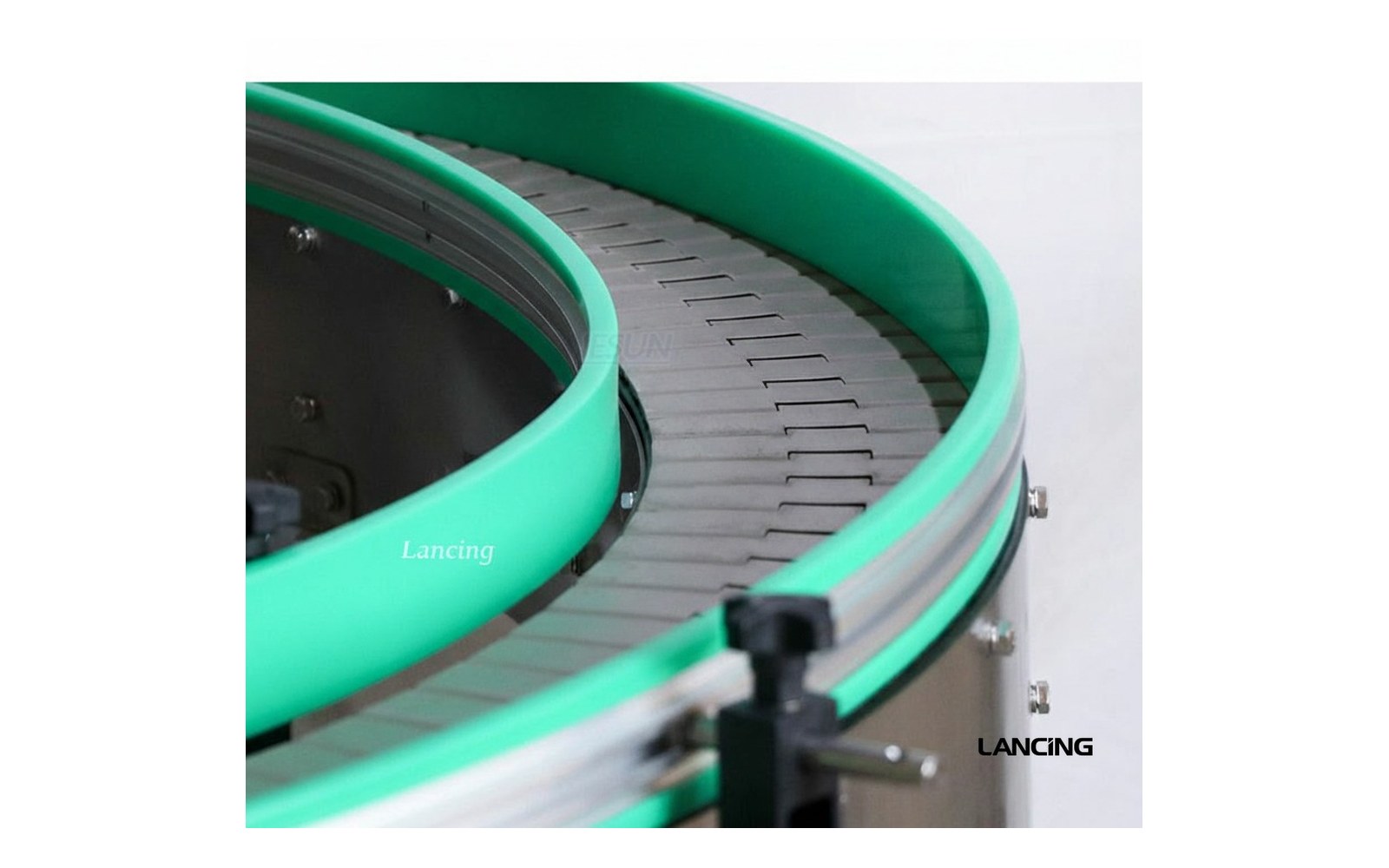
Small details at the planning stage can prevent jams, unstable transfers and operator access problems once the line is running.
Confirm size, weight, base shape and stability before choosing the conveyor route.
Match conveyor height, speed and transfer direction to the equipment on either side.
Keep access for loading, cleaning, adjustment, inspection and safe day-to-day use.
Decide whether the line needs accumulation to protect output during short stops.
These pages help narrow down the conveyor type, application and quote details.
Continue with practical conveyor information for this part of your line.
Open page →Continue with practical conveyor information for this part of your line.
Open page →Continue with practical conveyor information for this part of your line.
Open page →Clear answers for buyers comparing conveyor options and preparing an enquiry.
Common causes include too much gap, mismatched heights, unstable bases, poor guidance or sudden speed changes.
Sometimes. A local conveyor, transfer plate, guide adjustment or speed change may solve the issue, depending on the line.
Send photos or video of the product approaching, crossing and leaving the transfer point, plus measurements of the gap and heights.
Get practical conveyor advice based on the way your product actually needs to move through the line.
Many conveyor problems occur in the short distance between two otherwise suitable machines. A transfer point can introduce a gap, height step, surface change, acceleration, guide discontinuity or unsupported base feature. Draw the product at the transfer and test the limiting formats rather than treating the interface as a line on a layout.
The best transfer detail depends on the pack. A rigid carton, flexible pouch, narrow bottle, glass jar and handled container do not need the same support. The design should state which surface supports the product and how guides preserve the required orientation before, during and after the hand-off.
Working-height dimensions should use a common datum and identify the top of belt, chain or transfer surface. Include belt thickness, wear surface and any installed adjustment. A small height error can create an impact or catch, especially with a leading base edge, pouch seal or recessed container base.
Where a transfer plate or dead plate is used, check its length, edge, support, friction and cleaning access. Reduced end geometry or a matched conveyor can help small products, but the selected solution must fit the load, belt or chain and maintenance duty.
If the receiving conveyor runs faster, it may create pitch but can also pull or rotate the pack. If it runs slower, products can close up and create pressure. Record both speeds and acceleration states. The correct relationship is the one that maintains the required product behaviour at the neighbouring machine.
Guides should converge, diverge or change height without creating a pinch or abrupt side load. Use the complete product outline, including pumps, triggers, handles and labels. For machine-specific hand-offs, continue to infeed and outfeed conveyor engineering.
| Detail | Information to record | Test |
|---|---|---|
| Product base | Contact footprint, recesses, seals, feet and leading/trailing edges. | Smallest and least supported samples. |
| Surface level | Upstream and downstream top-of-surface heights from one datum. | Installed measurement and adjustment range. |
| Gap and support | Open gap, transfer plate, nose geometry or overlap. | Slow-motion pass at minimum and target speed. |
| Surface change | Belt/chain material, friction, cleanliness and direction. | Dry and relevant operating condition. |
| Speed relationship | Both conveyor speeds, acceleration and product pitch effect. | Steady, stop and restart sequence. |
| Guide transition | Height, width, contact zone and convergence/divergence. | All formats and sensitive surfaces. |
| Sensor or device position | Photoeye, gate, coder, checkweigher or machine entry window. | Functional interface trial. |
| Cleaning and access | Removal, inspection, spill clearance and guard opening. | Operator and maintenance review. |
Record the transfer from the side and above where safe. Slow-motion review can show the leading edge dropping, base catching, guide impact, product rotation or speed-induced separation. Repeat the trial because intermittent failures can depend on product variation or arrival position.
Test the transfer after a normal stop with products positioned across the hand-off. Many interfaces run acceptably at constant speed but fail when one conveyor starts before the other or when accumulated pressure releases. Include that sequence in the controls test.
Acceptance should record the sample references, surface condition, conveyor speeds, gap, level and guide settings. This makes future troubleshooting more reliable than a statement that the transfer “looked satisfactory”.
These answers define the evidence needed for a reliable specification and quotation.
It is a stationary transfer surface used to bridge a gap between moving surfaces or equipment. Its length, edge, support and friction must suit the product base and cleaning duty.
Possible causes include unsupported base, height step, excessive gap, sudden speed change, guide impact or high centre of gravity. Use samples and slow-motion observation to identify the actual mechanism.
Some designs use overlap or specialised transfer geometry, but the mechanical arrangement, product support, belt or chain path, guarding and access must be engineered for the duty.
Not always. Equal speed can give neutral hand-off, while a controlled differential may create or close pitch. The correct relationship is defined by product stability and downstream presentation.
Measure level and gap, record speeds and guide settings, then run all limiting products through steady, stop and restart conditions for an agreed number of cycles or duration.