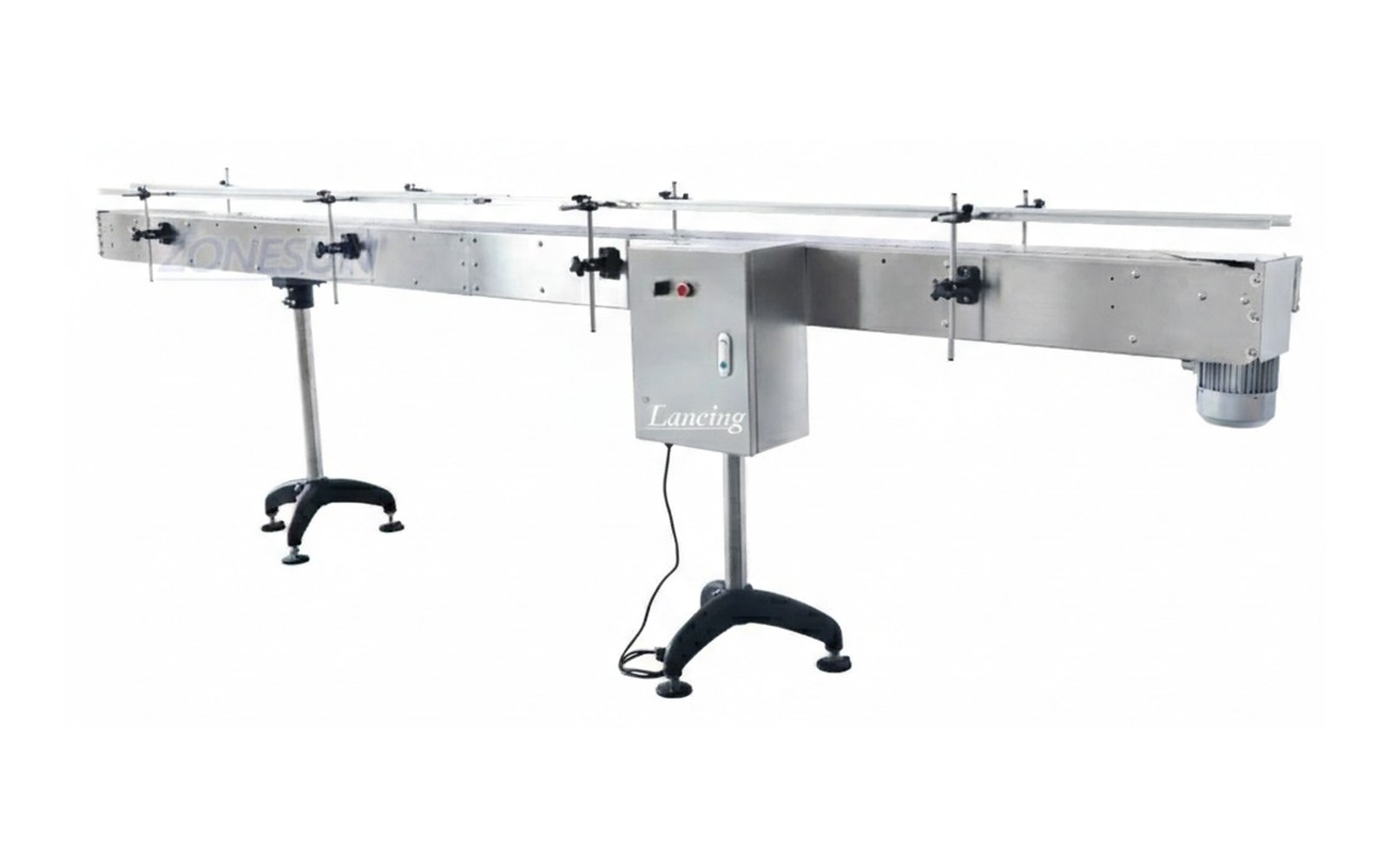
 General transfer
Belt conveyors
Clean, practical movement for cartons, bottles, tubs, trays and stable packaged goods.
Explore conveyor →Conveyor systems, accumulation tables and packaging-line integration for UK manufacturers, contract packers and production teams. Share your pack, output target and line layout to get practical advice on the conveyor route that fits your production line.
Choose a conveyor type based on your pack stability, transfer points, footprint, output target and the packaging machines on either side.
General transfer
Clean, practical movement for cartons, bottles, tubs, trays and stable packaged goods.
Explore conveyor →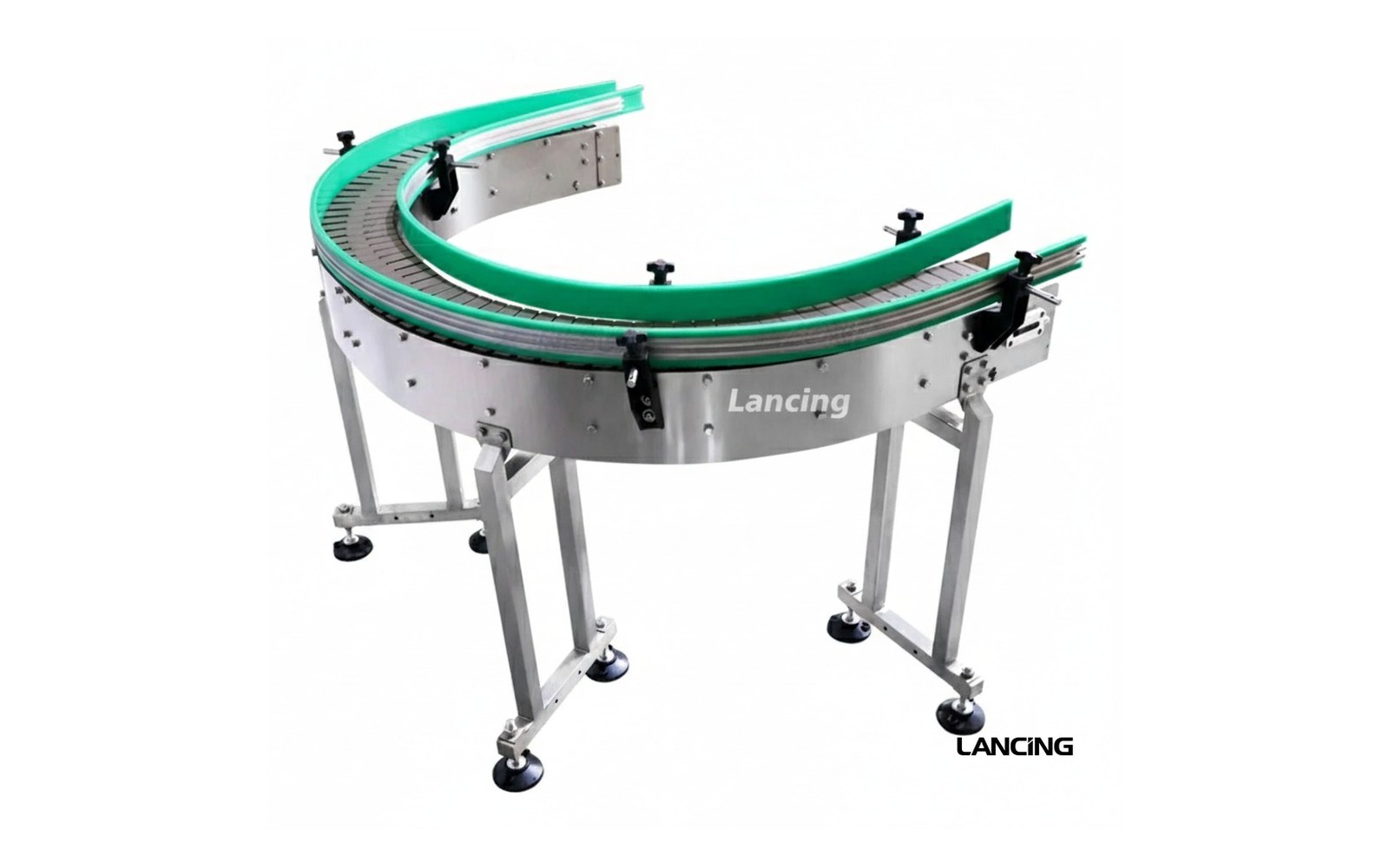 Bottle lines
Stable inline handling for bottles, jars and containers moving through filling, capping and labelling.
Explore conveyor →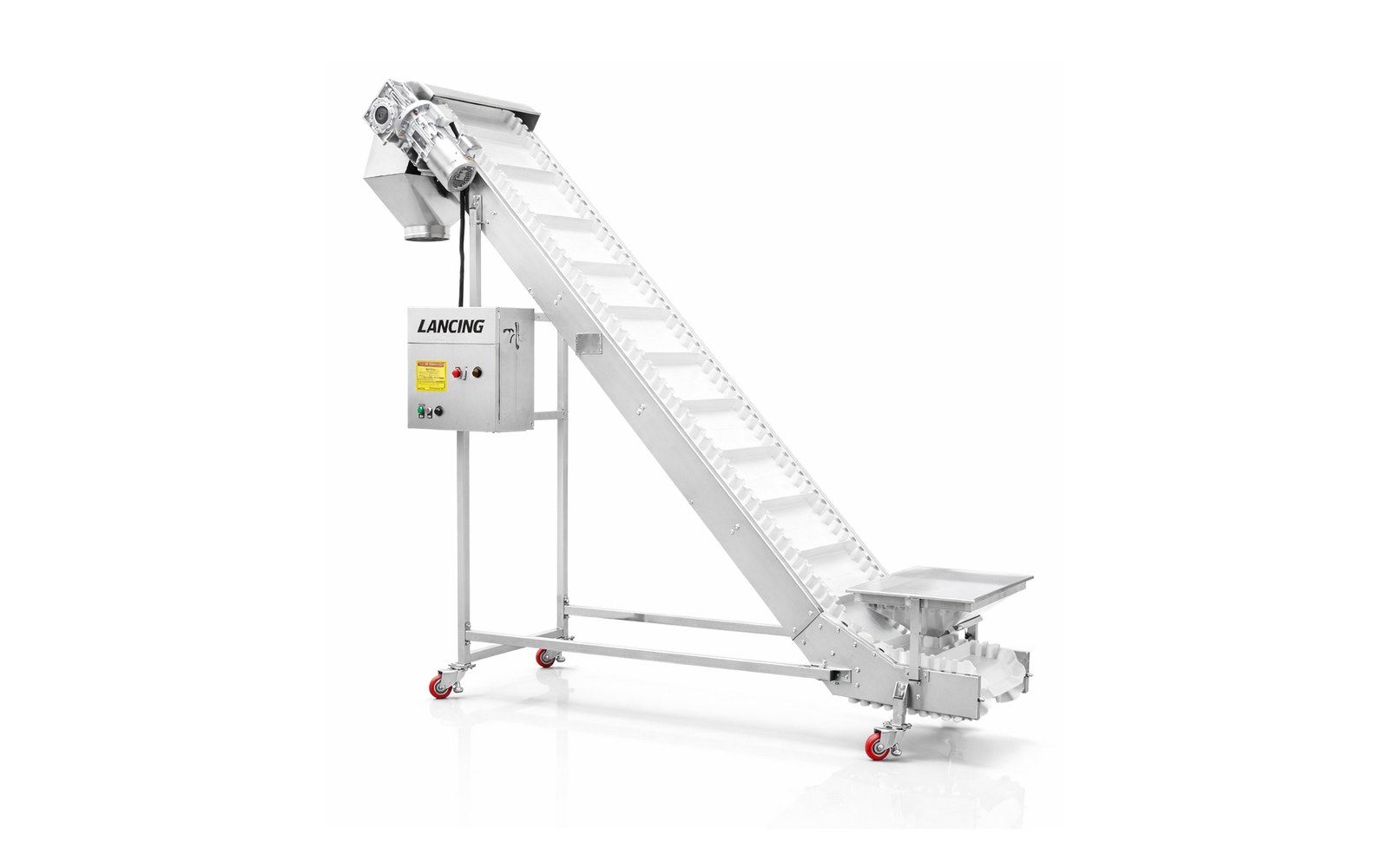 Elevation changes
Move packs between levels with belts, cleats, grip surfaces and layout support for safe transfer.
Explore conveyor →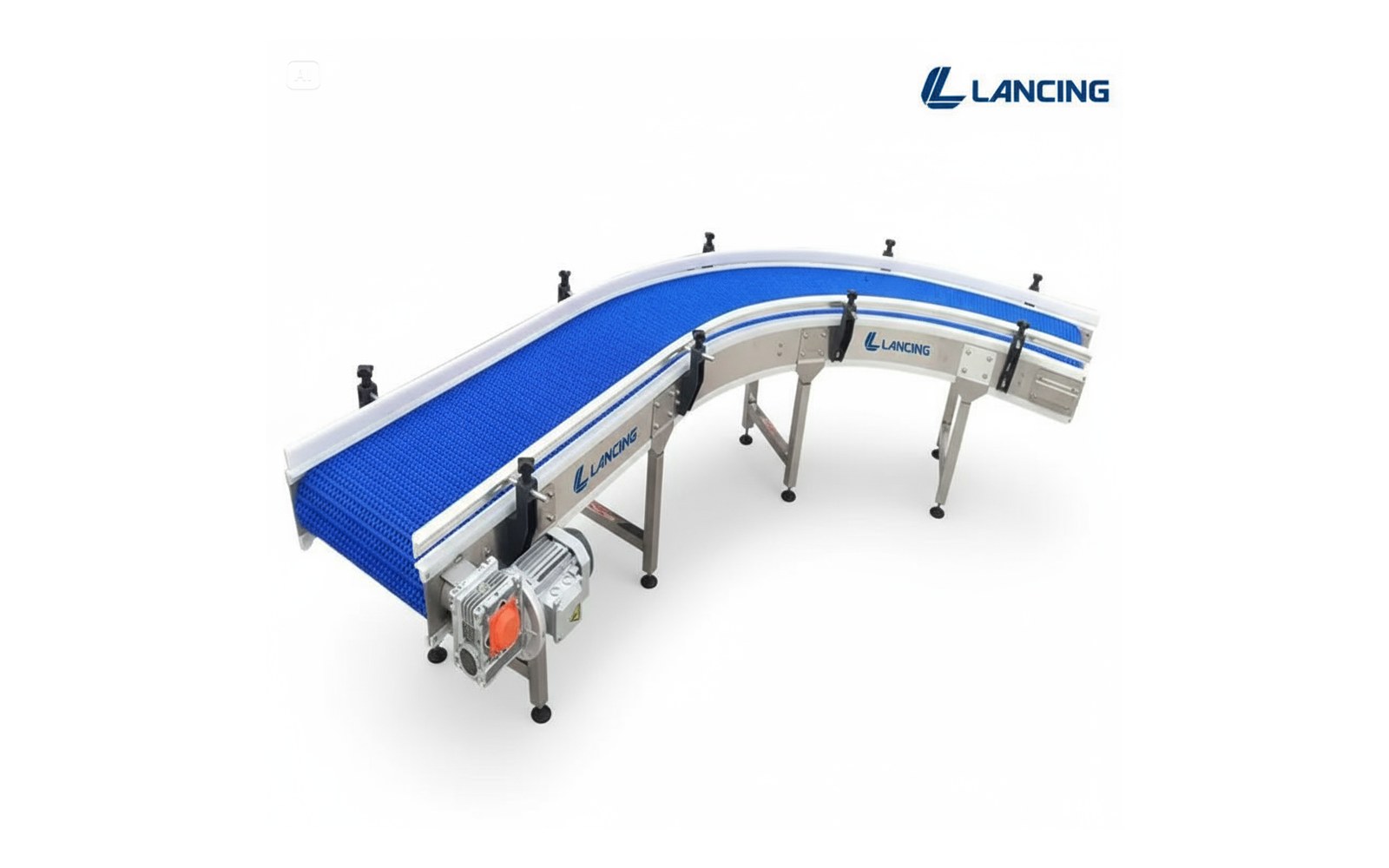 Space saving
Turn production flow through 45°, 90° or 180° routes while protecting pack spacing and orientation.
Explore conveyor →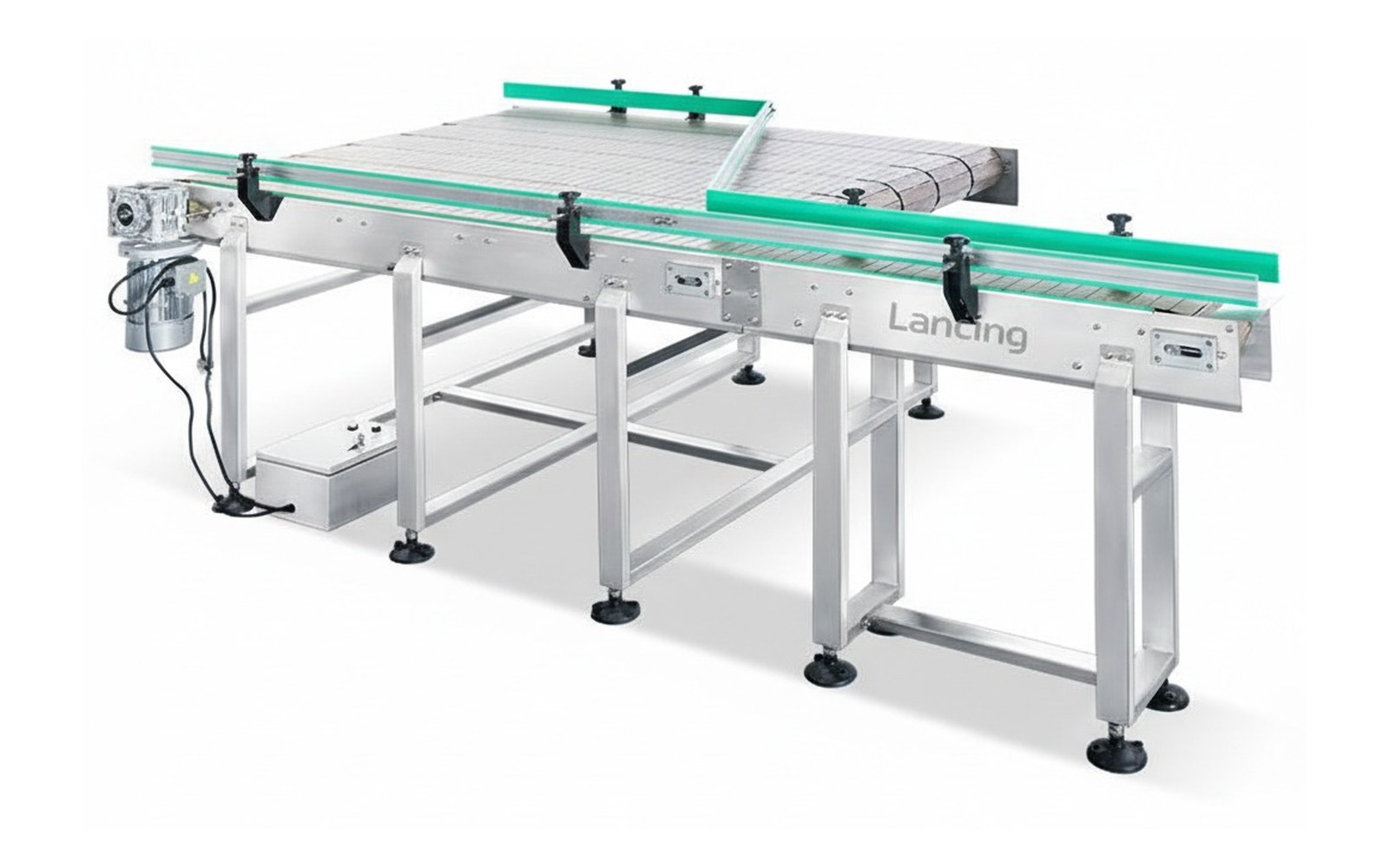 Machine interfaces
Connect fillers, cappers, labellers, coders, inspection systems and end-of-line packing equipment.
Explore conveyor →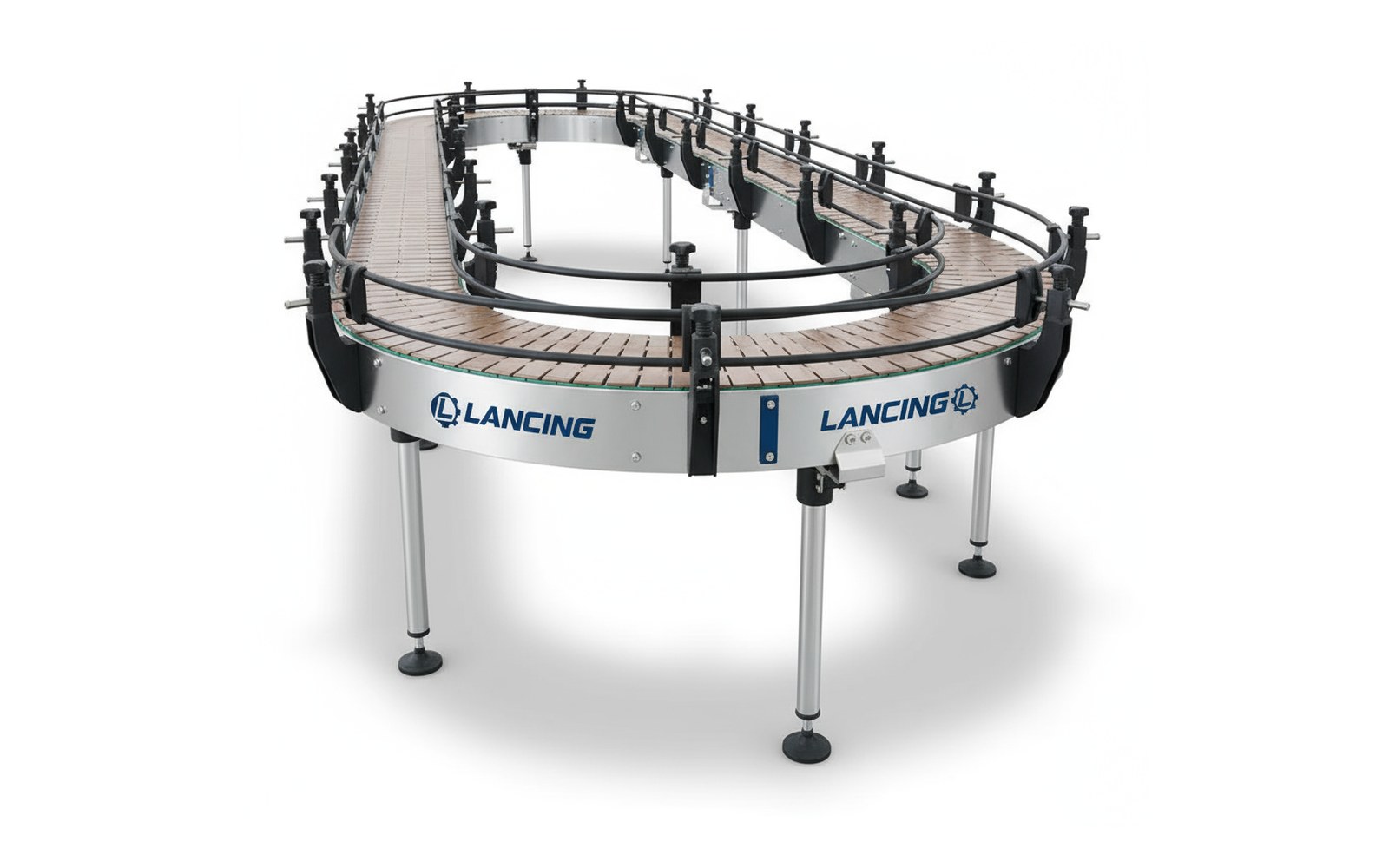 Buffering
Create controlled buffer zones where machines run at different speeds or short stoppages occur.
Explore conveyor →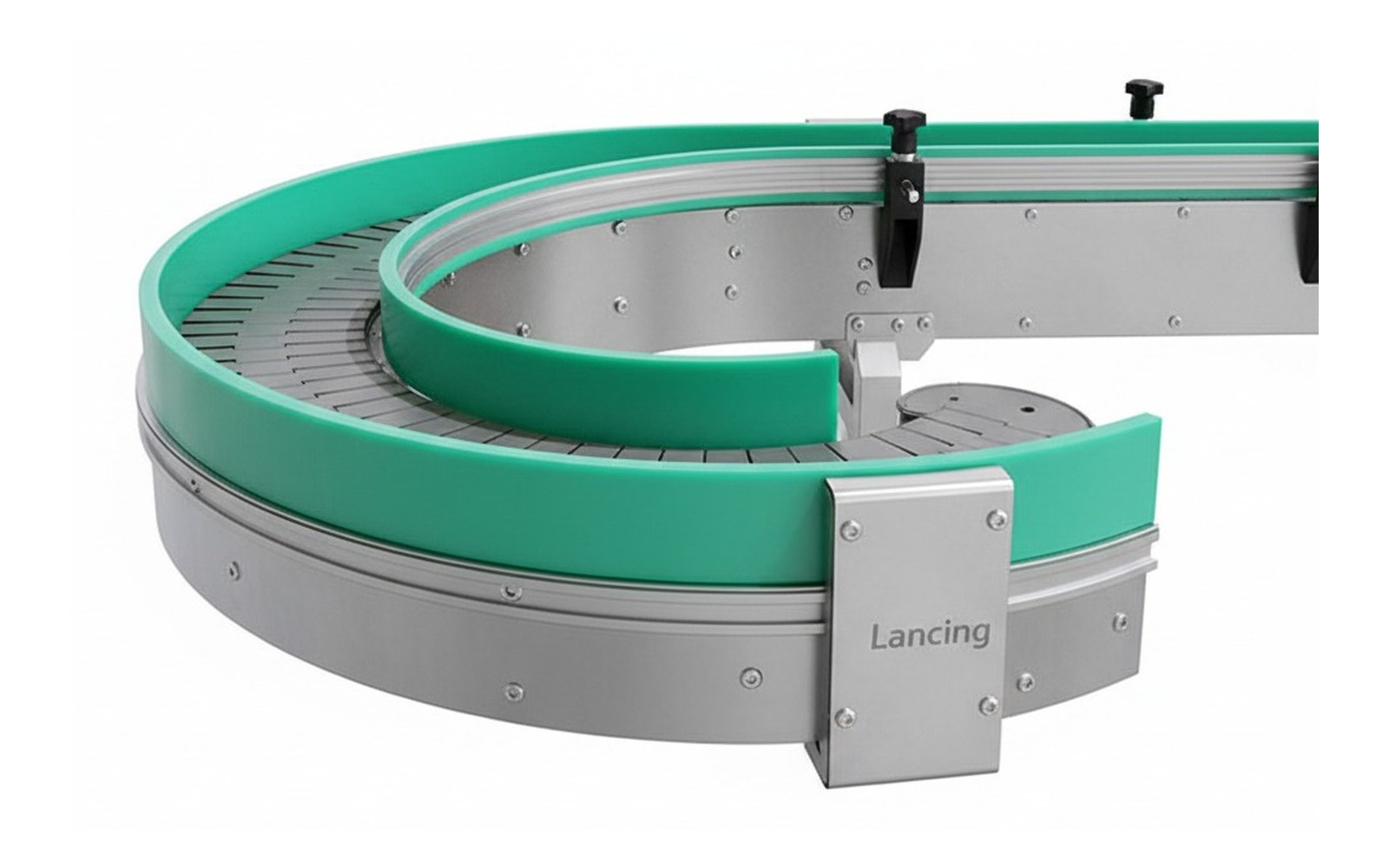 Feed or collect
Compact feed, collection and accumulation tables for bottles, jars, pots and other small containers.
Explore conveyor →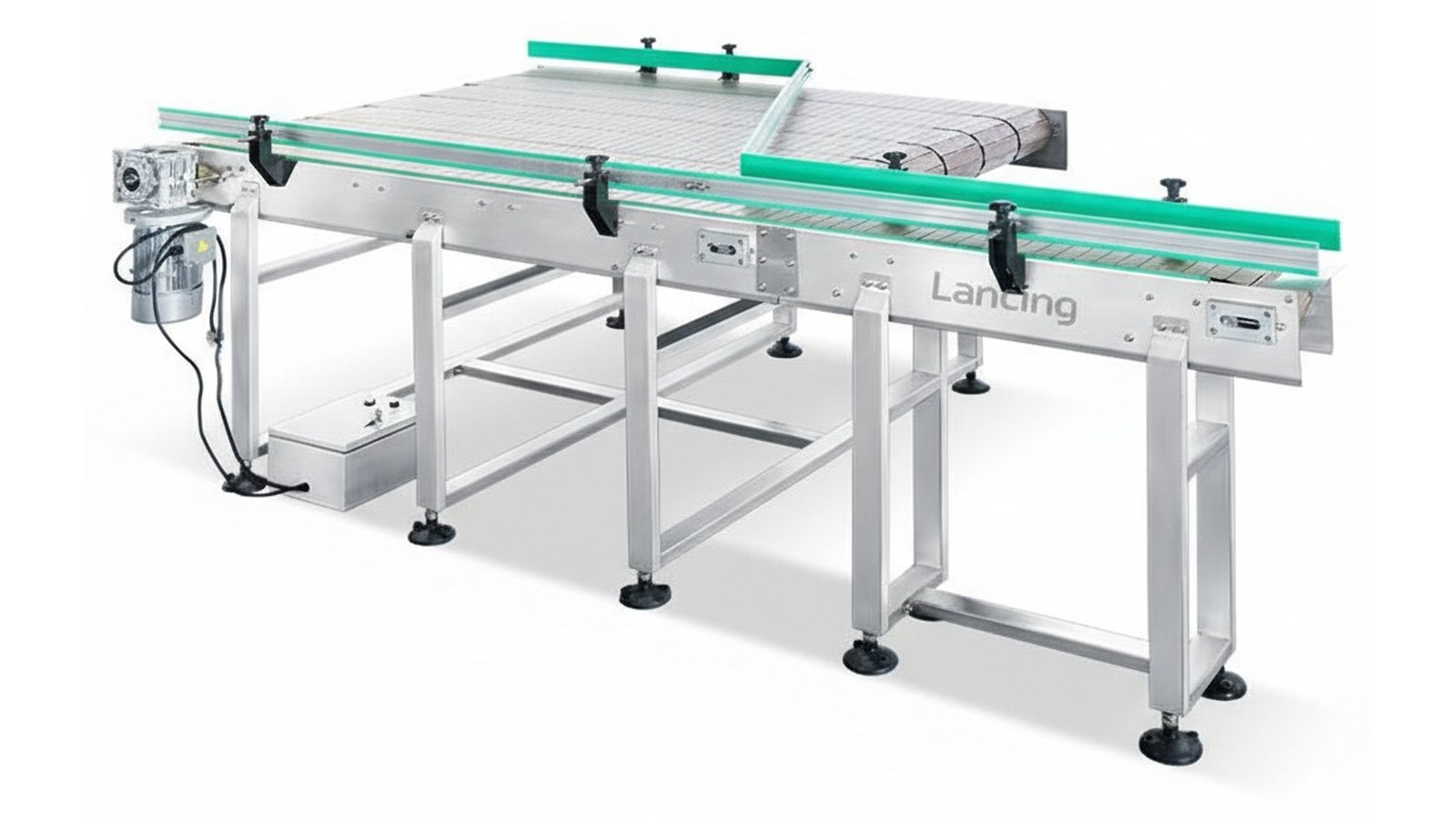 Line planning
Plan conveyors around machine heights, controls, access, guarding and future product changeovers.
View support →Conveyors decide whether a packaging line flows cleanly or stalls at transfer points. The best route depends on container stability, infeed height, belt type, guide rails, speed control, accumulation and how the conveyor interfaces with filling, capping, labelling, coding and packing equipment.
Start with the real pack and the real layout. Speed figures alone are not enough when bottles topple, cartons skew, pouches need spacing or machines need time to recover from short stops.
Measure height, width, base, filled weight, centre of gravity, fragility and whether the product is wet, dry, hot, cold or dusty.
Review where packs enter and leave fillers, cappers, labellers, coders, inspection systems and packing equipment.
Decide whether straight transfer is enough or whether accumulation, rotary tables or controlled buffering are needed.
Protect access for cleaning, format changeovers, loading, maintenance, guarding and safe day-to-day production.
Find conveyor options around the products you run: bottles, food and beverage packs, cosmetics, household products, chemicals and contract packing.
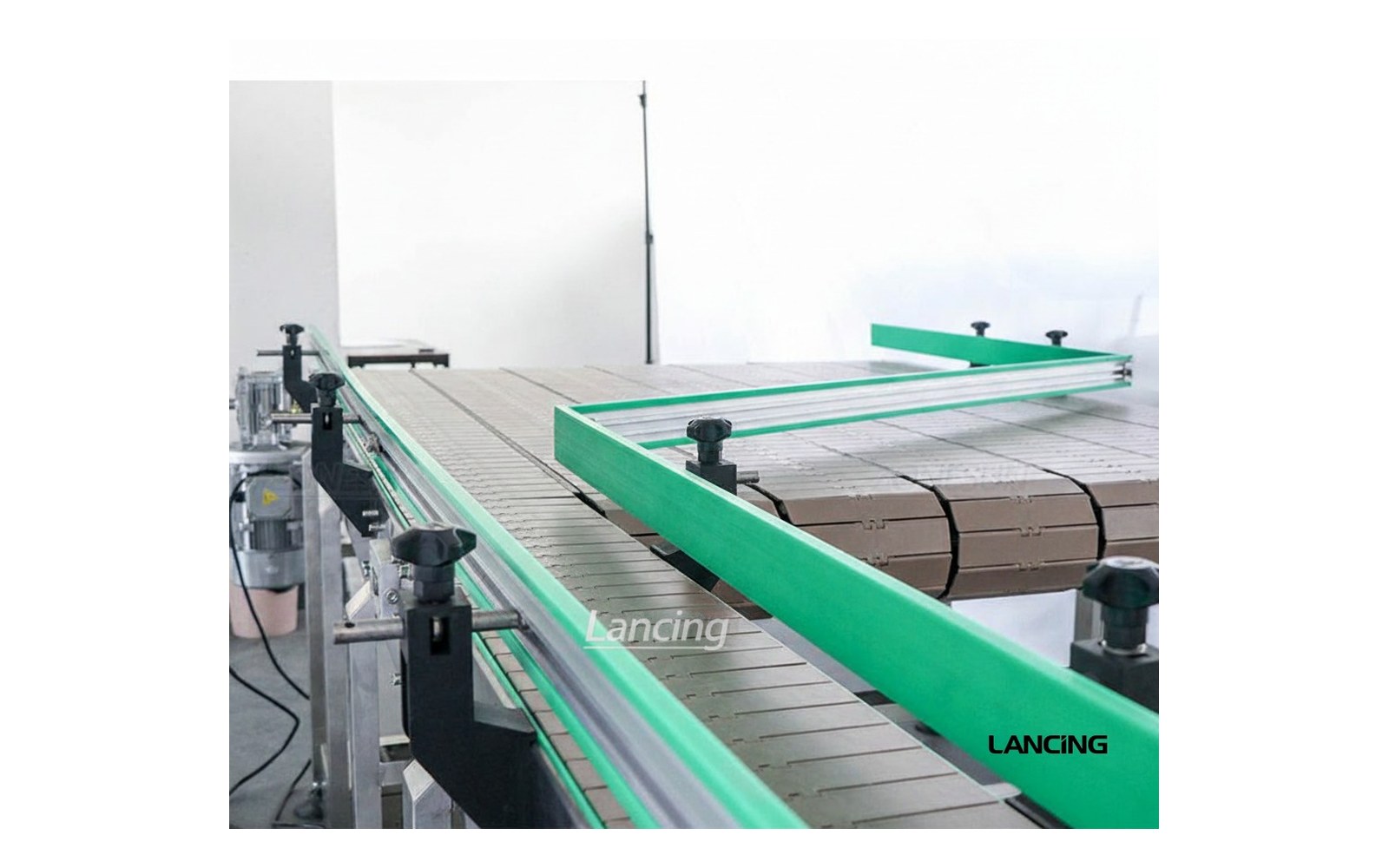 Application
Bottle handling routes for filling, capping, labelling, coding and accumulation.
View application →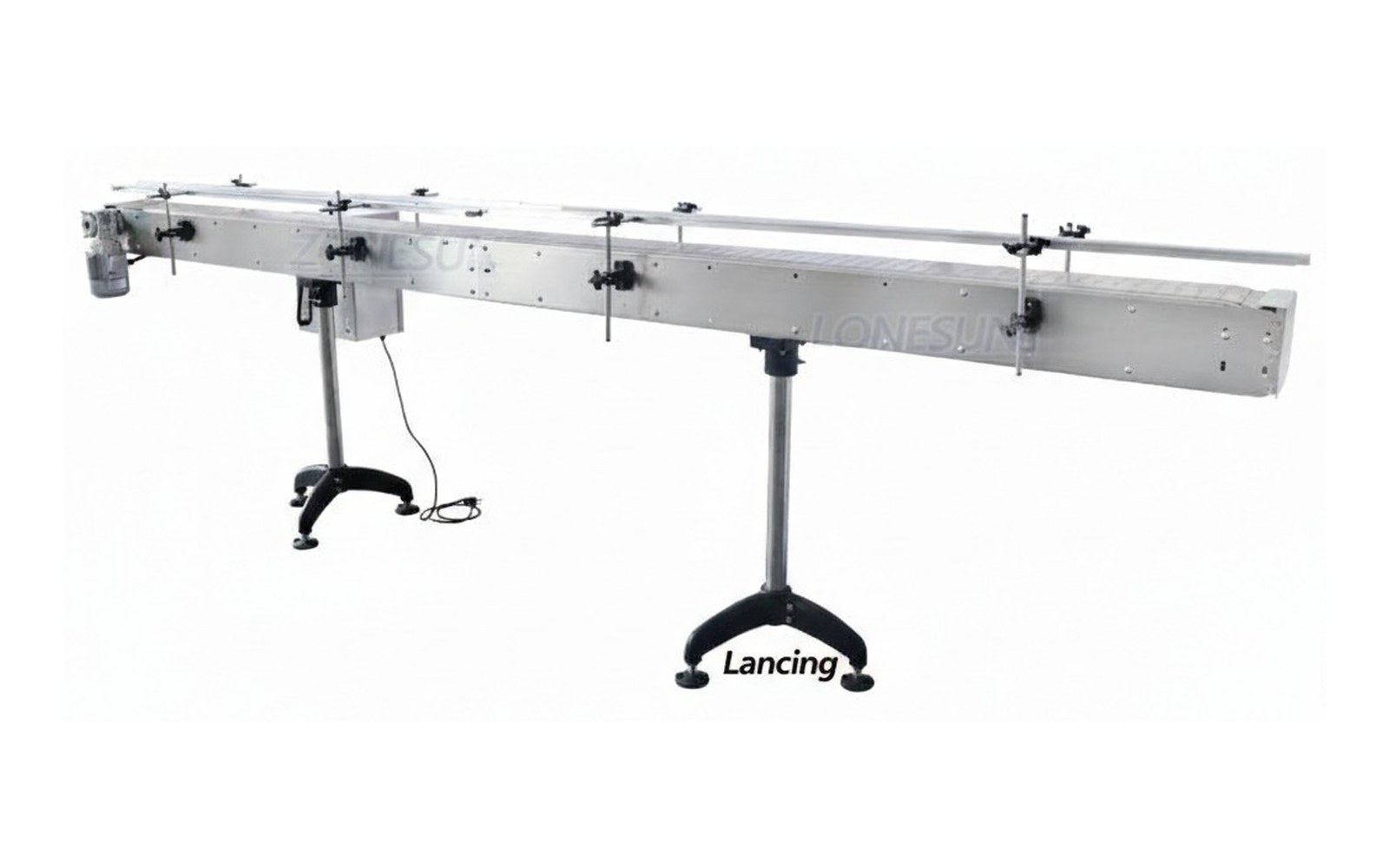 Application
Conveyors for jars, bottles, trays, tubs and packs where hygiene, cleaning and changeover matter.
View application →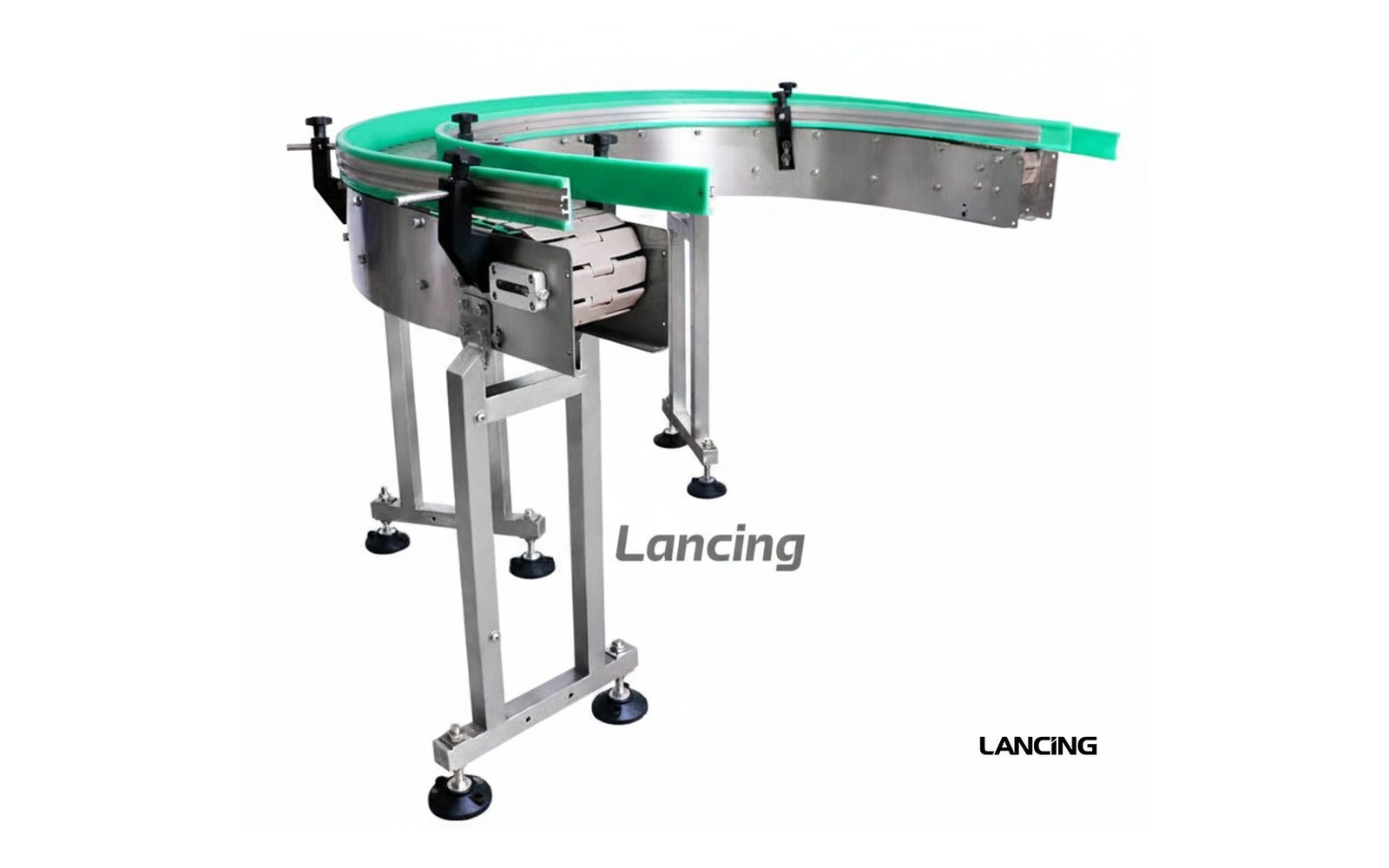 Application
Conveyor layouts for creams, lotions, pump bottles, jars, tubs and presentation-sensitive packs.
View application →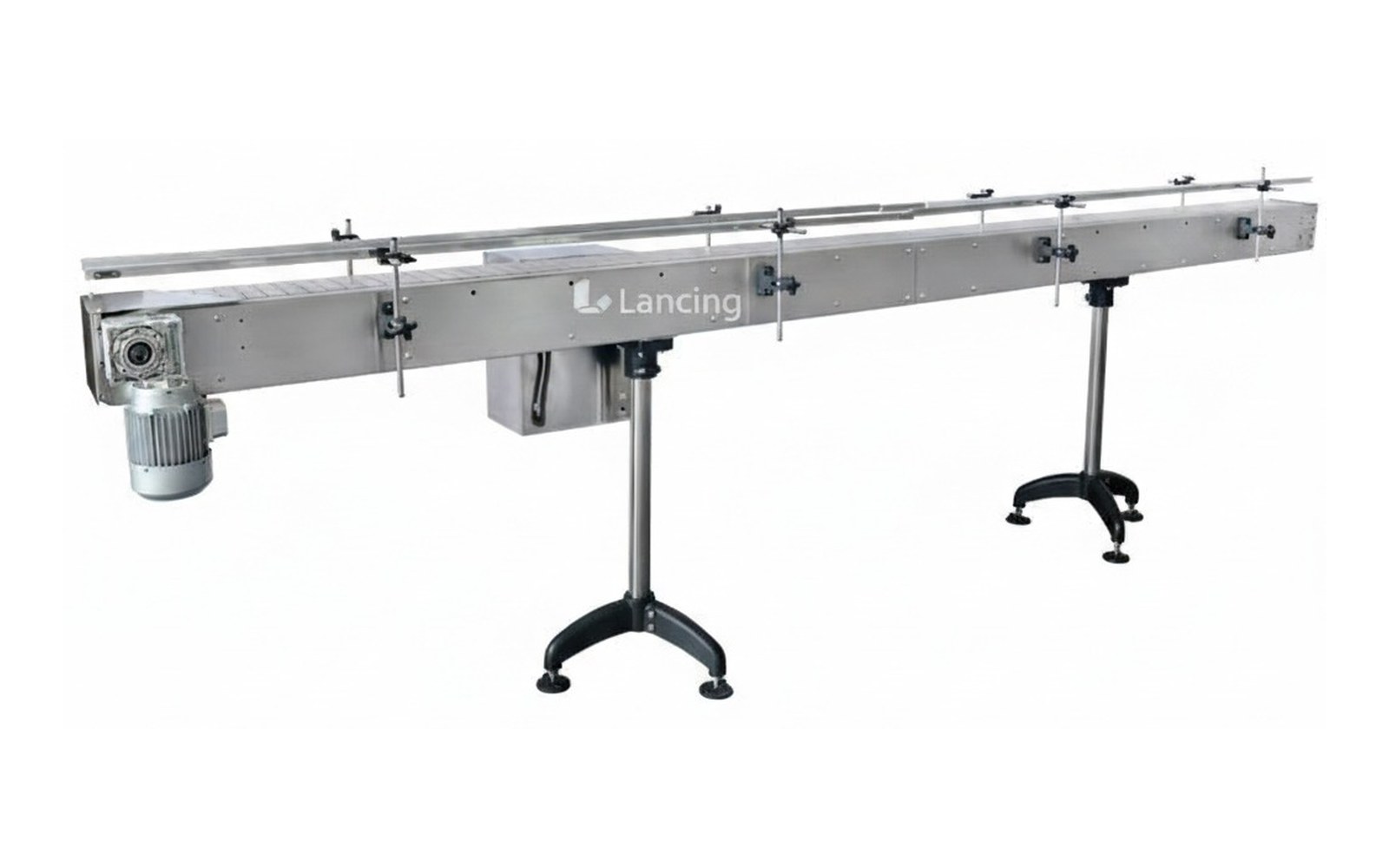 Application
Stable handling for trigger bottles, jerrycans, detergents, cleaning products and industrial liquids.
View application →Check your pack, layout and machine details before you ask for pricing, so your conveyor advice is based on the way your line actually runs.
 Guide
Guide
Check pack stability, transfers, widths, speeds, accumulation and integration before choosing a conveyor.
Read guide → Guide
Guide
Send the right pack and layout details first so your conveyor quote is clearer and more accurate.
Read guide →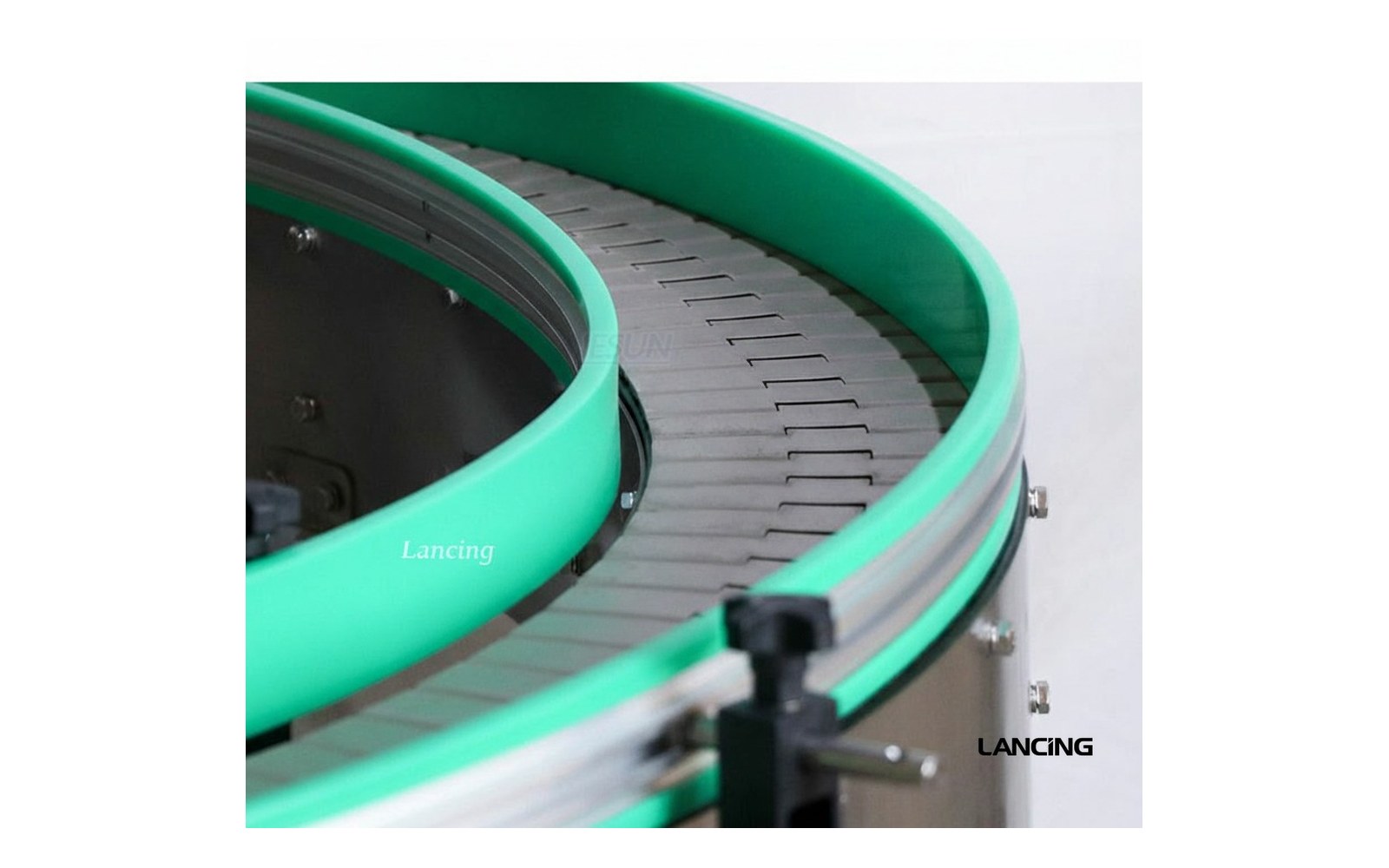 Guide
Guide
Plan footprint, operator access, machine interfaces, guarding, cleaning and future expansion.
Read guide →Clear answers for choosing conveyor options, planning a line layout and preparing quote details.
Send pack dimensions, filled weight, product type, target output, available space, infeed and outfeed heights, upstream and downstream machines, power requirements and any cleaning or guarding needs.
Yes. Conveyor systems are commonly specified with fillers, cappers, labellers, coders, inspection equipment, rotary tables and end-of-line packing equipment.
Bottle lines often use slat chain, modular belt, side-grip, infeed, outfeed and accumulation conveyors depending on bottle stability, spacing, speed and the connected machinery.
Accumulation is useful when machines do not run at exactly the same speed, when operators need time to reload materials or when a short stop should not shut down the whole line.
Yes. A practical layout normally starts with the available footprint, operator access, machine heights, product flow, cleaning needs, guarding and future line expansion.
Send your product details, line speed and available space to get advice on the conveyor route that fits your packaging line.
A packaging conveyor is not only a length of belt or chain between two machines. It controls how a real container, carton, tray or pouch is presented to filling, capping, labelling, coding, inspection and packing equipment. The useful starting point is therefore the product behaviour, the machine interfaces and the recovery required when one part of the line stops.
This website concentrates on packaging-project ownership: product stability, machine-to-machine transfer, accumulation, inspection and coding positions, operator access and the information needed to release a practical layout. For a broader catalogue covering warehouse, roller and general powered handling applications, use Powered Conveyors UK. For a complete multi-machine packaging project, Packaging Lines UK owns the wider line-integration brief.
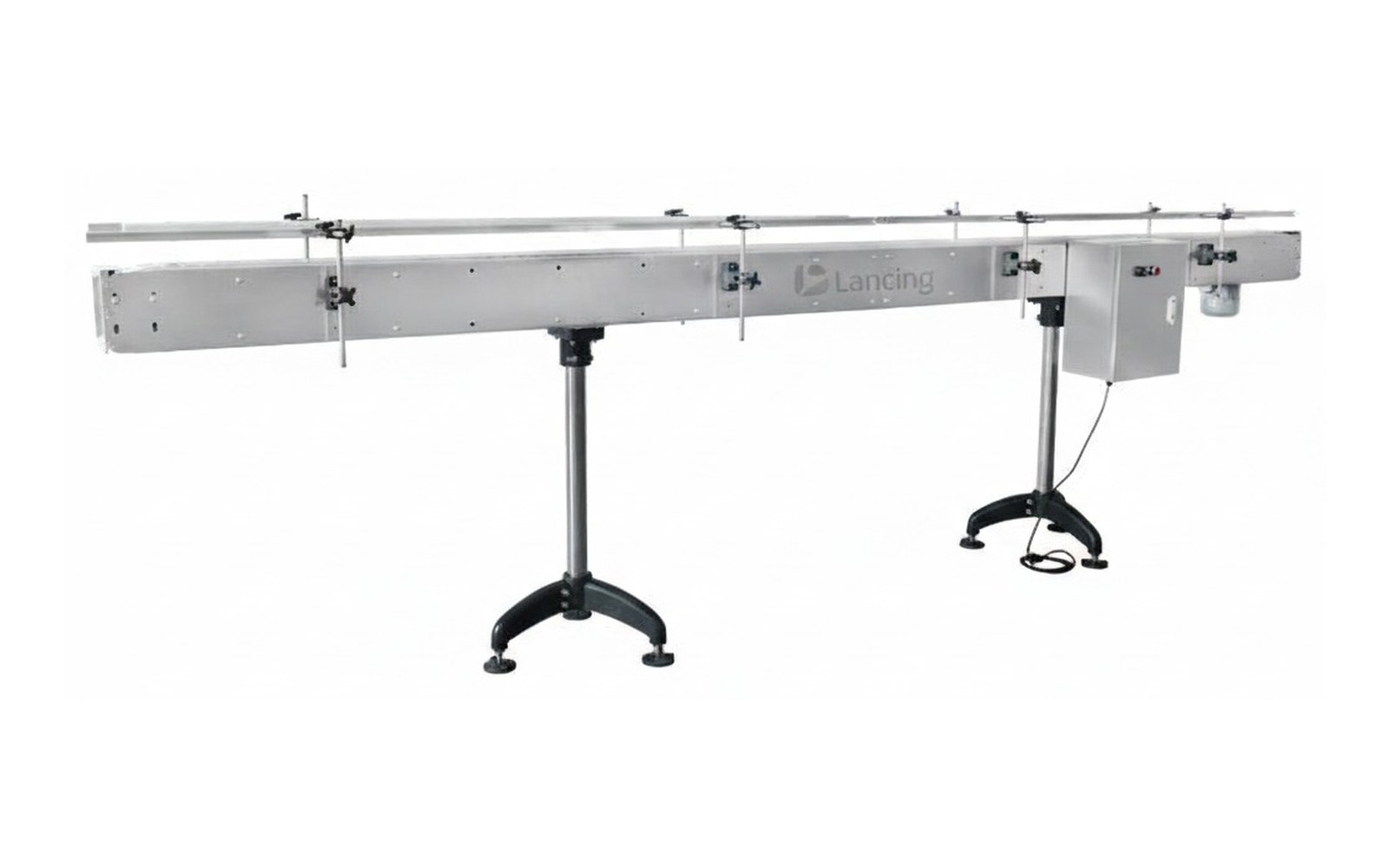
The same pack can need different conveyor technologies at different points. A carton may run well on a flat belt but require controlled spacing before a coder or checkweigher. A bottle line may use slat chain for guided transport, a side-grip section where its base must be exposed, and a rotary or low-pressure buffer before packing. Curves and inclines should be selected only after the product remains stable through the entry and discharge transitions.
Use the core conveyor-system pages to compare the mechanical route, then use the line-layout checklist to confirm heights, access, controls and guarding interfaces. Bottle projects should also be checked against the dedicated bottle-conveyor guidance.
Length, usable width, working height, load, line speed, drive arrangement, frame material, belt or slat format, side guides, controls and ingress protection all depend on the actual duty. Where a value is not already fixed by neighbouring machinery, it should be confirmed from samples, a measured layout and an agreed operating sequence rather than copied from an unrelated conveyor.
A useful product trial records stable running at the intended rate, start and stop behaviour, blocked-outfeed recovery, transfer quality, guide contact, changeover and access for cleaning. The result should be expressed as acceptance evidence: what product was tested, in what condition, at what agreed line rate and with which upstream and downstream conditions.
Use this as a shortlist. The final route still has to be checked against actual samples and the connected machines.
| Conveyor route | Useful starting point | Evidence to confirm |
|---|---|---|
| Flat or continuous belt | Cartons, trays, tubs, supported pouches and stable packs needing full-base support. | Product base, belt contact, tracking allowance, transfer gap, cleaning method and load. |
| Slat or tabletop chain | Guided bottles, jars and containers moving through filling, capping and labelling stages. | Container base, guide height, curve radius, chain width, transfer detail and acceptable back pressure. |
| Side-grip conveyor | A container needs side support while its base is exposed for coding, inspection or a level change. | Sidewall stiffness, safe contact area, gripping force, speed match and entry/exit stability. |
| Incline or curved section | The route must change height or direction without manual handling. | Product centre of gravity, angle or radius, belt grip, guide contact and both transition points. |
| Accumulation conveyor or rotary table | A buffer is needed between machines with different stop/start behaviour. | Required buffer time, line rate, usable density, product-contact limit and restart logic. |
Send one representative sample only when it covers the full range. Where formats differ in height, base, weight or stiffness, provide the smallest, largest, lightest, heaviest and least stable examples. Include photographs or a short video of the current bottleneck if the project is an upgrade.
The controls brief should identify whether the conveyor is independently operated or linked to neighbouring equipment. Record start permissives, run and fault signals, product-detection photoeyes, blocked-line response, variable-speed requirements and the responsible party for emergency-stop and guarding interfaces. Do not assume that machines from different suppliers use the same signal logic.
These answers define the evidence needed for a reliable specification and quotation.
Start with the buffer time the line must absorb and the agreed product rate. The theoretical minimum capacity is buffer time multiplied by line rate. The physical conveyor then needs enough usable area or lane length after allowing for product pitch, stability, contact pressure and the chosen accumulation method.
Consider side grip when the product base must remain clear for base coding or inspection, when a container must be transferred between levels, or when side support is more stable than base support. The container sidewall must be strong enough for controlled contact, so real samples are essential.
It should prove stable transfer, running and restart at the agreed conditions; acceptable guide and product contact; correct sensor detection; recovery from a blocked downstream machine; and practical changeover, cleaning and maintenance access. Record the exact samples and test conditions.
Packaging conveyor enquiries usually begin in one of three ways: a known conveyor type, a packaging-machine stage that needs connecting, or a production problem such as unstable transfers, insufficient buffer or difficult changeovers. Using the right starting point keeps the enquiry focused and avoids comparing equipment that solves a different duty.
The conveyor systems section compares belt, slat chain, incline, curved, infeed, outfeed, accumulation and rotary routes. The packaging conveyor solutions hub starts from the process stage or handling problem. The buyer resources hub covers more specific product, layout, changeover and project questions without changing the ownership of the principal conveyor pages.
| Starting point | Best first page | Evidence to collect next |
|---|---|---|
| You know the conveyor family | Compare conveyor systems | Product samples, usable width, route, working height, speed range, transfers and controls. |
| You know the packaging-machine stage | Browse packaging conveyor solutions | Machine entry and exit details, product pitch, stop states, signal responsibilities and access. |
| You are solving a specific handling problem | Use the buyer resources | The limiting product, photographs or video, measured footprint and a description of the failure or bottleneck. |
| You need a quotation | Prepare the quote checklist | Pack range, line rate, dimensions, environment, utilities, cleaning, guarding and acceptance requirements. |
These questions help route an early enquiry without assuming a conveyor specification too soon.
Start with the packaging-stage solution pages for filling, capping, labelling, coding, inspection or end-of-line handling. Then compare the conveyor family once the product, transfer and control duty are clear.
Containers and packs with similar nominal dimensions can differ in base shape, centre of gravity, stiffness, friction and decorated surfaces. Representative samples are needed to confirm guides, transfers, accumulation and restart behaviour.
The quickest route to a reliable conveyor brief is to identify the first uncontrolled condition: unstable product transfer, lost spacing, a blocked machine, inaccessible cleaning, an unclear safety boundary or an acceptance test that has not been defined.
For products that tip, skew, scuff or fail only during restart, begin with the troubleshooting guide and record the exact product state and line sequence. Where the design is still being selected, use a representative sample trial to prove support, guide contact, transfers and sensor detection before the layout is frozen.
Machine-to-machine projects also need a written controls schedule, a guarding boundary and a witnessed FAT/SAT plan. These documents turn broad expectations such as “run smoothly” into observable conditions that suppliers and production teams can test.
Use the packaging conveyor troubleshooting guide, sample-trial guide, speed and product-spacing guide, controls guide, guarding guide and FAT/SAT checklist as the project develops.
These answers separate conveyor movement from complete-line performance and show which evidence should be agreed before a design is released.
Conveyor speed is the movement of the belt, chain or product-support surface; good packaging-line output is the number of acceptable packs completed over a defined period. Good output also depends on product pitch, machine cycles, rejects, stops, buffer recovery and the ability to restart without tipping or double-feeding. Specify both the required good output and the operating states that must be demonstrated.
A packaging conveyor can run normally yet fail when a downstream machine restarts, an accumulation zone releases or operators replenish consumables. The slowest recovery condition reveals surge pressure, lost spacing, unstable transfers and conflicting signals. Describe the longest expected short stop, the upstream response and the required return to normal production so the supplier can design and test the complete sequence.
Include future formats when their dimensions, base shape, weight, stiffness or closure could alter the conveyor envelope, guide positions, sensors, transfers or guarding. A vague request for “future flexibility” is not enough. Provide the known candidate formats or a controlled design range, then state which future capability must be included now and which can be left as a documented upgrade.
A remote review is practical when the product range, current line photographs, measured layout, machine drawings, working heights, direction of flow and operating problem are clear. A site survey is more likely to be needed where datums are uncertain, access is restricted, several suppliers share interfaces or the failure cannot be reproduced from the supplied evidence. Start with labelled photographs and one known dimension in every view.
Three recurring packaging-line risks sit across the mechanical conveyor, controls and production teams: whether every pack is detected, whether a rejected pack is physically confirmed off the good route, and whether a critical component can be replaced without prolonged uncertainty. These decisions should be specified with the product and machine interfaces rather than left until site commissioning.
Define the target, product variation, mounting datum, line state and fault response for photoeyes and product-detection signals.
Read the sensor guide →Connect the inspection result to the correct physical pack, prove its removal and define the failed-reject response.
Plan the reject sequence →Build the spares schedule from the released machine, production consequence, safe access and return-to-service evidence.
Prepare the support plan →Some packaging operations need the product to stop at a station, combine with another stream or remain supported inside a carrier. These routes should be planned with the complete machine sequence and representative products.
Move and hold products at defined stations for filling, coding, inspection, assembly or packing operations.
Plan the indexing sequence →Combine, divide or restore single-file product flow before packaging machines and inspection stations.
Review lane control →Support shaped or unstable containers through several packaging operations and a controlled carrier-return route.
Compare carrier handling →