Where this helps
- Sauces, oils and drinks
- Cosmetics and personal care liquids
- Household and chemical products
- Bottle and jar filling lines
Move filled and unfilled liquid containers through filling, capping, labelling and packing with a route designed around weight and stability.
A container that is light before filling may become much heavier and more stable afterwards. The conveyor route should account for both stages of the process.
Spills, cleaning access, cap fitting, labelling and buffer space are also important for many liquid product lines.
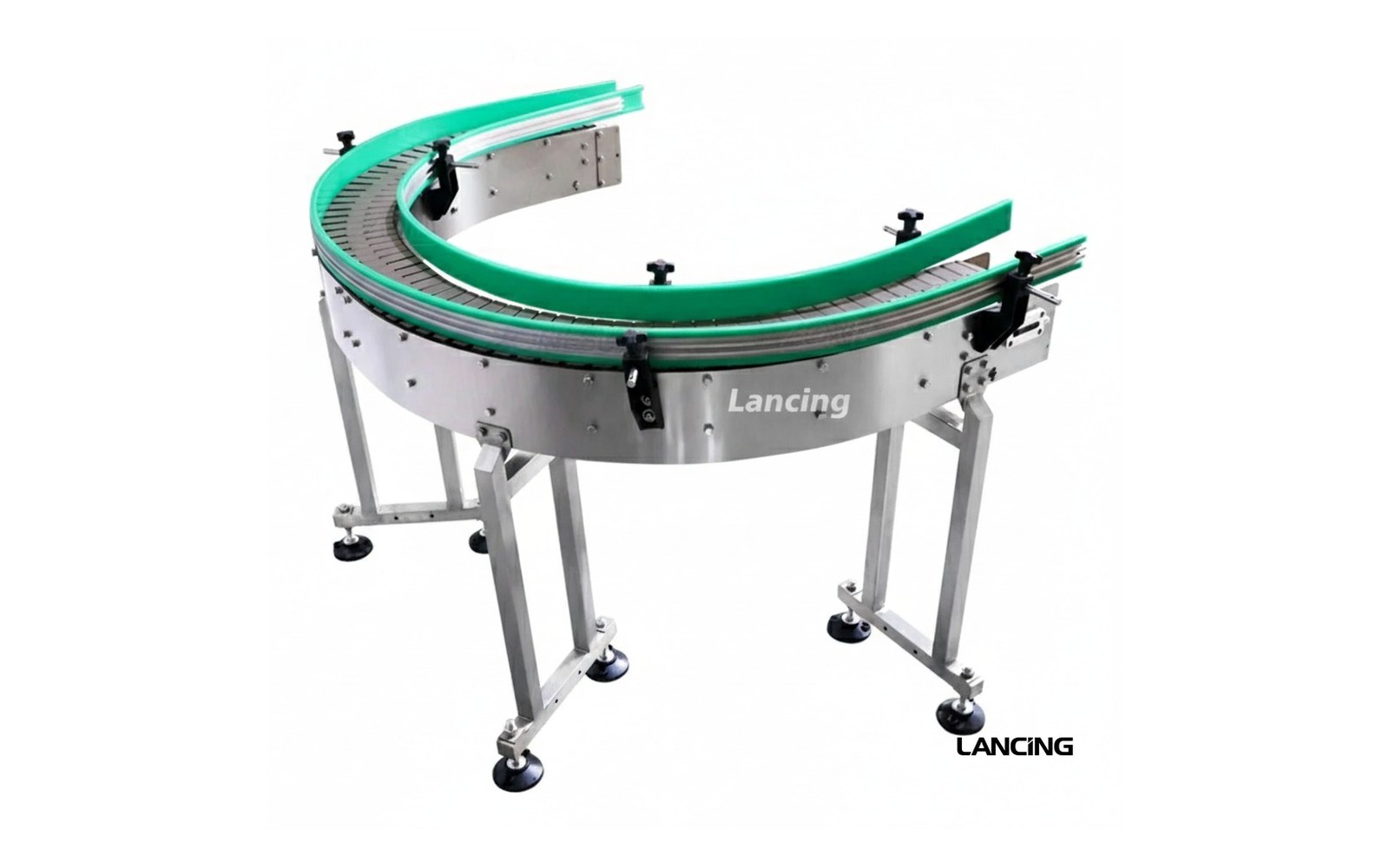
Small details at planning stage can prevent unstable transfers, awkward access and output issues later.
Confirm size, weight, base shape and stability before choosing the conveyor type.
Match conveyor height, speed and direction to the equipment on either side.
Keep room for loading, cleaning, adjustment, inspection and safe operation.
Decide whether the line needs accumulation to protect output during short stops.
These related pages help narrow down the conveyor type, layout and quote details.
Continue with practical conveyor information for your enquiry.
Open page →Continue with practical conveyor information for your enquiry.
Open page →Continue with practical conveyor information for your enquiry.
Open page →Clear answers for buyers comparing conveyor options and preparing an enquiry.
The product changes the container weight, stability and sometimes cleaning requirements after filling.
They are often considered for rigid bottles and jars where stable support and guide rails are needed.
Yes, but the accumulation method should suit filled container weight and stability.
Get practical conveyor advice based on the way your product needs to move through the line.