Where this conveyor route helps
- Round, oval and shaped bottles
- Jars and rigid containers
- Filling and capping lines
- Labelling, coding and inspection feed routes
Move bottles and jars through packaging machines with stable handling, controlled transfers and enough buffer for practical production.
Bottle lines need more than a straight conveyor. Stability, side guides, accumulation, transfers and changeover settings all affect how reliably containers move through the line.
For the clearest advice, share the pack format, production speed, available floor space and the machines before and after the conveyor. That makes it easier to confirm whether a straight, curved, incline, infeed, outfeed or accumulation route is the right starting point.
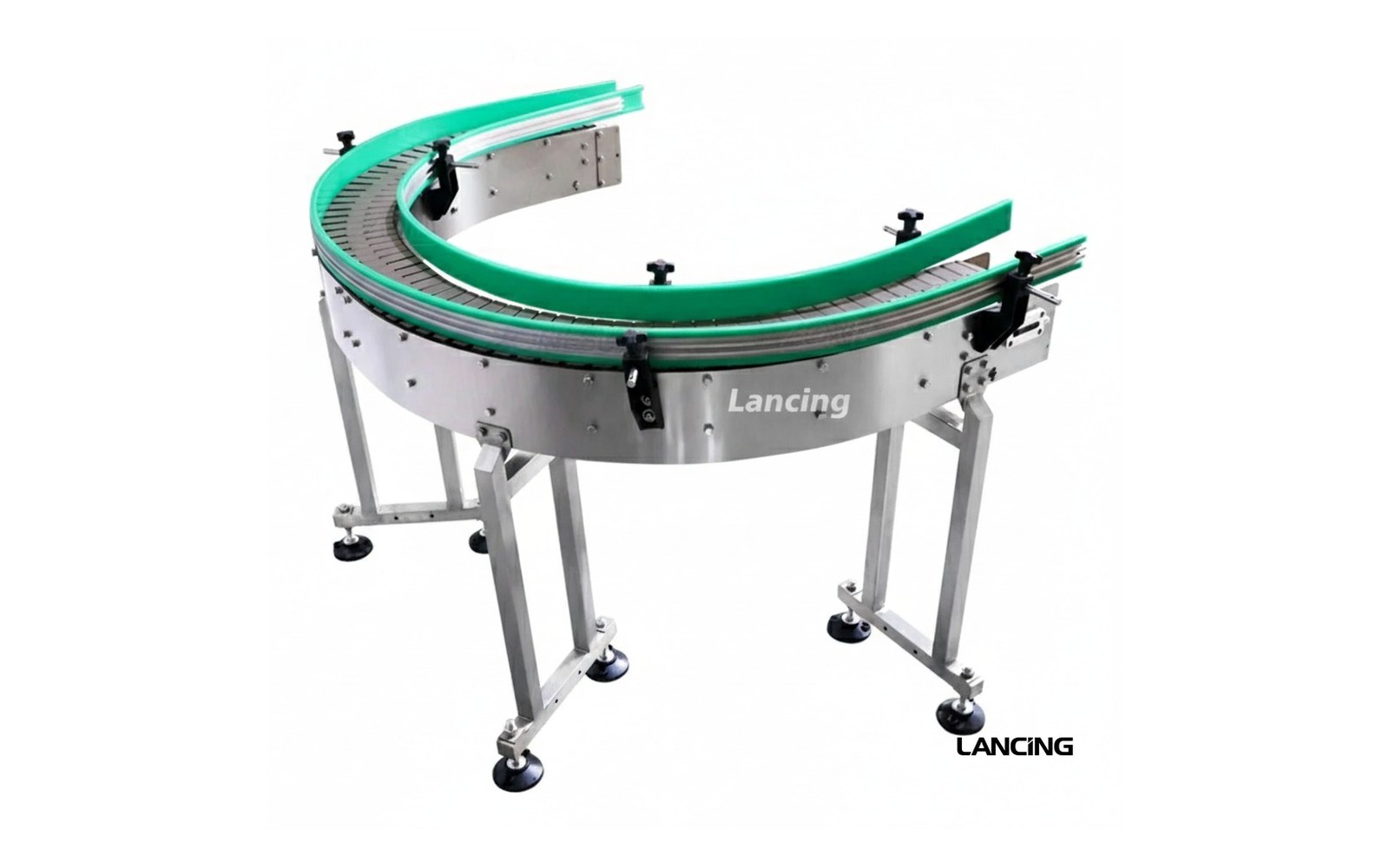
Small details at the planning stage can prevent jams, unstable transfers and operator access problems once the line is running.
Confirm size, weight, base shape and stability before choosing the conveyor route.
Match conveyor height, speed and transfer direction to the equipment on either side.
Keep access for loading, cleaning, adjustment, inspection and safe day-to-day use.
Decide whether the line needs accumulation to protect output during short stops.
These pages help narrow down the conveyor type, application and quote details.
Continue with practical conveyor information for this part of your line.
Open page →Continue with practical conveyor information for this part of your line.
Open page →Continue with practical conveyor information for this part of your line.
Open page →Clear answers for buyers comparing conveyor options and preparing an enquiry.
Slat chain conveyors are often considered for bottle lines because they offer stable support and can be combined with guide rails, curves and accumulation sections.
Often yes, but the design should allow sensible guide rail adjustment, transfer clearance and enough support for the smallest and tallest containers.
Accumulation helps when fillers, cappers, labellers and operators do not all run at exactly the same rate or when brief stoppages need to be absorbed.
Get practical conveyor advice based on the way your product actually needs to move through the line.