Where this helps
- Pouches and sachets
- Flexible finished packs
- Coding and inspection areas
- Manual packing lines
Move flexible packs through coding, inspection and packing with a conveyor surface that supports the product properly.
Pouches and sachets can behave differently from rigid packs. Belt support, transfer points and product spacing should be chosen around the pack size, weight and fill level.
The route should also allow space for inspection, coding or manual packing if those steps are part of the process.
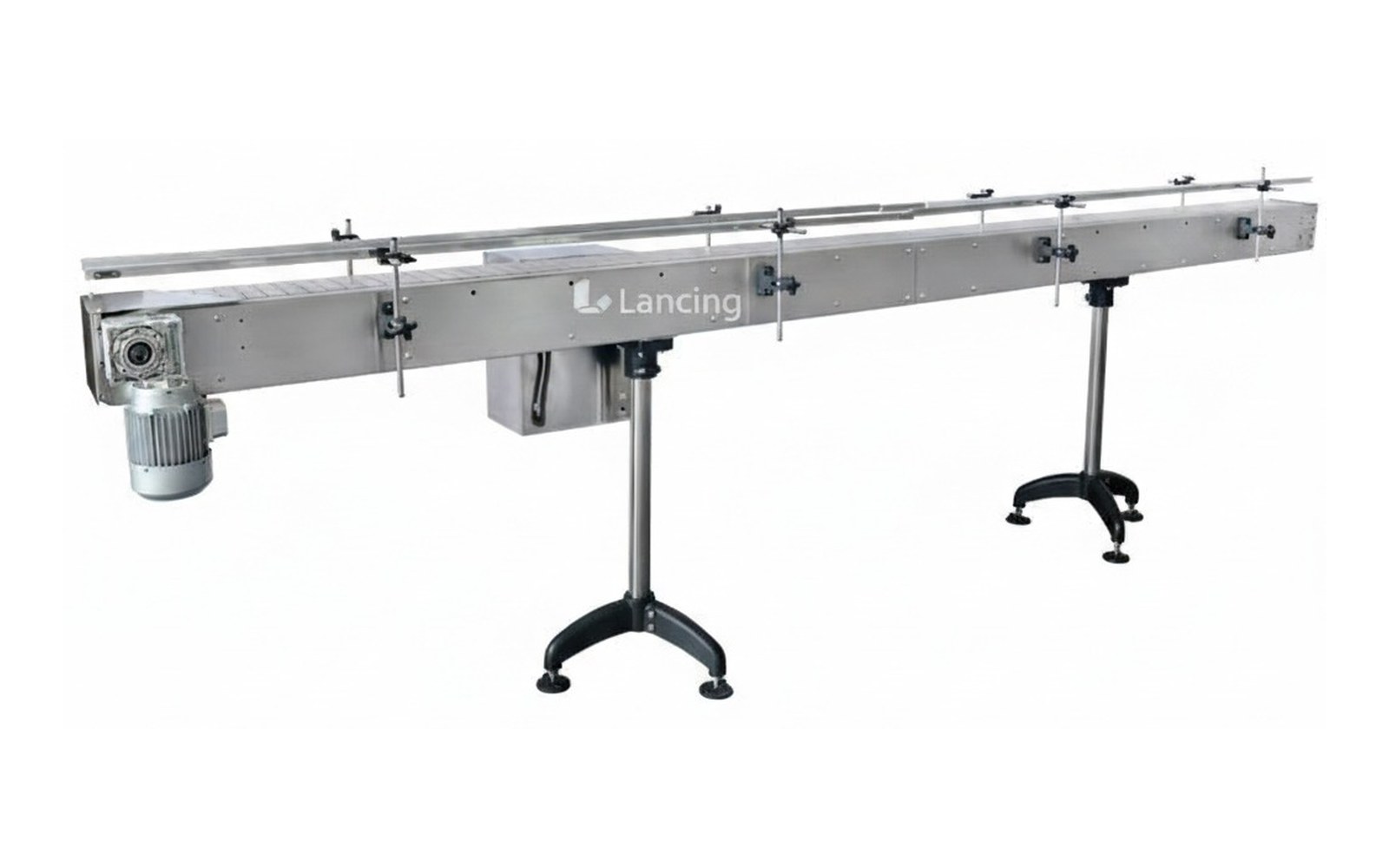
Small details at planning stage can prevent unstable transfers, awkward access and output issues later.
Confirm size, weight, base shape and stability before choosing the conveyor type.
Match conveyor height, speed and direction to the equipment on either side.
Keep room for loading, cleaning, adjustment, inspection and safe operation.
Decide whether the line needs accumulation to protect output during short stops.
These related pages help narrow down the conveyor type, layout and quote details.
Continue with practical conveyor information for your enquiry.
Open page →Continue with practical conveyor information for your enquiry.
Open page →Continue with practical conveyor information for your enquiry.
Open page →Clear answers for buyers comparing conveyor options and preparing an enquiry.
Yes, if the conveyor surface, width and transfer points support the pack properly.
They may be useful for alignment, but the pack shape and flexibility need to be considered.
Pack size, fill weight, flexibility, line speed and the required inspection or packing process are key details.
Get practical conveyor advice based on the way your product needs to move through the line.