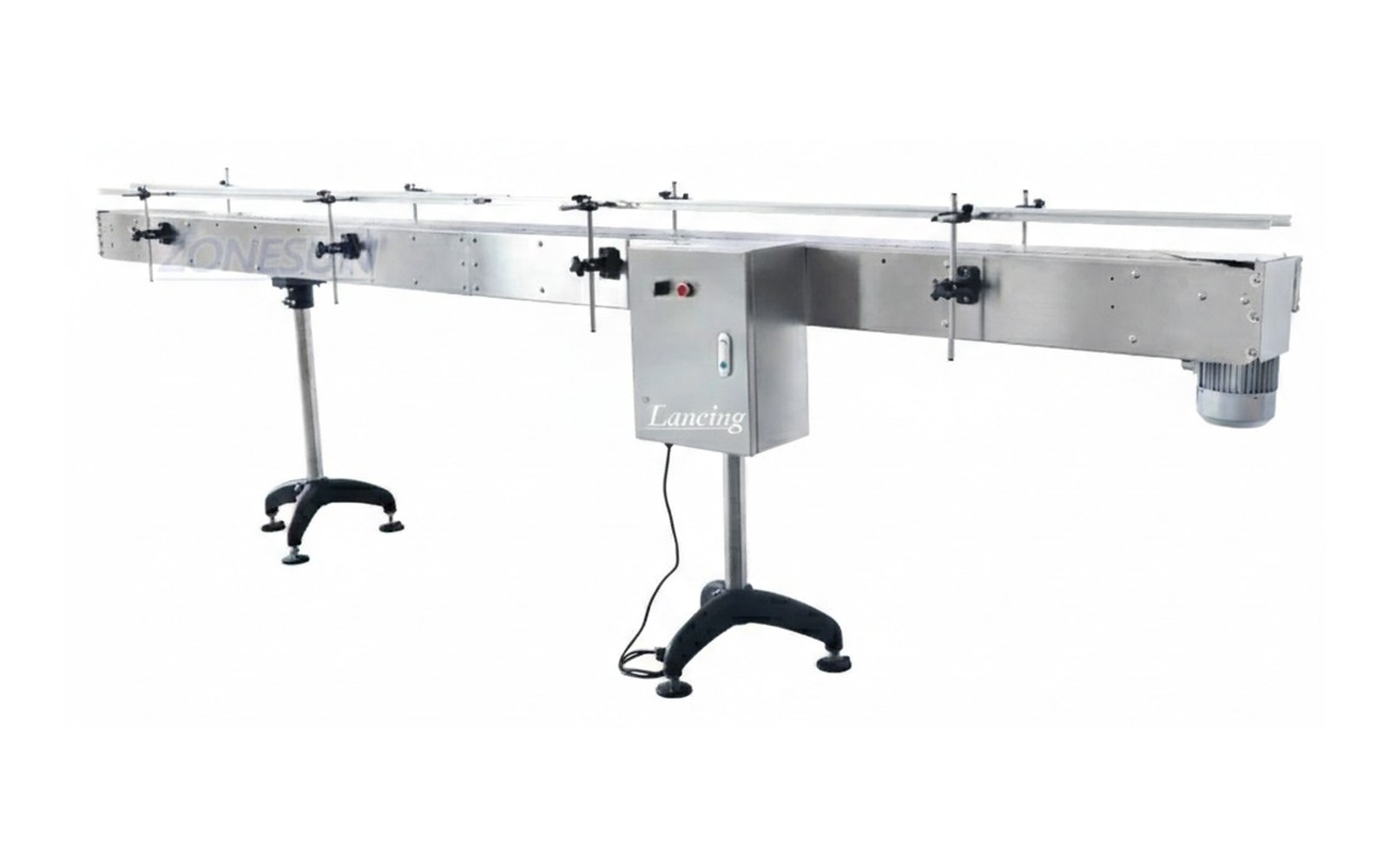
 General transfer
Belt conveyors
Clean, practical movement for cartons, bottles, tubs, trays and stable packaged goods.
Explore →Belt conveyors are a practical route for moving stable packaged goods between process stages, inspection, coding, labelling and end-of-line packing. The correct design starts with the pack base, weight, speed, transfer points and cleaning requirements.
Belt conveyors are a practical route for moving stable packaged goods between process stages, inspection, coding, labelling and end-of-line packing. The correct design starts with the pack base, weight, speed, transfer points and cleaning requirements.
A conveyor quote is more accurate when pack samples, layout drawings and target output are supplied with the enquiry.
Conveyor selection works best when transfer, accumulation and machine interfaces are planned together.
General transfer
Clean, practical movement for cartons, bottles, tubs, trays and stable packaged goods.
Explore →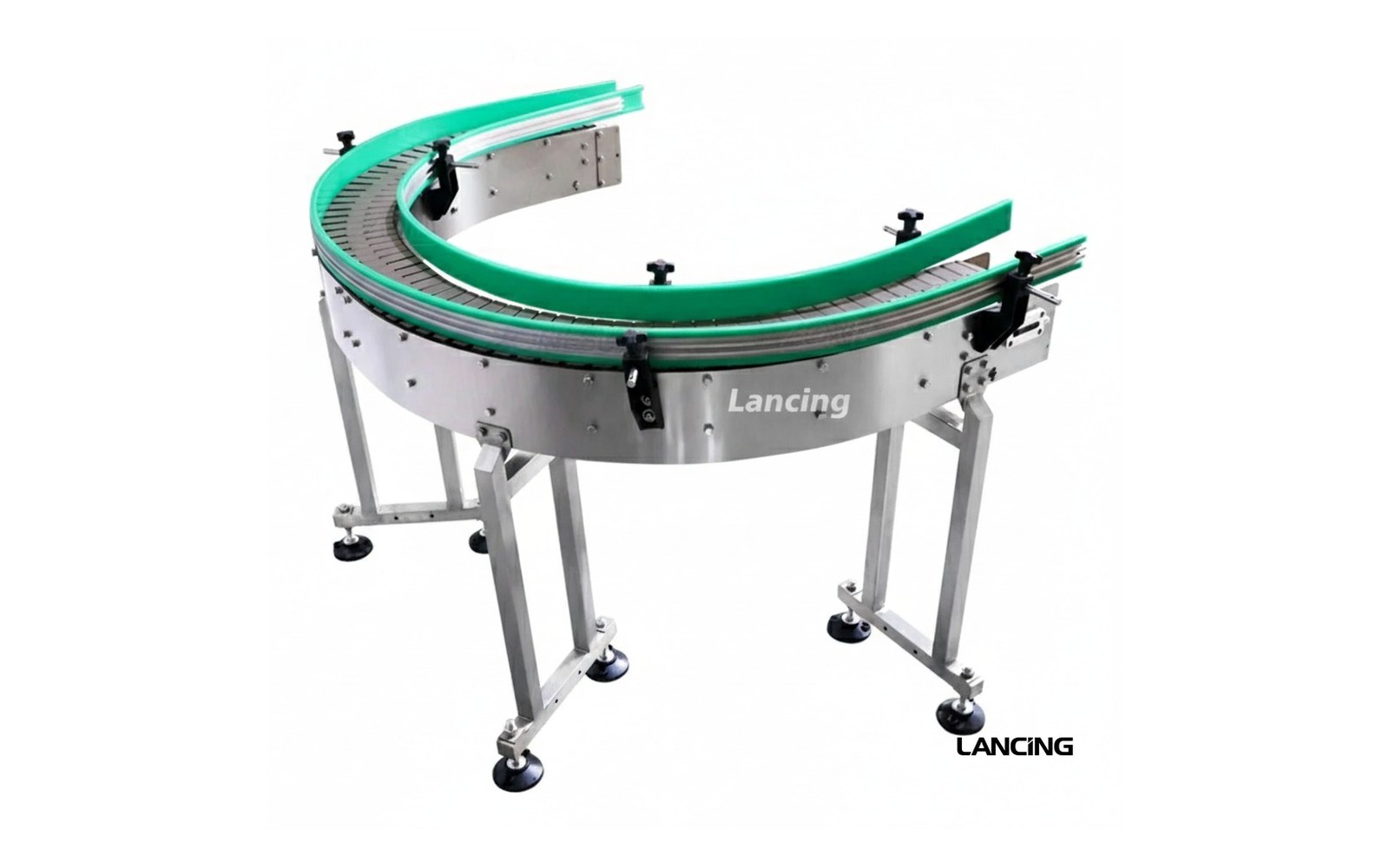 Bottle lines
Stable inline handling for bottles, jars and containers moving through filling, capping and labelling.
Explore →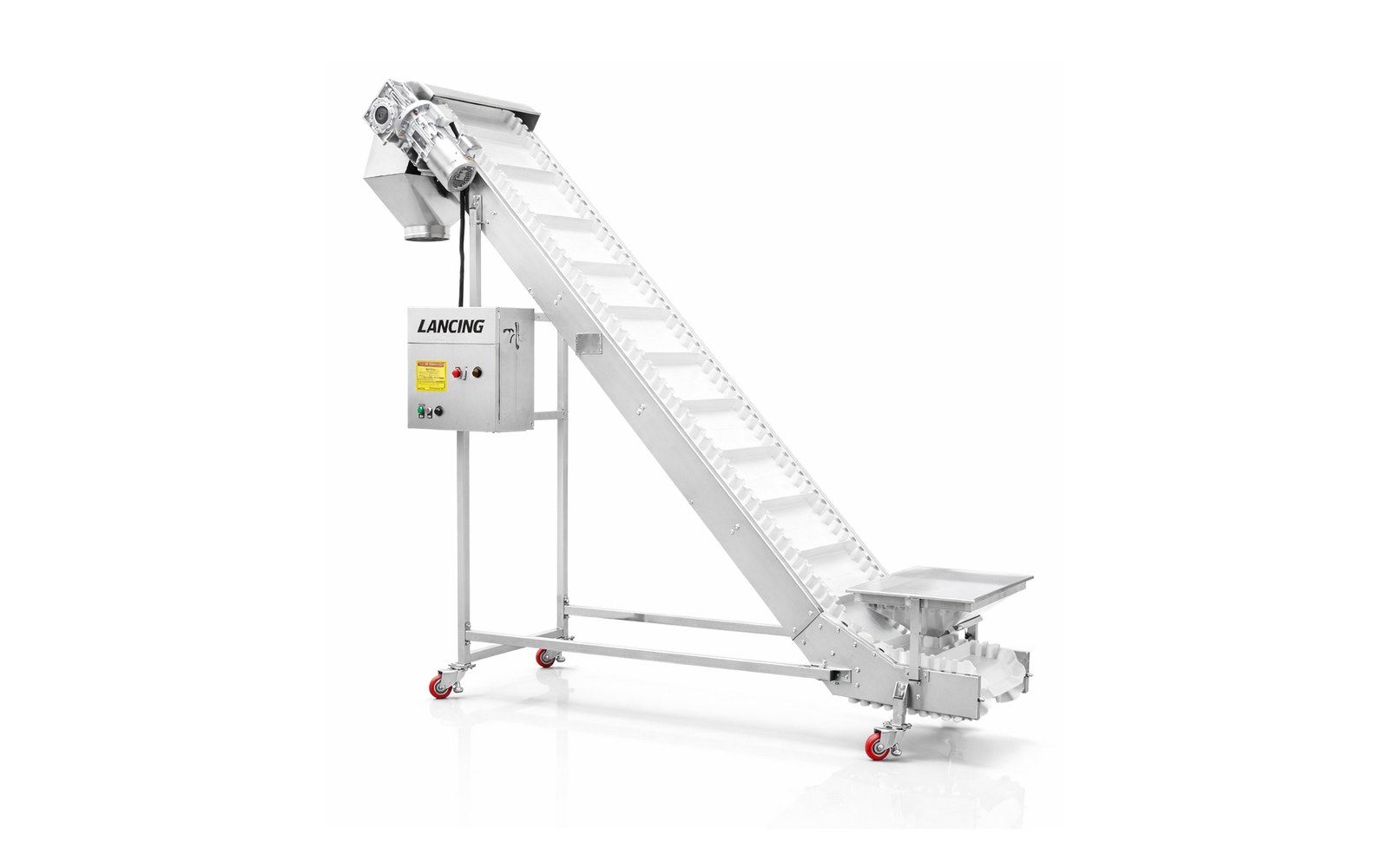 Elevation changes
Move packs between levels with belts, cleats, grip surfaces and layout support for safe transfer.
Explore →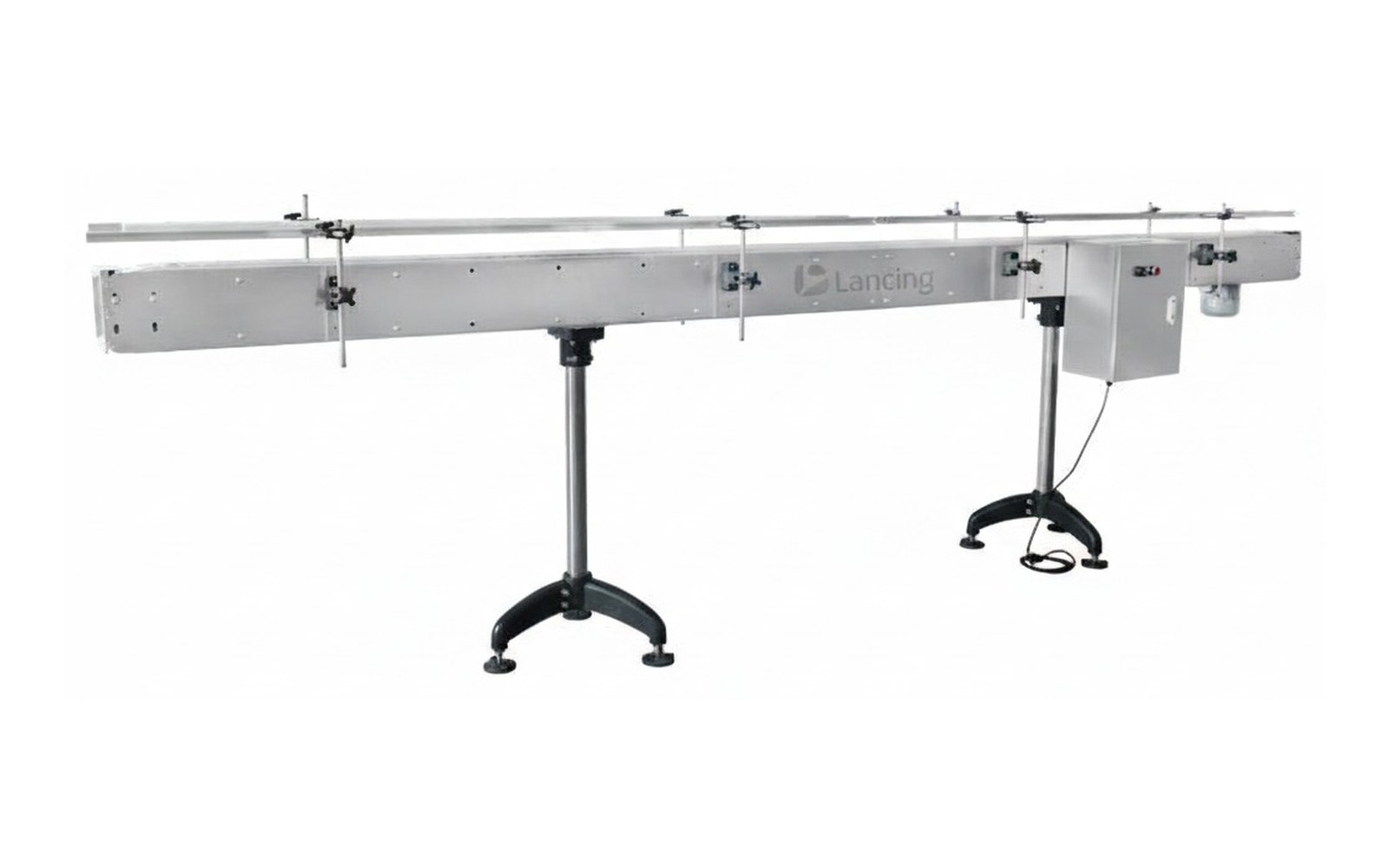 Compare your options
Check pack stability, transfers, widths, speeds, accumulation and integration before choosing a conveyor.
Explore →Clear answers for choosing conveyor options, planning a line layout and preparing quote details.
Use a belt conveyor when the pack has a stable base and can move cleanly on a continuous belt surface without needing specialised chain handling.
Yes. Variable speed control is commonly used to match fillers, labellers, coders, inspection equipment and packing stations.
Send pack dimensions, filled weight, line speed, available footprint, infeed and outfeed heights, photos of the existing line and details of connected machines.
Send your product details, line speed and available space to get advice on the conveyor route that fits your packaging line.
A belt conveyor gives continuous support under the pack, making it a useful starting point for cartons, trays, tubs, wrapped products and supported pouches. It can also move bottles when the base, side guides and transfers are stable. The final choice depends on the real product contact, route and environment rather than the general description “belt conveyor”.
The specification should separate usable product width from overall machine width, and working height from frame or guard height. Length should be measured between defined interface points. Load should include the maximum number of products on the belt and any accumulation or operator-loading case, not only one pack.
A flat, rigid base can tolerate a wider range of support and transfer arrangements than a soft pouch, narrow carton or pack with an uneven underside. Check whether the belt must grip, allow controlled slip, resist marking or release the product cleanly. Where food, chemical or cosmetic production has a defined cleaning method, material selection must be confirmed against the cleaning chemicals, temperature, water exposure and product-contact requirement.
Small products can be limited by the discharge gap. Possible transfer approaches include a suitably detailed transfer plate, smaller end geometry, a matched adjoining conveyor or a positively controlled hand-off. The choice must be tested with the actual product because a solution that supports a carton may catch a pouch seal or destabilise a bottle.
A variable-frequency drive can provide adjustable belt speed and controlled acceleration where the motor and control design support it. The required speed range should come from product pitch and good output, then be checked against the neighbouring machines. A speed increase can create spacing, but it can also increase sliding, impact and instability if the transfer geometry is wrong.
Photoeyes may be used for product detection, blocked-line control, counting or machine permissives. Their location, sensing method and response should be confirmed with the product range. Transparent, reflective, very small or closely spaced packs can need a different sensing approach from opaque cartons.
Record the agreed value or the evidence needed to confirm it. Do not insert a generic catalogue figure where the project value is unknown.
| Specification field | Project definition | Verification |
|---|---|---|
| Length, usable width and working height | Interface-to-interface route, product-support width and datum height. | Measured layout and adjacent-machine drawings. |
| Maximum load | Worst simultaneous product load plus any operator or accumulation case. | Product schedule, pitch and operating sequence. |
| Speed and control range | Required product rate, pitch, acceleration and line-following need. | Machine-rate data and product trial. |
| Motor and drive arrangement | Drive position, access, supply, control method and duty. | Layout, electrical brief and selected design. |
| Frame and support material | Environment, cleaning, corrosion and product-contact needs. | Site standard and material-compatibility review. |
| Belt material and surface | Grip, release, wear, marking, cleaning and transfer requirement. | Actual-product and cleaning-method trial. |
| Side guides | Contact height, adjustment range, format settings and sensitive surfaces. | Smallest, largest and least stable samples. |
| Transfer detail | Gap, level, support, speed relationship and neighbouring conveyor geometry. | Interface drawing and slow-speed product trial. |
| Controls and photoeyes | VFD, start/stop, blocked line, counting, alarms and machine signals. | Agreed controls schedule. |
| Ingress protection and guarding | Water, dust, chemical exposure and access to moving parts. | Environmental review and project risk assessment. |
A belt conveyor needs access to the drive, tensioning and tracking points. The layout should allow the belt to be inspected and replaced without moving an unrelated machine. Product debris should not be allowed to build up where it changes tracking, contaminates the belt or prevents a sensor from operating.
Noise and wear can increase through poor tracking, worn bearings, product impact, guide friction or loose components. Record a routine inspection that covers belt condition, tracking, tension, rollers or supports, bearings, drive, sensors, guards and fasteners. The spare list should use the final belt and component references, not a generic list prepared before design release.
If the duty is primarily guided bottles and jars through filling and capping, compare the slat chain route. If the project is general warehouse or powered handling rather than a packaging-machine interface, continue to Powered Conveyors UK.
These answers define the evidence needed for a reliable specification and quotation.
There is no universal allowance. The usable width must cover product variation, tracking tolerance, side-guide position and any required lane or operator access. Confirm it from the complete product range and layout.
It is useful where commissioning, changeover, spacing or machine matching requires adjustment. The final range should be defined from product pitch and interface needs; a VFD does not correct unstable transfer geometry.
The design may use a reduced end diameter, transfer plate, matched conveyor or another controlled hand-off. The pack base and seals must remain supported, so the chosen detail should be demonstrated with samples.
Yes, when the bottle base, guide system, speed and transfers are suitable. For long guided bottle routes, curves or controlled accumulation, slat or tabletop chain may be the stronger starting point.
Use the final design to identify the exact belt, bearings, drive and tracking parts, sensors, guides and wear items. Classify them as routine wear, recommended or production-critical according to replacement time and site stock policy.
A belt conveyor can look straightforward, but small differences in the pack underside, friction, transfer gap or acceleration can determine whether the product remains stable.
Record the product position as it enters the belt, crosses each hand-off and reaches the next machine. Then repeat the test at start-up, after a short downstream stop and during controlled recovery. This identifies sliding, rotation or close-product contact that may not appear during a single slow pass.
Where product spacing matters, document the incoming pitch, belt speed relationship and sensor target. Cleaning and belt access should be reviewed in the installed layout, including the route for inspection, tracking, tensioning and replacement.
Use the speed and spacing guide, troubleshooting guide and cleaning checklist to prepare the evidence.
These answers focus on the points that are often missed when a belt conveyor is selected only from its overall dimensions.
Check whether the belt itself tracks and drives consistently before changing tension. If the belt runs correctly but the product slips, rotates or stalls, review product contact, surface condition, incline, acceleration and contamination. Increasing belt tension is not a reliable remedy for insufficient product grip and can introduce wear or tracking problems. Test the actual product and operating condition.
Separate speed zones are useful when the line must create or close product gaps, meter packs into a machine, isolate accumulation pressure or match equipment with different operating states. Each zone needs a defined purpose, sensing point and transition. Adding zones without a control sequence can create surges or unstable transfers, so specify the required pitch and stop/restart behaviour at the relevant machine datum.
The return path affects belt tracking, cleaning access, tensioning, debris collection, guarding and maintenance. A neat product-carrying surface does not prove that the underside can be inspected or cleaned, or that the belt can be removed within the available space. Review the complete belt circuit and access envelope before fixing the conveyor position.
Check the pouch length, stiffness, seal position, fill distribution and the unsupported distance between surfaces. A pouch may sag, catch, rotate or bridge even when the nominal gap appears small. Test the least-filled and most flexible production samples through normal running, stop and restart, and confirm that guides do not trap or damage the pack.
Belt material and surface are only part of the specification. The support bed, pulley or roller arrangement, take-up, tracking method, drive orientation, cleaning access and transfer geometry determine how the belt behaves in production. The final handover information should identify the exact fitted belt and joining method rather than relying on a generic description.
Inspect recurring tracking correction, edge contact, contamination and transfer wear as symptoms of the duty. Replacing a belt without resolving an underlying alignment, loading or product-contact issue can repeat the same failure. The critical-spares and maintenance guide provides a structured handover and return-to-service checklist.