Where this helps
- Food and beverage packaging
- Hygiene-sensitive production areas
- Lines needing easy cleaning access
- Bottle, jar, tub and tray handling
Plan conveyor materials, cleaning access and product handling for environments where hygiene and washdown requirements matter.
Food and hygiene-sensitive lines need practical access for cleaning and inspection. Conveyor materials, frame design, belt type and guarding can all affect how easy the line is to maintain.
The right specification depends on the product, cleaning method, environment and the equipment around the conveyor.
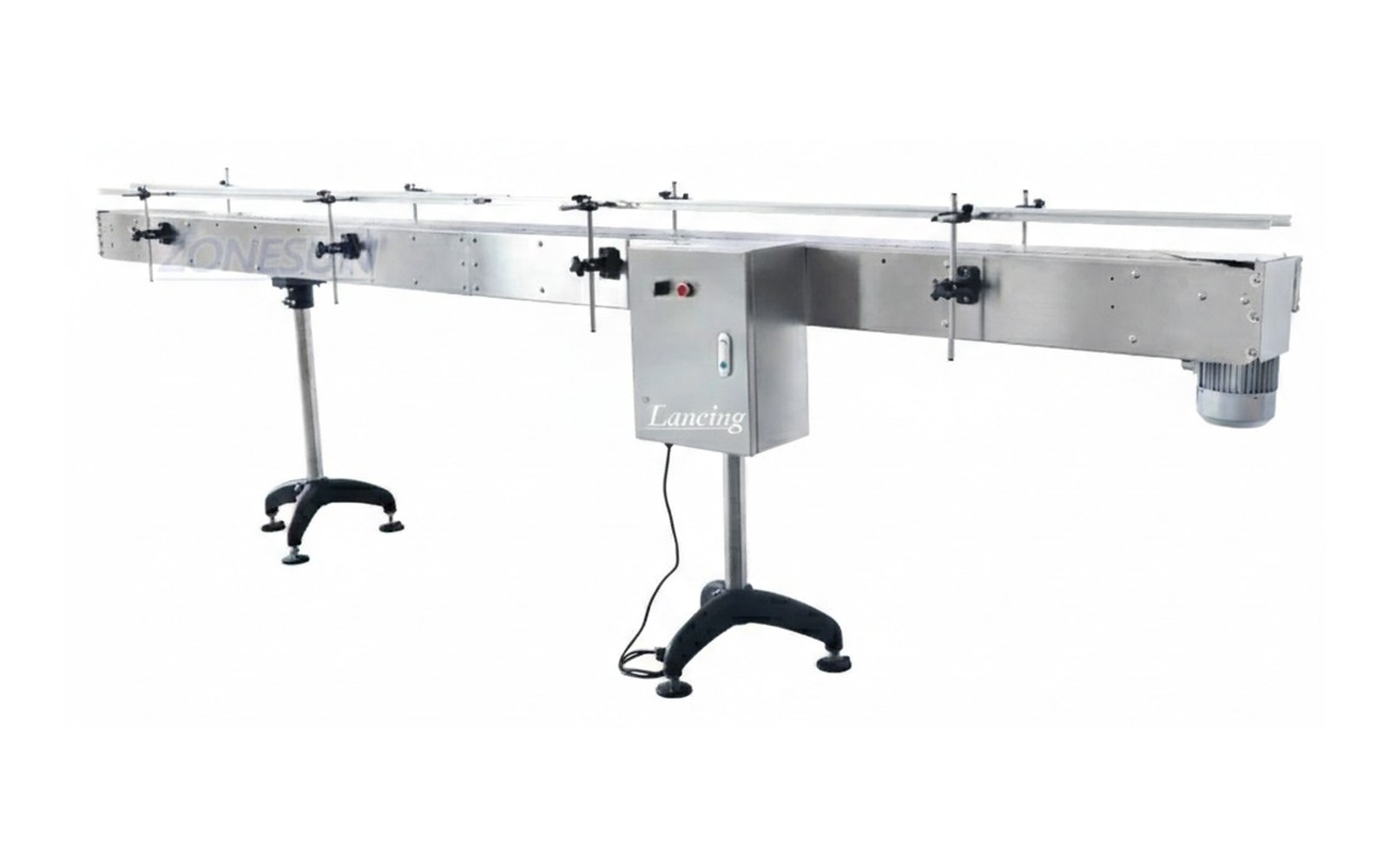
Small details at planning stage can prevent unstable transfers, awkward access and output issues later.
Confirm size, weight, base shape and stability before choosing the conveyor type.
Match conveyor height, speed and direction to the equipment on either side.
Keep room for loading, cleaning, adjustment, inspection and safe operation.
Decide whether the line needs accumulation to protect output during short stops.
These related pages help narrow down the conveyor type, layout and quote details.
Continue with practical conveyor information for your enquiry.
Open page →Continue with practical conveyor information for your enquiry.
Open page →Continue with practical conveyor information for your enquiry.
Open page →Clear answers for buyers comparing conveyor options and preparing an enquiry.
Not always. It depends on the product, environment and cleaning process, so requirements should be discussed before specification.
Frame design, belt or chain choice, access, guards, supports and surrounding equipment all affect cleanability.
Sometimes, but it depends on the design and whether access, materials or guarding can be changed.
Get practical conveyor advice based on the way your product needs to move through the line.
“Washdown conveyor” is not a complete specification. Record the cleaning method, water pressure or flow, temperature, chemicals, concentration, frequency, exposure time and the parts that are cleaned. Then select frame, belt or chain, wear parts, bearings, motor, sensors, controls, seals and cable entries for that actual duty.
The design should also make cleaning physically possible. Accessible surfaces, drainage, openable or removable parts and inspection points are as important as material choice. A resistant component can still leave a hygiene or maintenance problem when residue is trapped behind it.
Different parts of one conveyor can see different exposure. The product surface may be rinsed directly while a remote control panel remains dry; a sensor near a filling point may see frequent splashes; the motor may be close to floor wash. Mark those zones and define the required component protection for each.
Ingress-protection ratings should be selected for the documented exposure and installation. A rating does not prove chemical compatibility, drainage, hygienic design or long-term sealing after maintenance. Confirm all these aspects separately.
Review top surfaces, underside, belt or chain return, wear strips, guides, brackets, supports, guards, fasteners and floor interfaces. Avoid inaccessible horizontal ledges and enclosed areas where the stated cleaning procedure cannot reach or drain. If parts are removed for cleaning, show the removal path and handling method.
Select belt or chain from the product, transfer and cleaning need together. A surface that cleans easily may not support a small pouch or stable bottle transfer, and a strong grip surface may retain residue. Use the actual pack and cleaning method in the trial.
For food and beverage application context, use food and beverage conveyors.
| Area | Requirement to define | Verification |
|---|---|---|
| Cleaning process | Dry, wipe, foam, rinse, pressure, temperature, chemicals and frequency. | Customer procedure and chemical information. |
| Frame and supports | Material, finish, drainage, open sections and residue traps. | Design review in installed orientation. |
| Belt, chain and wear parts | Material compatibility, removal, return cleaning and product support. | Product and cleaning trial. |
| Bearings and drive | Exposure, seals, lubricant policy, motor position and access. | Component selection and maintenance review. |
| Sensors and controls | Zone exposure, cable entries, connectors, enclosures and adjustment. | Environmental schedule and functional test after cleaning. |
| Guides and brackets | Tool access, removal, setting repeatability and trapped areas. | Cleaning and changeover demonstration. |
| Drainage and floor | Water and residue path, floor slope, drains and adjacent machines. | Site layout and cleaning observation. |
| Inspection and release | Areas checked before production restart and acceptance method. | Site hygiene or maintenance record. |
After the agreed cleaning cycle, inspect belt or chain tracking, guide settings, fasteners, bearings, seals, sensors and guards. Water or chemical residue can affect sensing, lubrication, corrosion and product grip. The return-to-service procedure should identify checks that must be completed before production restarts.
Do not publish a generic cleaning time, noise value or component life without a verified test. Record the real method and result for the selected conveyor. Where a customer requires a formal hygiene standard or certification, include that requirement in the project specification and verify it through the responsible parties.
The spare-parts list should preserve material and seal compatibility. A physically similar replacement may not be suitable for the approved cleaning exposure.
These answers define the evidence needed for a reliable specification and quotation.
No. The complete design includes belt or chain, wear parts, bearings, motor, sensors, controls, seals, cable entries, access and drainage. Each must suit the stated cleaning exposure.
No. Ingress protection addresses enclosure protection under defined conditions; chemical compatibility and long-term material performance must be reviewed separately.
That depends on the design and site procedure. If removal is required, the layout must provide a safe practical removal path and repeatable refitting and tracking method.
Review the conveyor and floor in their installed orientation, trace water and residue paths, and verify that cleaning does not leave pools in frames, guards, supports or adjacent equipment.
Inspect cleanliness, drainage, guards, belt or chain tracking, guides, sensors, electrical connections and any lubrication or seal points identified by the final maintenance procedure.
Washdown suitability cannot be established from a product category alone. The final design must reflect the real water, chemical, temperature, soil, drainage and electrical exposure described by the user.
Map product traps, return paths, guide brackets, fasteners and areas beneath the conveyor. Identify parts removed for cleaning and how they are restored without losing format settings. The site procedure should also define isolation, access, inspection, drying and pre-start release.
Any ingress-protection, material or chemical-compatibility requirement must be confirmed for the finished design and supplied components. This page provides preparation guidance rather than a blanket compliance statement.
Use the cleaning/changeover checklist and guarding and access guide to coordinate the task.