Where this helps
- Glass bottle filling lines
- Jar and container handling
- Capping and labelling routes
- Accumulation before packing
Move glass bottles carefully through filling, capping, labelling and packing stages with a route that protects stability and control.
Glass containers can be heavy, rigid and sensitive to unstable contact. Conveyor transfers, guide rails and accumulation areas should be planned to avoid avoidable knocks and jams.
The conveyor type depends on bottle shape, filled weight, speed and the machines in the line.
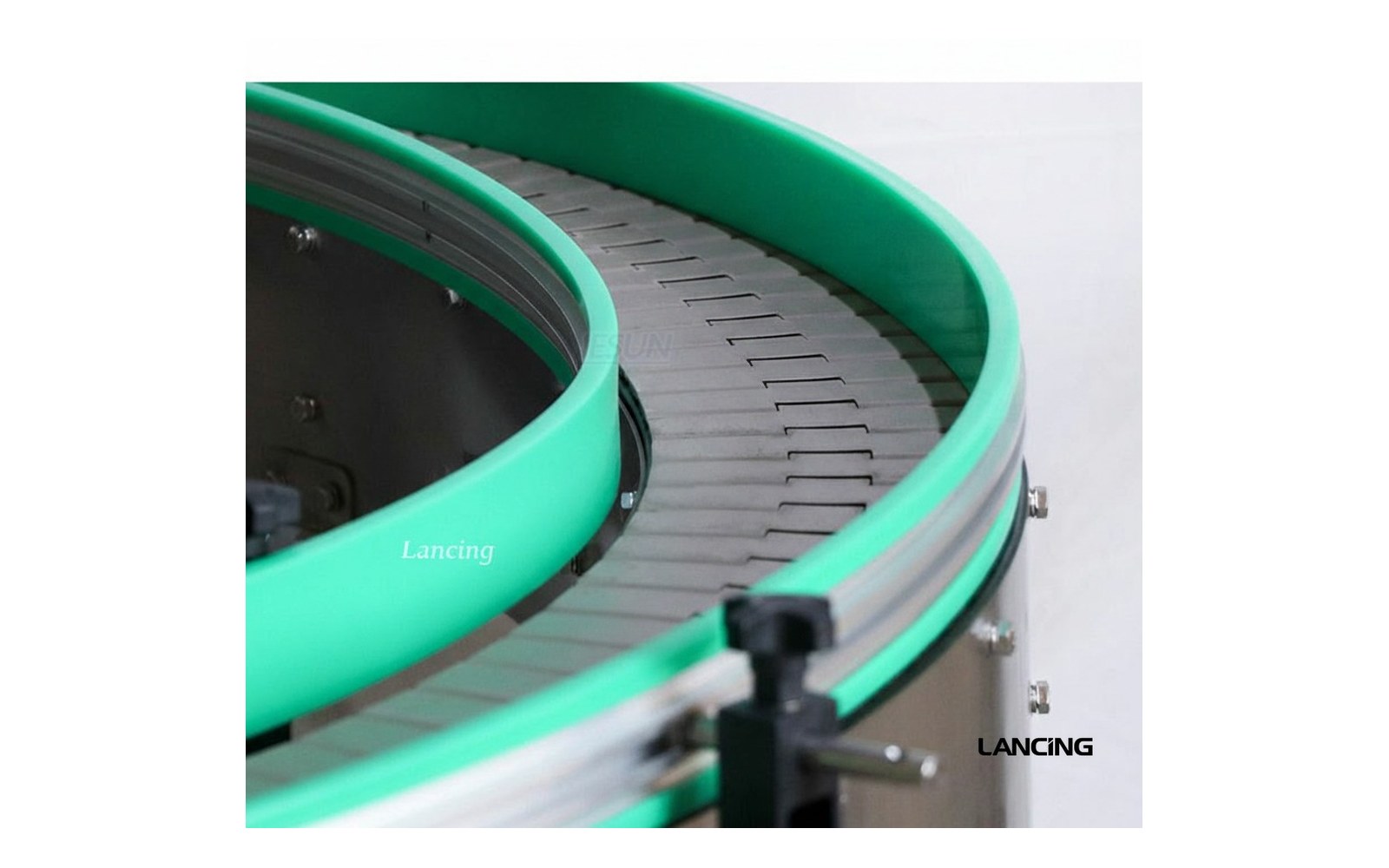
Small details at planning stage can prevent unstable transfers, awkward access and output issues later.
Confirm size, weight, base shape and stability before choosing the conveyor type.
Match conveyor height, speed and direction to the equipment on either side.
Keep room for loading, cleaning, adjustment, inspection and safe operation.
Decide whether the line needs accumulation to protect output during short stops.
These related pages help narrow down the conveyor type, layout and quote details.
Continue with practical conveyor information for your enquiry.
Open page →Continue with practical conveyor information for your enquiry.
Open page →Continue with practical conveyor information for your enquiry.
Open page →Clear answers for buyers comparing conveyor options and preparing an enquiry.
Slat chain conveyors are commonly considered because they provide stable support and work with guide rails and curves.
They can, but accumulation should be planned carefully to control pressure and avoid unstable contact.
Bottle dimensions, weight, line speed, machine layout and transfer heights are the key starting points.
Get practical conveyor advice based on the way your product needs to move through the line.