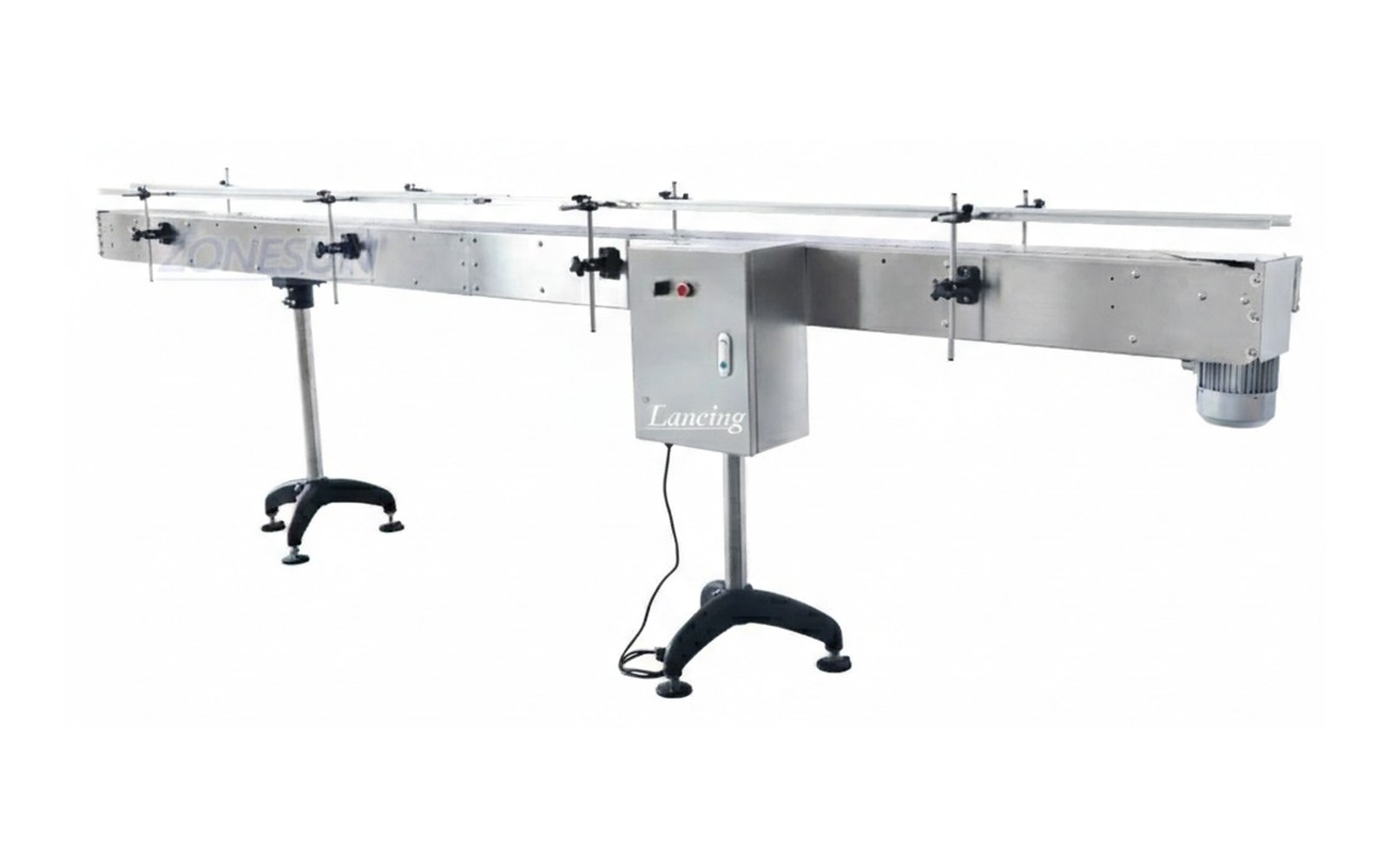
 General transfer
Belt conveyors
Clean, practical movement for cartons, bottles, tubs, trays and stable packaged goods.
Compare conveyor →Chemical and household product lines can involve heavier containers, flexible bottles, trigger closures, spill risk and material compatibility. The conveyor layout should protect stability, operator access and cleaning requirements.
Chemical and household product lines can involve heavier containers, flexible bottles, trigger closures, spill risk and material compatibility. The conveyor layout should protect stability, operator access and cleaning requirements.
Check the final conveyor choice against real samples, filled weight, line speed and connected machinery.
General transfer
Clean, practical movement for cartons, bottles, tubs, trays and stable packaged goods.
Compare conveyor →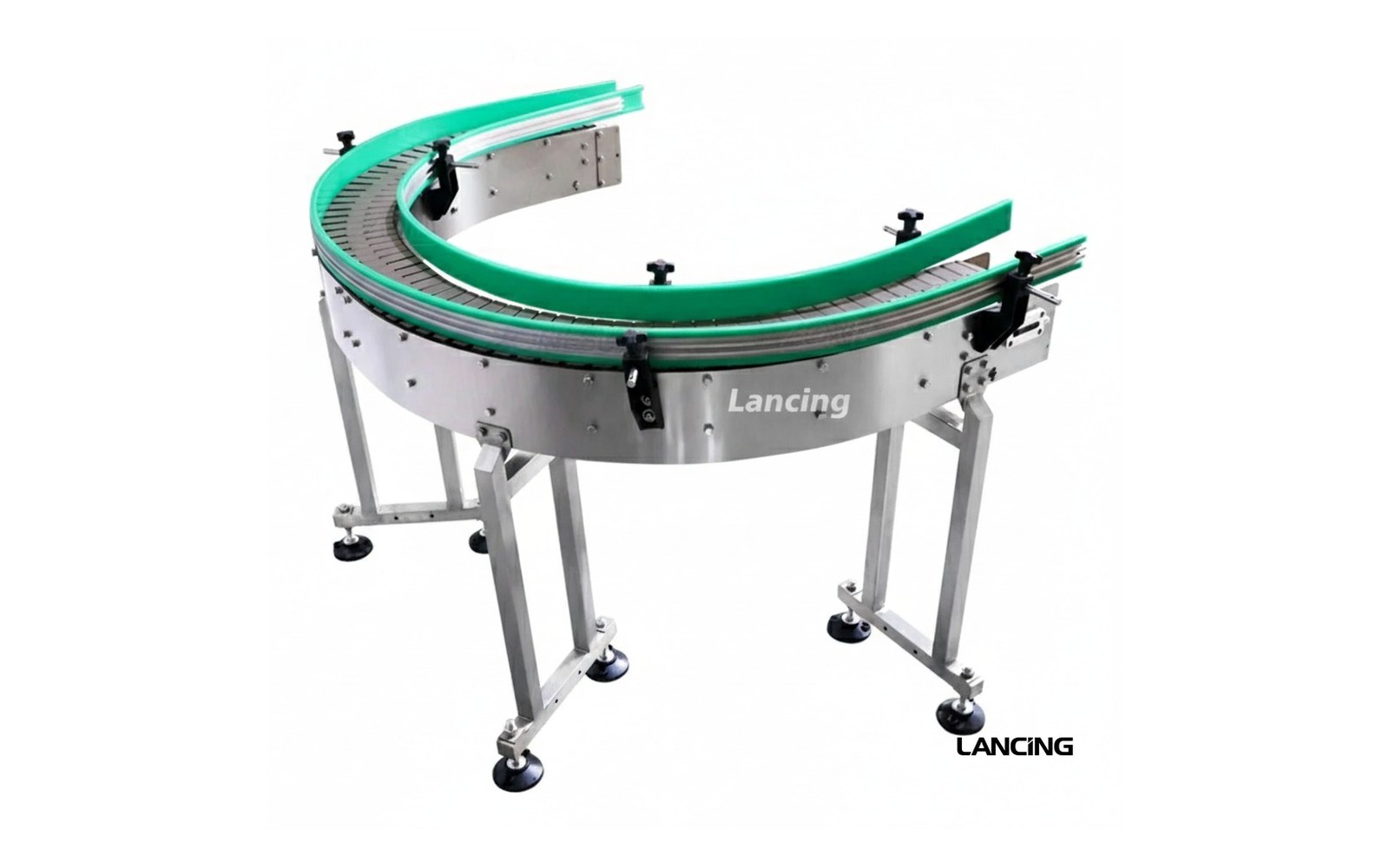 Bottle lines
Stable inline handling for bottles, jars and containers moving through filling, capping and labelling.
Compare conveyor →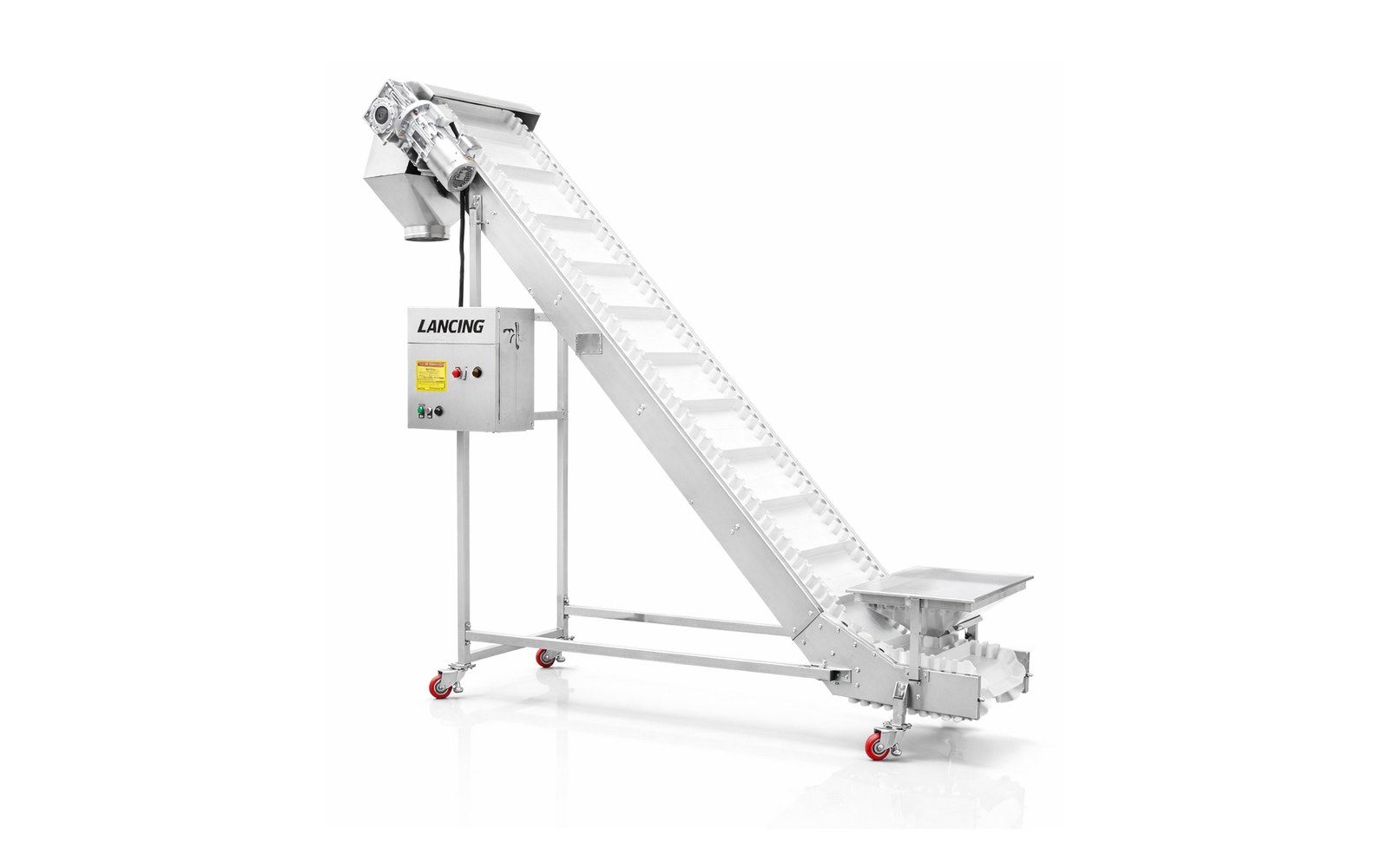 Elevation changes
Move packs between levels with belts, cleats, grip surfaces and layout support for safe transfer.
Compare conveyor →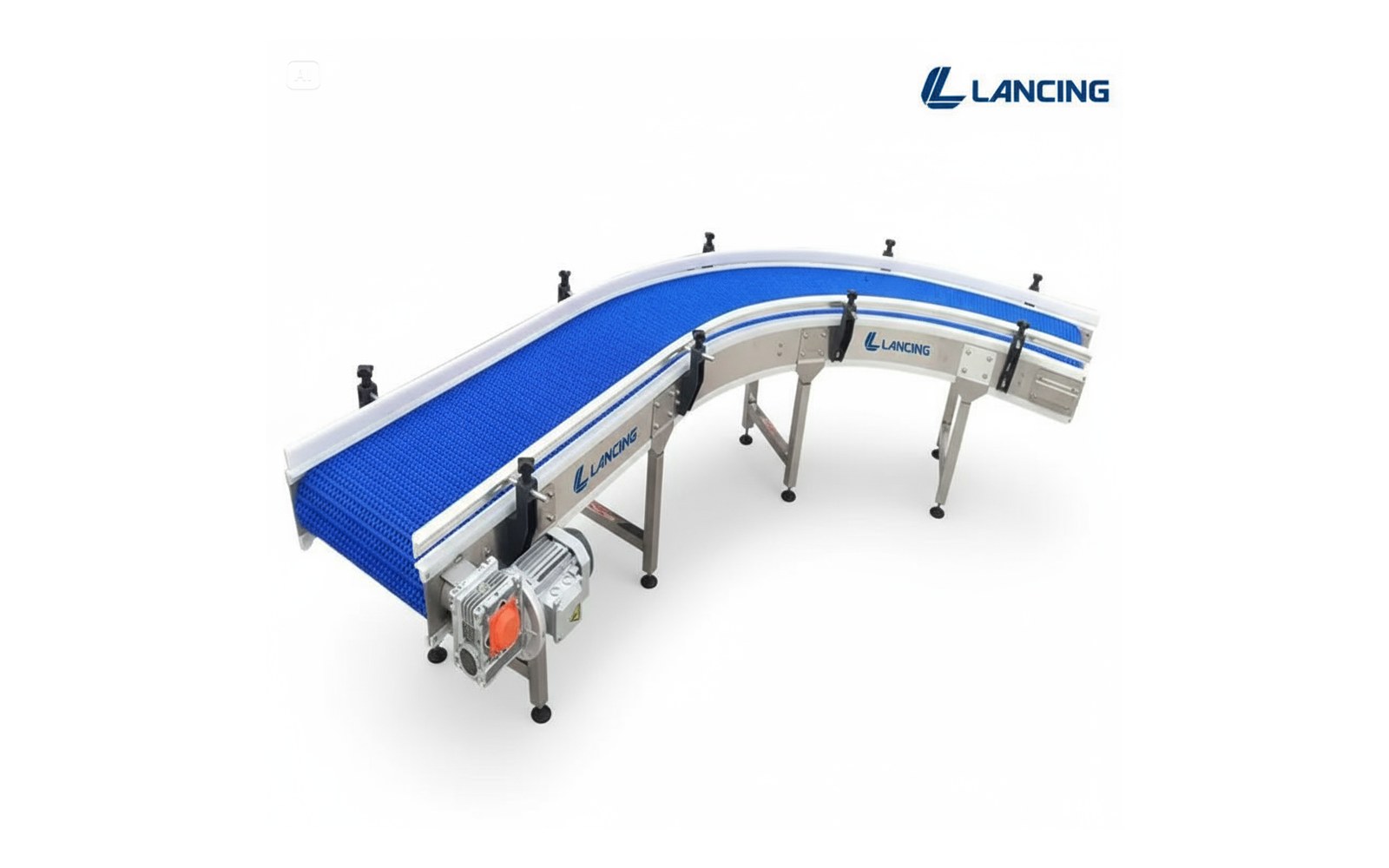 Space saving
Turn production flow through 45°, 90° or 180° routes while protecting pack spacing and orientation.
Compare conveyor →Clear answers for choosing conveyor options, planning a line layout and preparing quote details.
The best conveyor is decided by pack stability, size, weight, required speed, transfer points, cleaning needs and the connected packaging machinery.
Yes. Share photos, layout dimensions and machine details so infeed heights, outfeed heights, controls and access can be checked.
Send your product details, line speed and available space to get advice on the conveyor route that fits your packaging line.
Chemical and household packaging can include trigger bottles, detergent containers, jerrycans, industrial liquids and other rigid packs with higher loads or awkward closures. The conveyor specification must use the actual container and product condition. It should not assume corrosion resistance, electrical protection or hazardous-area suitability from the sector name alone.
Provide the product safety information and site classification relevant to the equipment area. Where a hazardous-area or special electrical requirement applies, it must be defined by the responsible customer and engineering parties and supported by appropriate equipment selection. Do not add an ATEX or similar claim to a conveyor without a verified project requirement and design.
Filled jerrycans and larger containers create greater load at belts, chains, transfers, guides and stops. Handles, trigger heads and closure projections can interfere with guides. Record the filled mass, centre of gravity, base shape and whether containers arrive wet, slippery or contaminated after filling and capping.
Material compatibility must cover the expected product or cleaning exposure, concentration, temperature and contact duration. The review should include belt or chain, frame, wear parts, seals, bearings, motor, sensors, cable entries and guards. A general stainless-steel description is not a substitute for a compatibility check.
The layout should show where a leak or damaged container is detected, contained and removed. Avoid inaccessible collection areas. Define whether the conveyor stops, rejects the pack, alarms or allows an operator to intervene under a safe procedure. Drainage and cleaning must suit the site system and the substance involved.
For complete filling, capping, labelling and end-of-line scope, continue to Packaging Lines UK. This page remains focused on the conveyor’s load, transfer, guide, accumulation and environmental interfaces.
| Requirement | Information to record | Verification |
|---|---|---|
| Container and load | Dimensions, filled mass, base, handle, closure and centre of gravity. | Finished sample range and maximum simultaneous load. |
| Product or spill exposure | Substance, concentration, temperature, duration and likely contact areas. | Customer safety and compatibility information. |
| Frame and contact materials | Required materials for belt/chain, guides, wear parts, frame and fasteners. | Project material specification and compatibility review. |
| Electrical environment | Water, dust, chemical exposure and any formally defined hazardous classification. | Customer site standard and responsible engineering assessment. |
| Ingress protection | Required protection for motors, sensors, controls and junctions by zone. | Environmental schedule; ratings selected for actual exposure. |
| Containment and cleaning | Leak path, drainage, removal, decontamination and inspection access. | Site procedure and layout review. |
| Controls and alarms | Leak/reject detection if used, blocked line, full buffer and safe stop response. | Functional description and test. |
| Guarding and handling | Heavy-pack impact, manual removal, nip points and recovery route. | Project risk assessment and operator review. |
A large container can bridge a gap, skew under guide pressure or create high impact at a stop. Test the heaviest pack through every transfer and blocked-line state. If the product surface becomes slippery after filling, include that relevant safe condition. The drive and structure should be selected from the total loaded duty and operating sequence.
Accumulation may be limited by handle interaction, closure damage or pressure on the container body. Define whether products may touch and how a full buffer is controlled. A simple longer conveyor is not automatically a safe buffer for heavy containers.
Maintenance planning should include safe access and handling for drives, belts, chains and guards, and a procedure for cleaning after a leak. Spare materials should be compatible with the approved design and stored according to the customer’s site requirements.
These answers define the evidence needed for a reliable specification and quotation.
Only when the responsible site and engineering assessment defines a hazardous-area requirement. The classification and equipment scope must be specified and verified for the actual product and location; it should never be assumed from the word “chemical”.
Use the actual substance, concentration, temperature, contact duration and cleaning chemicals to review every exposed material, including belt or chain, guides, seals, frame, bearings, motor and sensors.
Possibly, but the total load, handle interaction, base stability, contact pressure, transfer and restart behaviour must be tested. A metered or controlled buffer may be required.
The project should define detection, stop or reject response, containment, safe removal, cleaning and return-to-service checks. The procedure depends on the product hazard and site rules.
Select it from the documented exposure to water, dust, chemicals and cleaning by equipment zone. The rating must apply to the actual motor, sensors, controls and connections, not only the frame.
Household and chemical products can expose conveyor materials to leaks, residues, cleaning agents or vapours. The actual product and site assessment must define the required materials, electrical protection, containment, cleaning and access.
Provide the relevant SDS and site controls where exposure is possible. Record whether packs are open, filled, closed or leaking during the foreseeable operating and fault states. The conveyor supplier can then review contact surfaces, drainage, replaceable parts and access without making unsupported compatibility claims.
Guarding, isolation and intervention methods should be coordinated with the machinery risk assessment. A generic guide cannot determine ATEX, chemical compatibility or a protection rating for a particular installation.
Use the cleaning checklist, safety-interface guide and sample-trial guide.