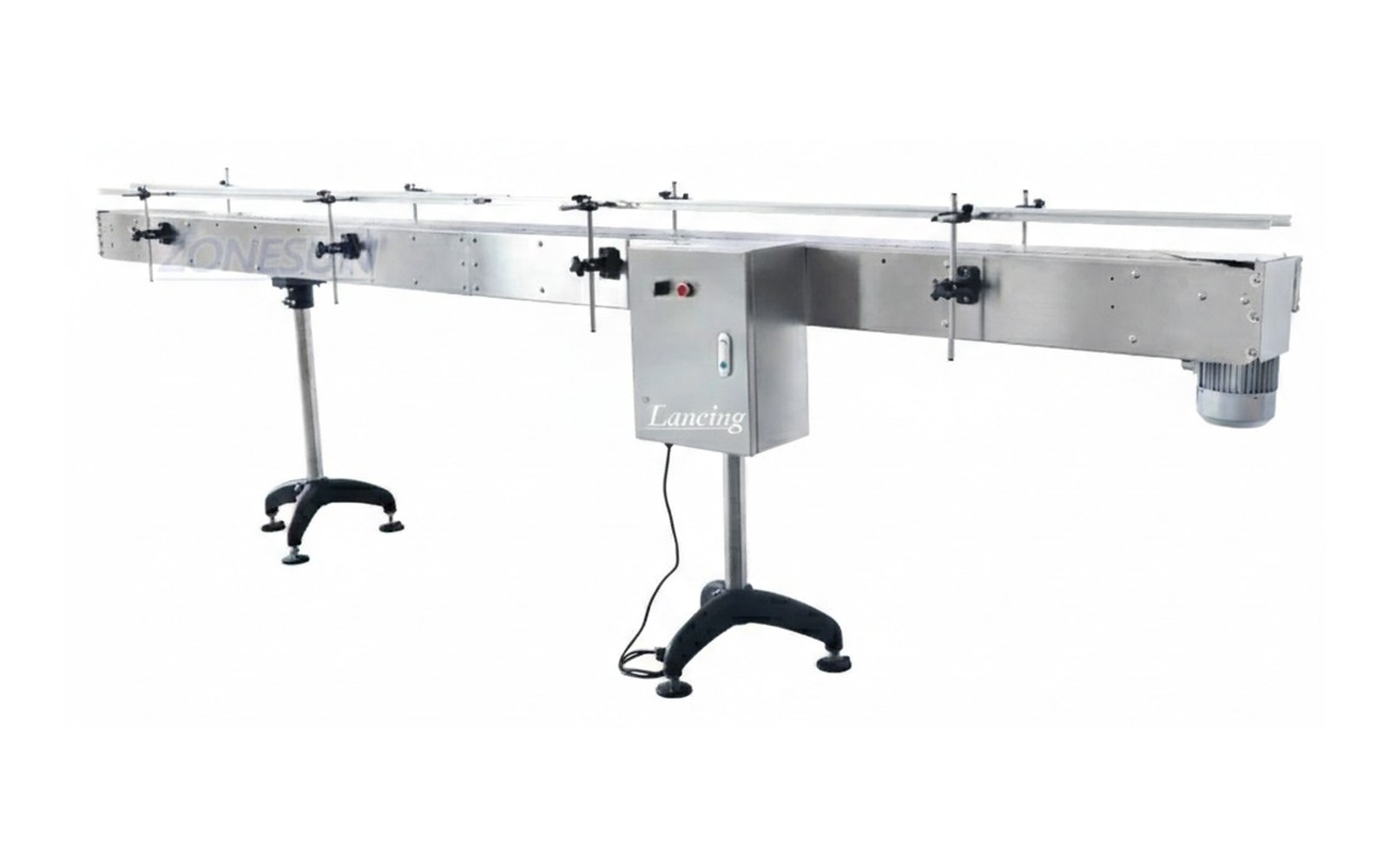
 General transfer
Belt conveyors
Clean, practical movement for cartons, bottles, tubs, trays and stable packaged goods.
Compare conveyor →Cosmetics and personal care packs often need careful handling because presentation, label alignment, unstable tall bottles and closure formats all matter. Conveyor design should support clean product flow and practical changeovers.
Cosmetics and personal care packs often need careful handling because presentation, label alignment, unstable tall bottles and closure formats all matter. Conveyor design should support clean product flow and practical changeovers.
Check the final conveyor choice against real samples, filled weight, line speed and connected machinery.
General transfer
Clean, practical movement for cartons, bottles, tubs, trays and stable packaged goods.
Compare conveyor →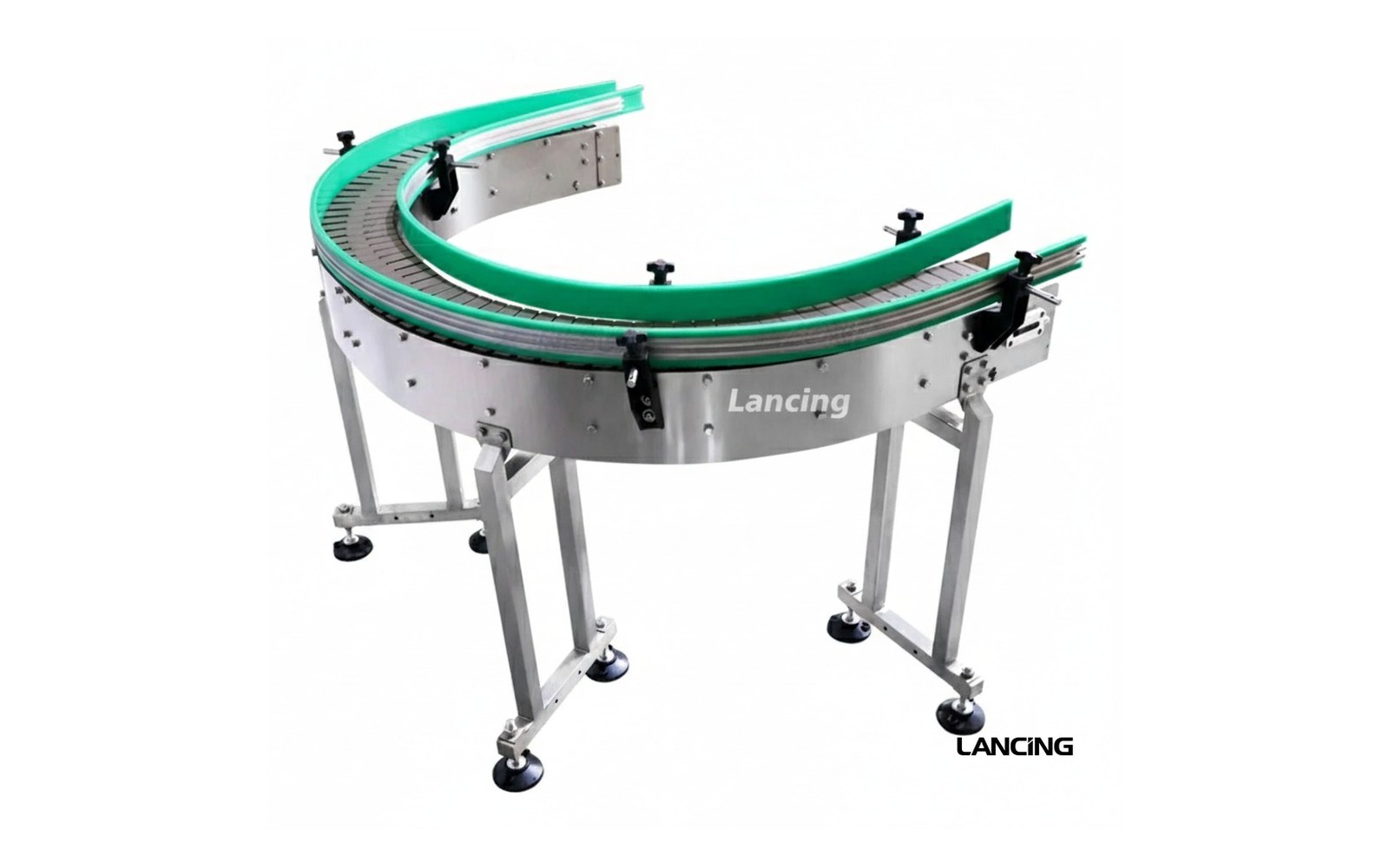 Bottle lines
Stable inline handling for bottles, jars and containers moving through filling, capping and labelling.
Compare conveyor →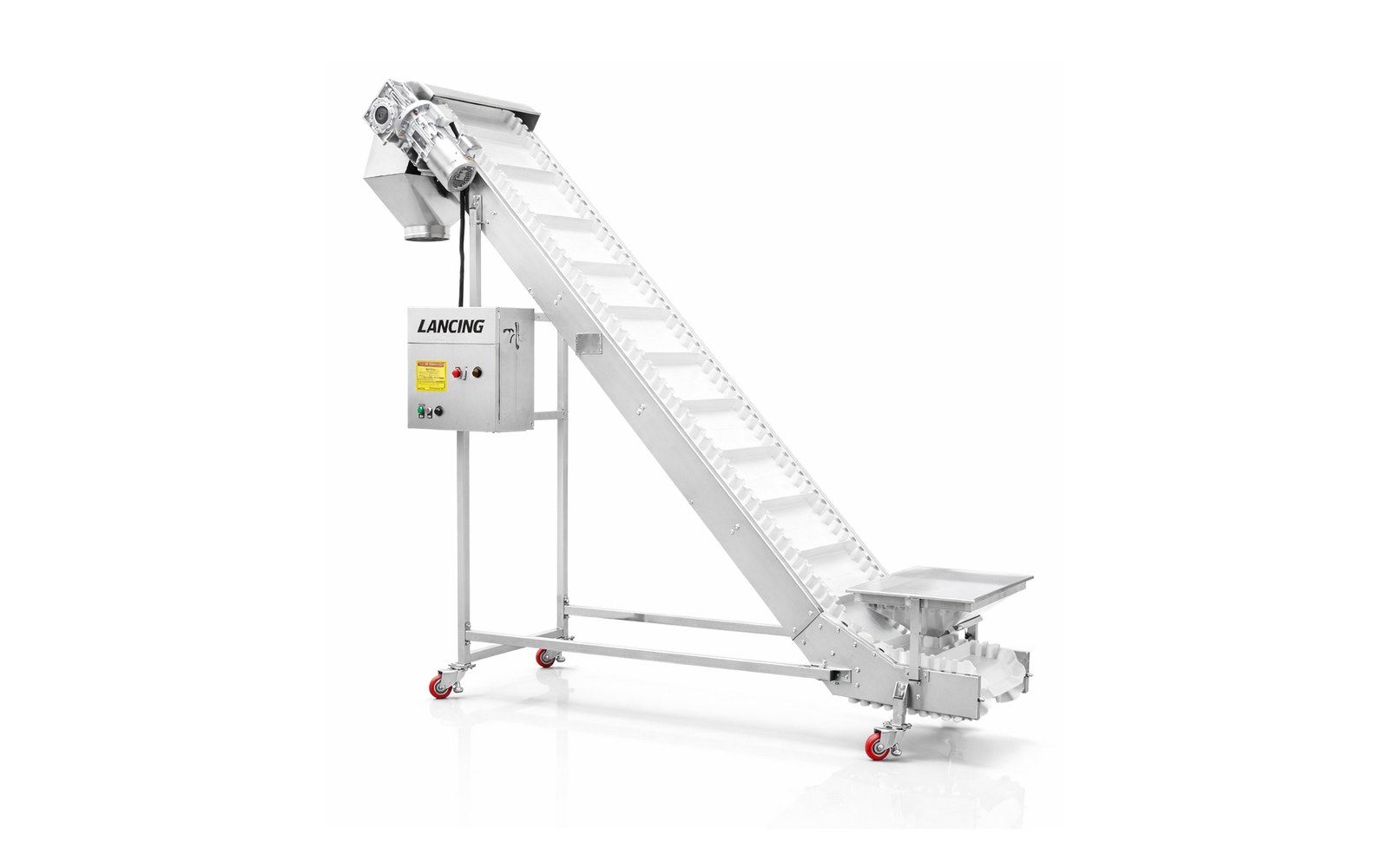 Elevation changes
Move packs between levels with belts, cleats, grip surfaces and layout support for safe transfer.
Compare conveyor →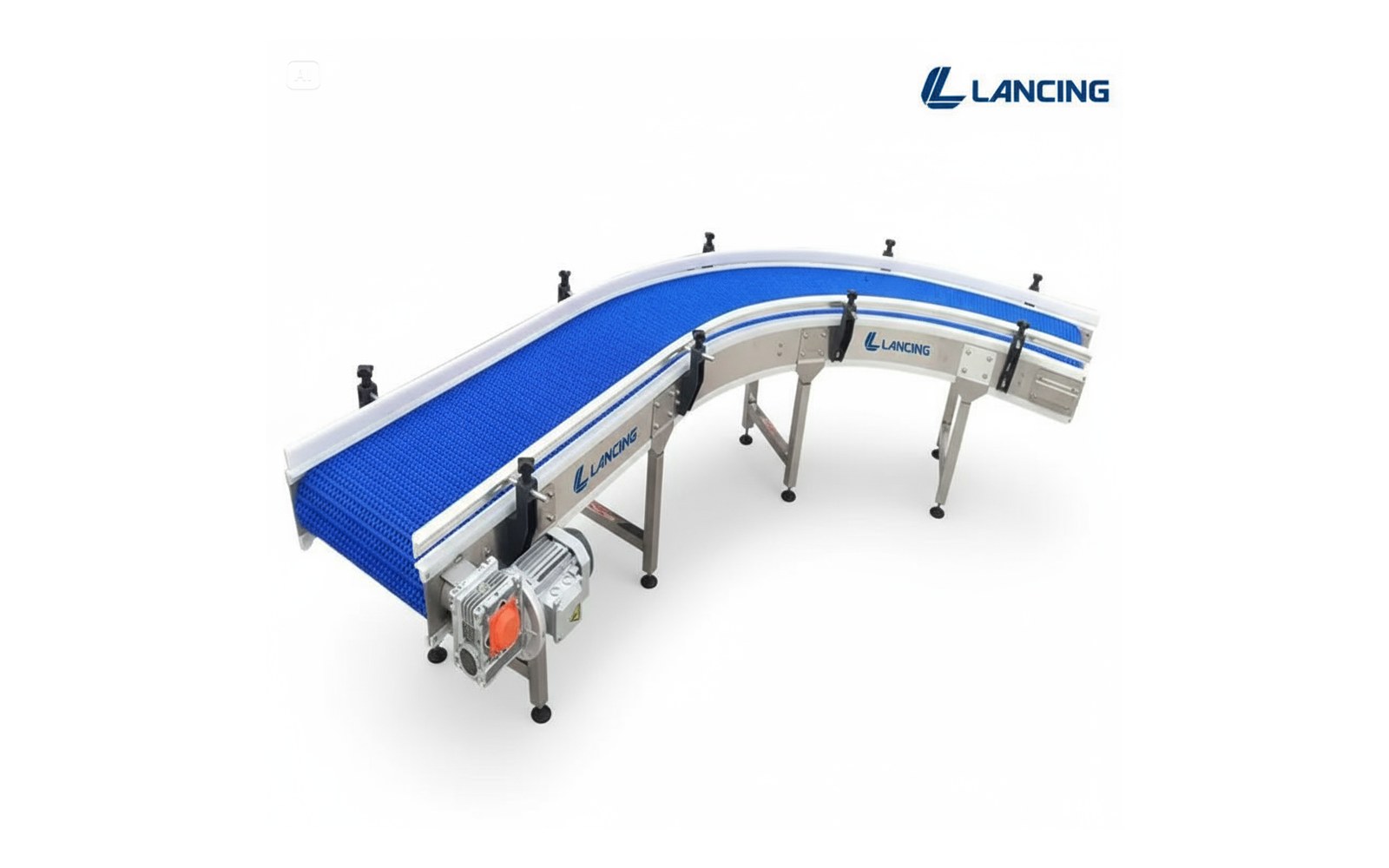 Space saving
Turn production flow through 45°, 90° or 180° routes while protecting pack spacing and orientation.
Compare conveyor →Clear answers for choosing conveyor options, planning a line layout and preparing quote details.
The best conveyor is decided by pack stability, size, weight, required speed, transfer points, cleaning needs and the connected packaging machinery.
Yes. Share photos, layout dimensions and machine details so infeed heights, outfeed heights, controls and access can be checked.
Send your product details, line speed and available space to get advice on the conveyor route that fits your packaging line.
Cosmetic and personal-care packs often combine tall containers, pumps, triggers, jars, tubs, labels and decorated surfaces. The conveyor must keep them stable without scuffing the presentation surface or interfering with a closure. A visually acceptable pack after one pass may show damage after repeated accumulation or guide contact, so the trial should represent the real route and duration.
Use finished production samples wherever possible. Empty undecorated development containers can help with early geometry, but they do not prove label adhesion, print resistance, pump orientation or filled stability.
Mark where side guides can touch the pack and where contact is not allowed. Labels, foil, lacquer, sleeves, pumps and triggers can be sensitive. A guide that works on a plain bottle can lift a label edge or rotate a pump bottle. Adjustable guides should preserve the required orientation and use repeatable format settings.
For jars and tubs, check lid fit and product surface condition. For tall lotion or shampoo bottles, compare base support, guide height and acceleration. If the base must be clear for printing, inspection or code verification, review a side-grip or supported transfer route and validate wall stiffness.
The conveyor should present the pack consistently to the labeller, coder or vision system. Record the datum face, allowable rotation, speed window, product pitch and sensor location. A smooth conveyor is not sufficient if the pack arrives at an unpredictable angle.
Printer, ink and code-verification selection belongs with Coding Machinery. The conveyor scope is the stable product presentation, trigger or encoder interface and controlled outfeed. For complete filling, capping and labelling ownership, use Packaging Lines UK.
| Pack feature | Conveyor concern | Validation |
|---|---|---|
| Tall bottle or narrow base | Tipping through acceleration, transfers, curves and stops. | Filled least-stable sample at agreed rate. |
| Pump or trigger closure | Projection, orientation and guide interference. | Assembled production pack in all possible arrival orientations. |
| Pressure-sensitive label or sleeve | Scuffing, edge lift, rotation and contact after application. | Production-labelled samples after repeated route cycles. |
| Jar, tub or pot | Base support, lid security, transfer gap and accumulation pressure. | Filled and closed samples through blocked/restart test. |
| Printed or lacquered surface | Marking from guides, product contact or debris. | Defined cosmetic inspection after agreed duration. |
| Multi-format changeover | Guide, sensor, coder and machine settings. | Repeatable settings across smallest and largest formats. |
Mechanical acceptance records tips, jams, transfer and rate. Presentation-sensitive products also need a defined visual check. Agree which surfaces are inspected, the lighting or inspection method, how many route cycles represent the duty and what marking, scuffing or label movement is unacceptable.
Debris on a belt or guide can create repeatable cosmetic damage. Cleaning access should cover the product-contact surfaces and the areas where fragments, adhesive or product residue can collect. Maintenance should include guide condition, loose fasteners, worn contact surfaces and sensor alignment.
If several formats are run, include a complete changeover in the test. Confirm guide positions, sensor height, coder position and downstream acceptance without relying on trial-and-error adjustment.
These answers define the evidence needed for a reliable specification and quotation.
Start by identifying the contact source: guides, neighbouring packs, belt debris, transfer impact or excessive accumulation pressure. Then adjust material, geometry, speed or buffer method and prove the result on finished packs.
Sometimes, but guide height and entry must avoid the pump or trigger and preserve orientation. Use fully assembled samples and test all arrival conditions.
Yes when labels, sleeves, decoration or print can be affected. Unlabelled samples do not prove presentation quality after guides, transfers and accumulation.
Use stable guide references, controlled product pitch and suitable sensing or handling devices. Define the datum face and allowable rotation, then validate it at the agreed speed.
Guide settings, sensor and coder positions, transfer stability, rate and final pack appearance for the smallest, largest and most sensitive formats.
Cosmetic and personal-care packs often combine unstable shapes with labels, print, metallic finishes, pumps or trigger closures that limit guide contact.
Mark where the product may be touched and where scuffing, rotation or pressure is unacceptable. Test empty and filled states because mass and centre of gravity can change. Record the guide material, contact height, product pitch and accumulated condition used during acceptance.
A side-grip section can keep the base clear for coding or inspection, but only when the side wall and finish tolerate controlled contact. The transition into and out of the gripped section is part of the trial.
Compare side-grip handling and use the sample-trial guide to document the finish and orientation criteria.
Cosmetic and personal-care containers often combine a small base with a tall body, pump, cap or presentation-sensitive decoration. Test the empty and finished states because the limiting format can change after filling or closure application.
Use puck conveyor planning where the pack needs a stable carrier through several stations, side-grip conveying for a local base-access duty, or an indexing conveyor where a product must stop at a controlled datum.