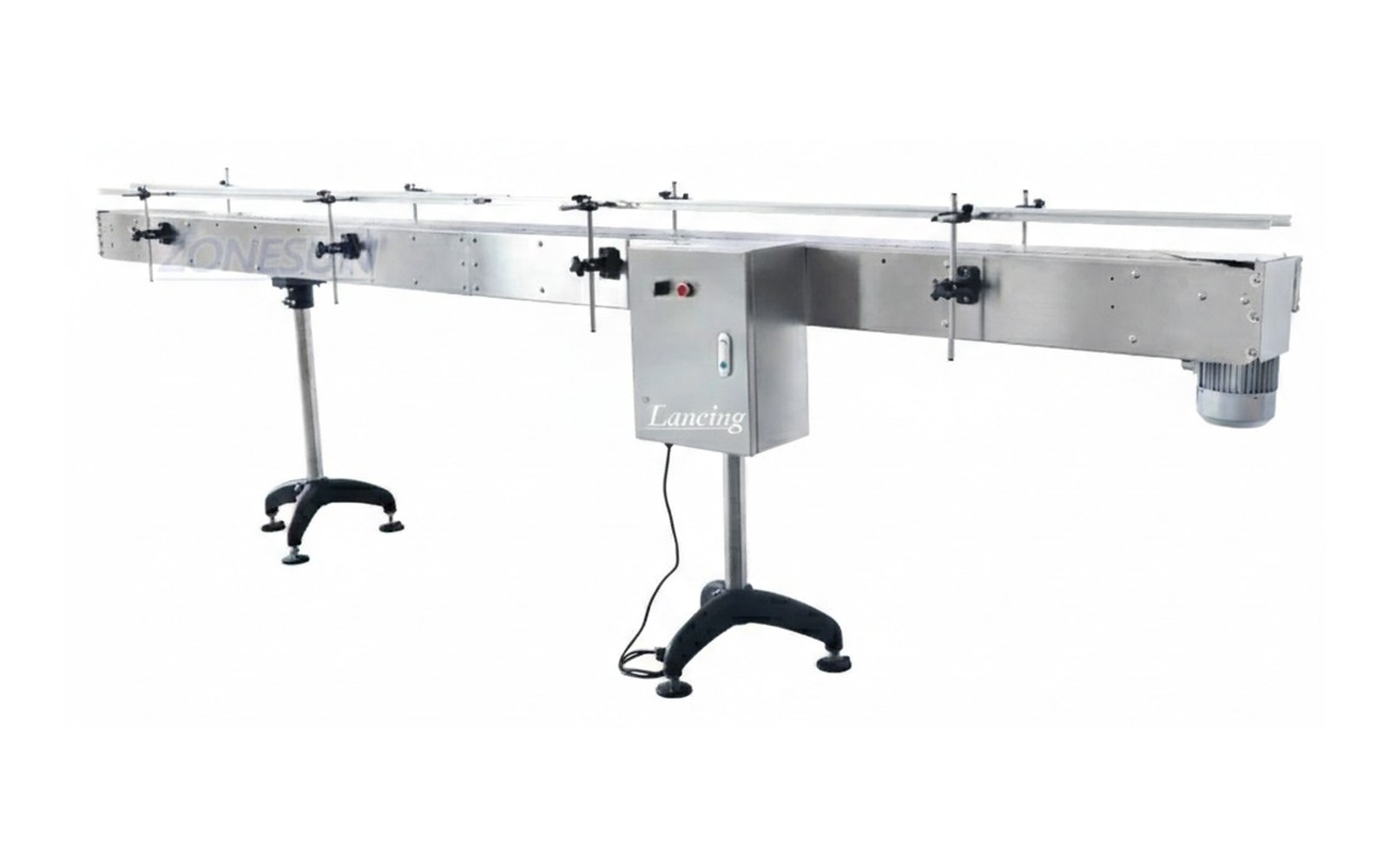
 General transfer
Belt conveyors
Clean, practical movement for cartons, bottles, tubs, trays and stable packaged goods.
Explore →Rotary tables provide compact feed, take-off and accumulation support where a simple conveyor section is not enough. They are common around small bottle, jar, pot and container lines.
Rotary tables provide compact feed, take-off and accumulation support where a simple conveyor section is not enough. They are common around small bottle, jar, pot and container lines.
A conveyor quote is more accurate when pack samples, layout drawings and target output are supplied with the enquiry.
Conveyor selection works best when transfer, accumulation and machine interfaces are planned together.
General transfer
Clean, practical movement for cartons, bottles, tubs, trays and stable packaged goods.
Explore →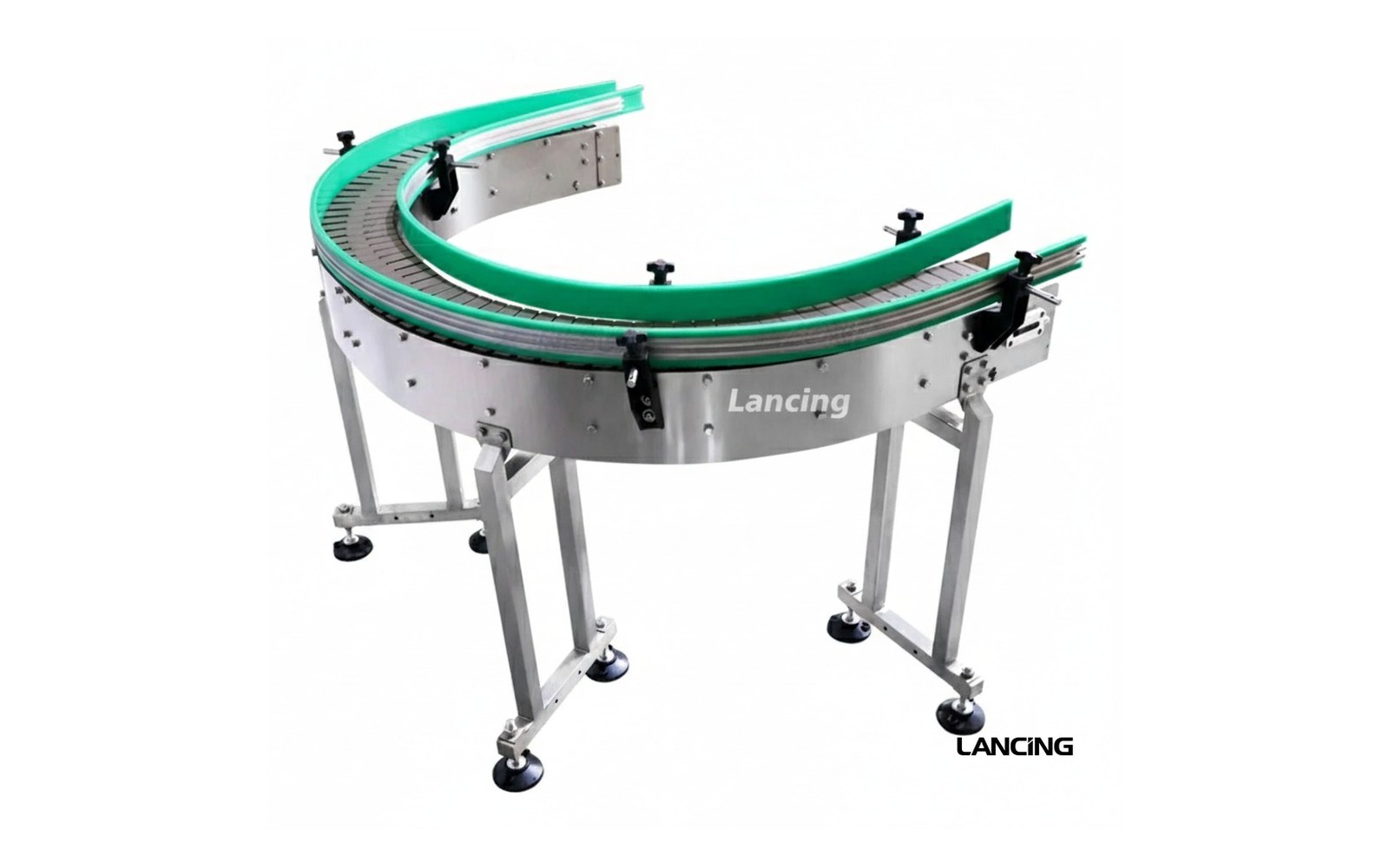 Bottle lines
Stable inline handling for bottles, jars and containers moving through filling, capping and labelling.
Explore →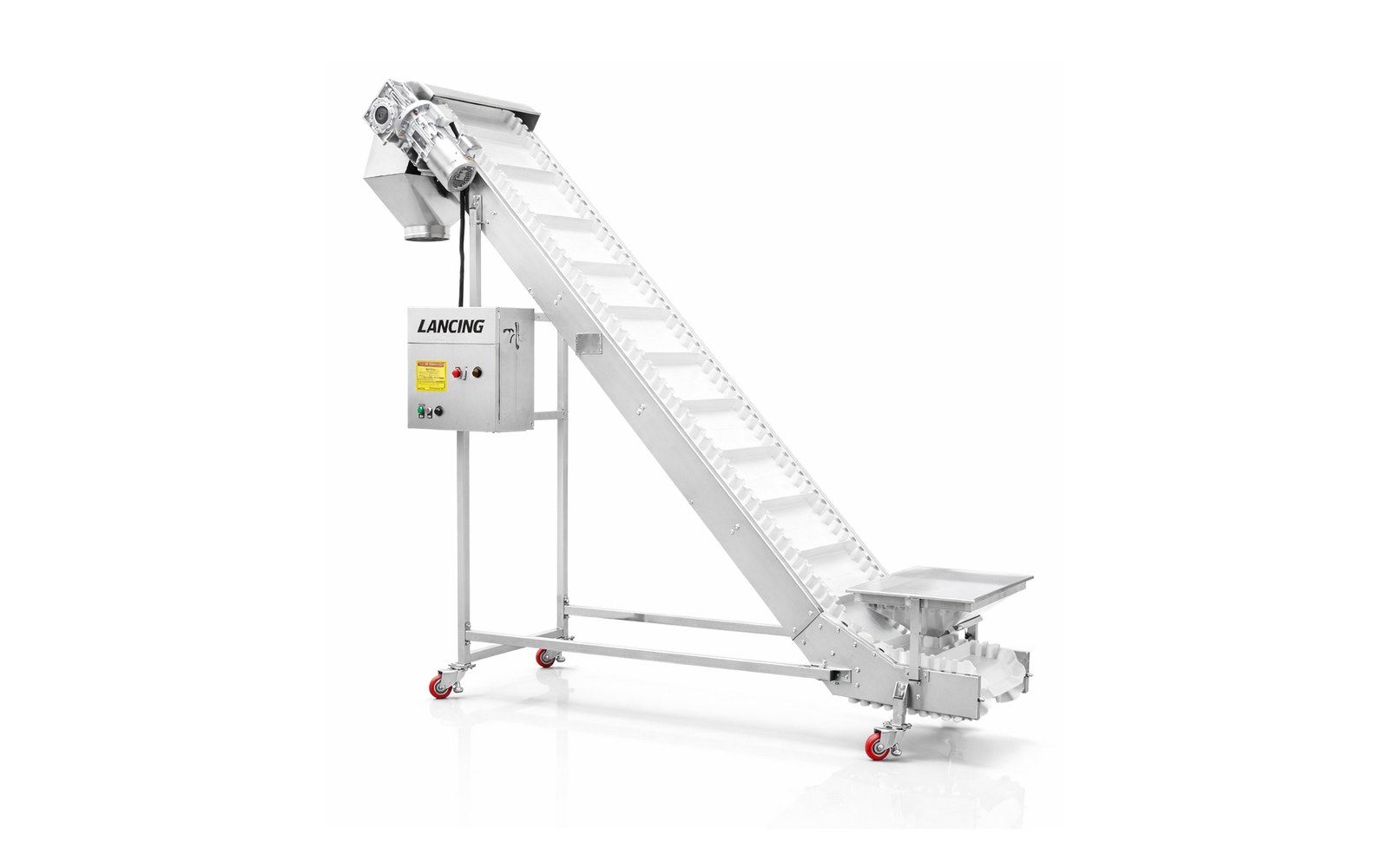 Elevation changes
Move packs between levels with belts, cleats, grip surfaces and layout support for safe transfer.
Explore →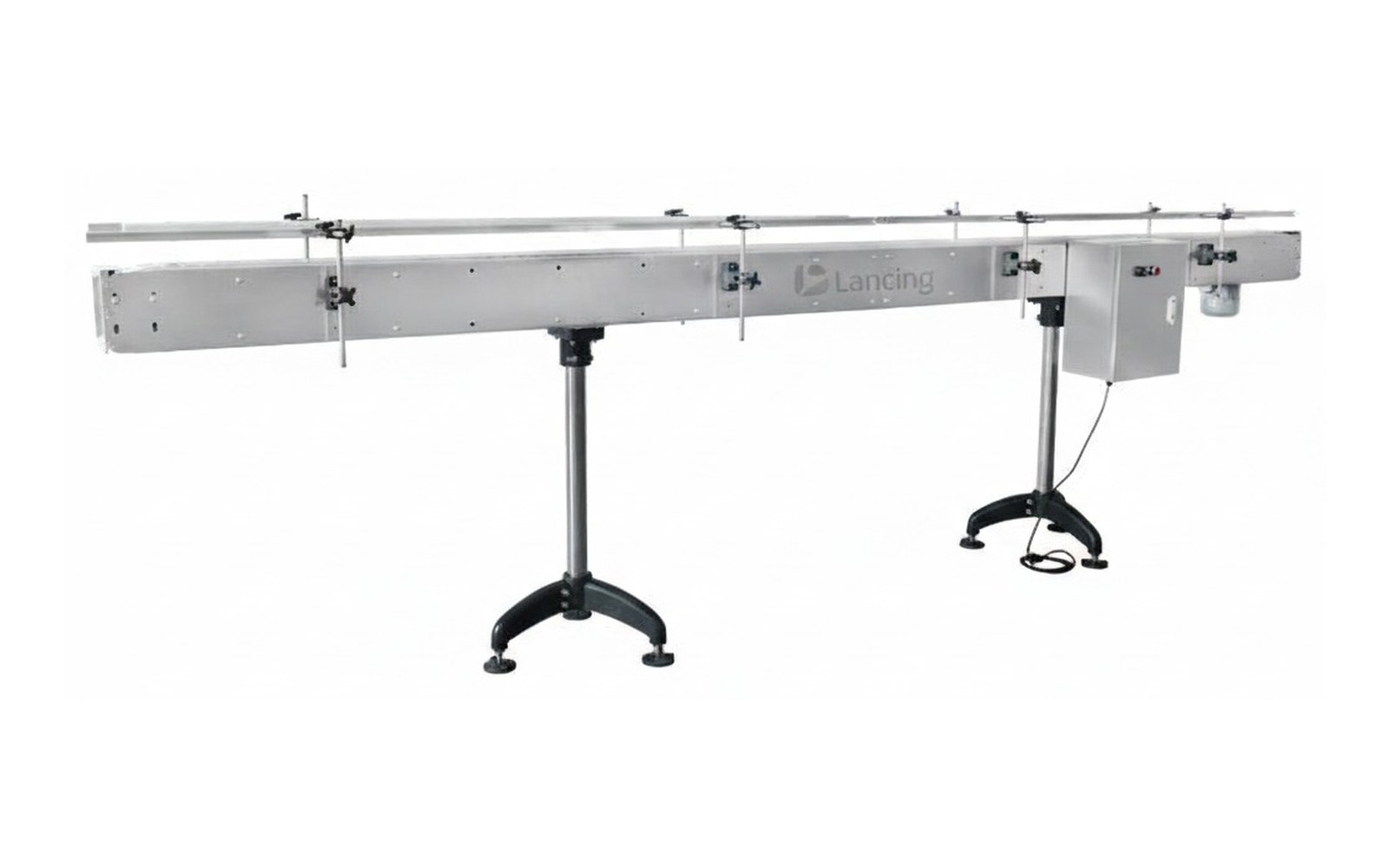 Compare your options
Check pack stability, transfers, widths, speeds, accumulation and integration before choosing a conveyor.
Explore →Clear answers for choosing conveyor options, planning a line layout and preparing quote details.
A rotary table can be used at the start, middle or end of a line for feeding, buffering, collecting or giving operators time to handle products.
Often yes, but container diameter, height, filled weight, stability and guide setup should be checked before specifying the table.
Send pack dimensions, filled weight, line speed, available footprint, infeed and outfeed heights, photos of the existing line and details of connected machines.
Send your product details, line speed and available space to get advice on the conveyor route that fits your packaging line.
Rotary tables can provide compact product collection, manual loading, controlled feed or short-term buffering for bottles, jars, pots and similar containers. Table diameter alone does not prove capacity or flow. The usable area is reduced by guides, centre geometry, entry and exit positions, product spacing and the need to avoid bridging or excessive contact.
The project brief should state whether the table receives products, feeds them into single file, recirculates them, collects them for an operator or absorbs a defined short stop. These duties can require different guide arrangements, speeds and control responses.
A rotary table must move products from the entry to the required collection or discharge point without tipping, trapping or remaining indefinitely in a dead area. Check the base diameter, centre of gravity, wall stiffness, pump or trigger projection, filled weight and allowable product contact. Transparent or decorated containers may also affect sensor and guide choices.
For controlled discharge, the outfeed guide must create a stable single-file path at the rate required by the next machine. Product pressure and table speed should not force containers into the outfeed faster than the conveyor or machine can accept them.
A first estimate can divide the usable table area or effective annular area by the space occupied by each product, but real capacity is usually lower because products do not pack perfectly and guides reserve part of the surface. For a time-based buffer, compare usable product count with the incoming rate and defined stop duration.
The acceptance test should include an initially empty table, normal loading, the target buffer state, full or blocked response, restart and complete drawdown. Observe product contact, scuffing, unstable clusters, sensor behaviour and operator reach. For longer controlled buffering, compare a dedicated accumulation conveyor.
| Specification field | Project definition | Verification |
|---|---|---|
| Duty | Feed, collect, recirculate, manually load or buffer products. | Operating sequence and machine interfaces. |
| Usable table area | Area remaining after centre, guides, entry, exit and access are allowed. | Layout drawing and product-position review. |
| Product range and load | Dimensions, filled weight, stability, projections and maximum product count. | Complete sample set and capacity trial. |
| Working height and interfaces | Entry and exit datum, guide transition and conveyor relationship. | Site measurement and interface drawing. |
| Speed and drive | Normal range, direction, acceleration, motor position and control method. | Flow trial and controls brief. |
| Surface and frame materials | Product contact, cleaning, wear and corrosion requirement. | Site environmental and cleaning review. |
| Guide system | Flow path, adjustment, product-contact zones and single-file discharge. | Samples at minimum and maximum load. |
| Sensors and controls | Full, low-level, discharge, permissive and blocked-line response. | Functional sequence test. |
| Ingress protection and guarding | Exposure, cleaning, access to rotating components and operator interface. | Environmental and risk assessment. |
Manual collection or loading positions should be within practical reach and should not require operators to work across an unguarded moving surface. The layout should allow rejected or damaged packs to be removed and should define what happens when the table is full or unattended.
Maintenance access should cover the drive, bearings, support, table surface, guides, sensors and guards. Cleaning should reach the product-contact surface and any area where spills or fragments collect. If the table surface or guides are removed, the method and required clearance should be included in the design review.
For automatic bulk bottle orientation, a rotary table is not automatically an unscrambler. Use Bottle Unscramblers UK when the project requires controlled orientation from disordered bulk supply.
These answers define the evidence needed for a reliable specification and quotation.
Estimate the usable surface after guides and interfaces are allowed, then assess the product positions that can occupy it. Validate the count because real products leave gaps, cluster and may need lower density for stable release.
Yes for suitable products and short defined events, provided the usable capacity, product contact, full-table response and release behaviour are proven. Longer or pressure-sensitive buffering may need another method.
It can when the guide path and discharge are designed for the bottle range and target rate. It does not necessarily orient disordered bottles; that is a separate unscrambling duty.
That depends on the duty and control sequence. It may run continuously, on demand or at variable speed. The selected mode should prevent overfeed, excessive contact and unstable restart.
Send product samples and dimensions, filled weight, duty, target rate, required buffer time or count, entry and exit heights, available footprint, cleaning method and control interfaces.
A rotary table can provide compact collection or feed, but its usable duty depends on product stability, table loading, guide arrangement and the discharge method.
Products can cluster, rotate, bridge at the guide or fail to enter the outfeed consistently. Test the intended product quantity and the full release sequence. If containers arrive disordered and require orientation, that is a different function from transporting products that are already upright.
Controls should define table start, stop, full condition, upstream response and restart. Access for cleaning beneath guides and around the drive should be assessed in the final installed position.
Use the troubleshooting guide for bridging or release faults and the controls guide for full and restart states.