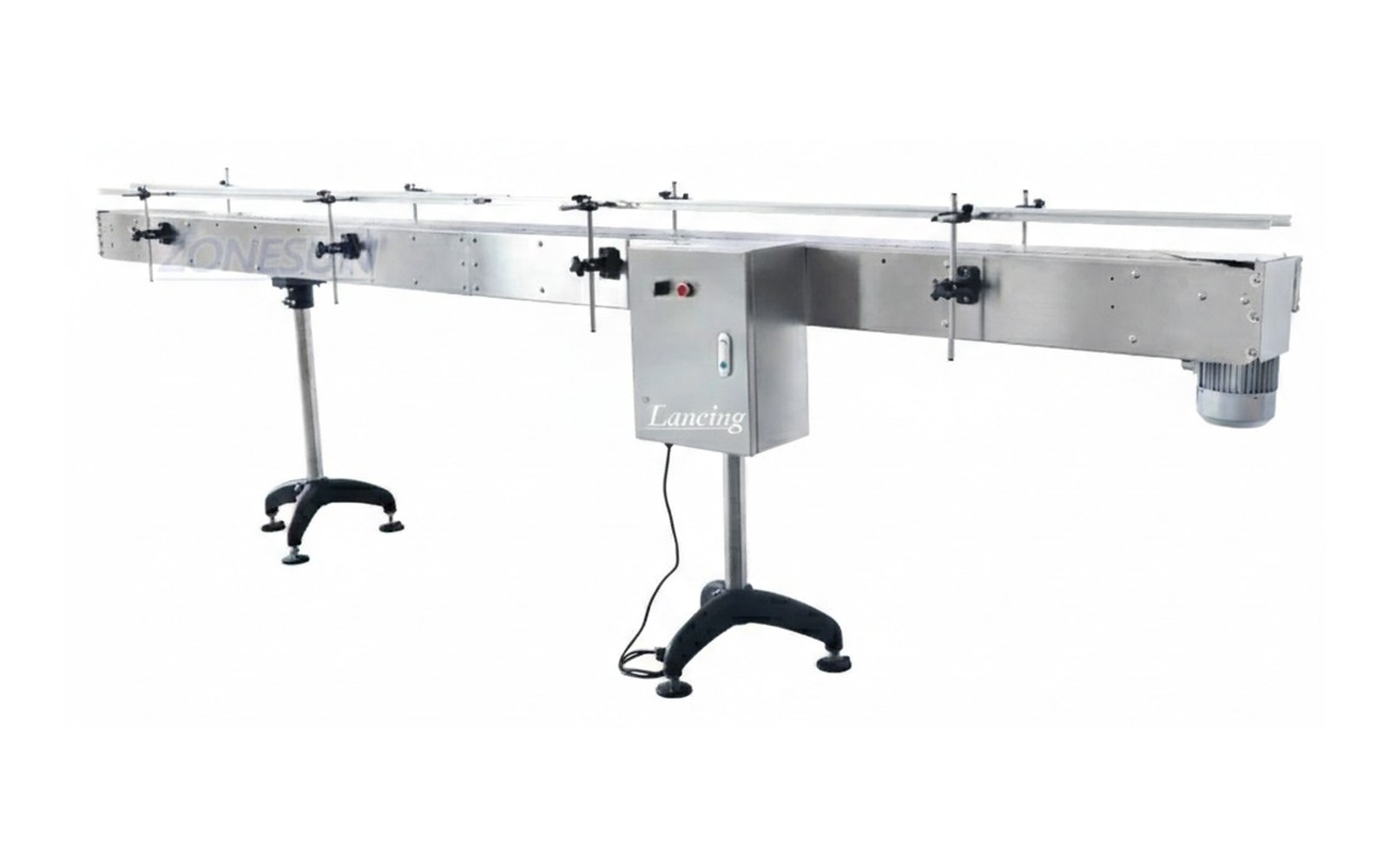
 General transfer
Belt conveyors
Clean, practical movement for cartons, bottles, tubs, trays and stable packaged goods.
Compare conveyor →Bottle conveyors need stable handling through filling, capping, labelling, coding and packing. Bottle height, base size, material, filled weight and closure type all affect guide rail setup and transfer design.
Bottle conveyors need stable handling through filling, capping, labelling, coding and packing. Bottle height, base size, material, filled weight and closure type all affect guide rail setup and transfer design.
Check the final conveyor choice against real samples, filled weight, line speed and connected machinery.
General transfer
Clean, practical movement for cartons, bottles, tubs, trays and stable packaged goods.
Compare conveyor →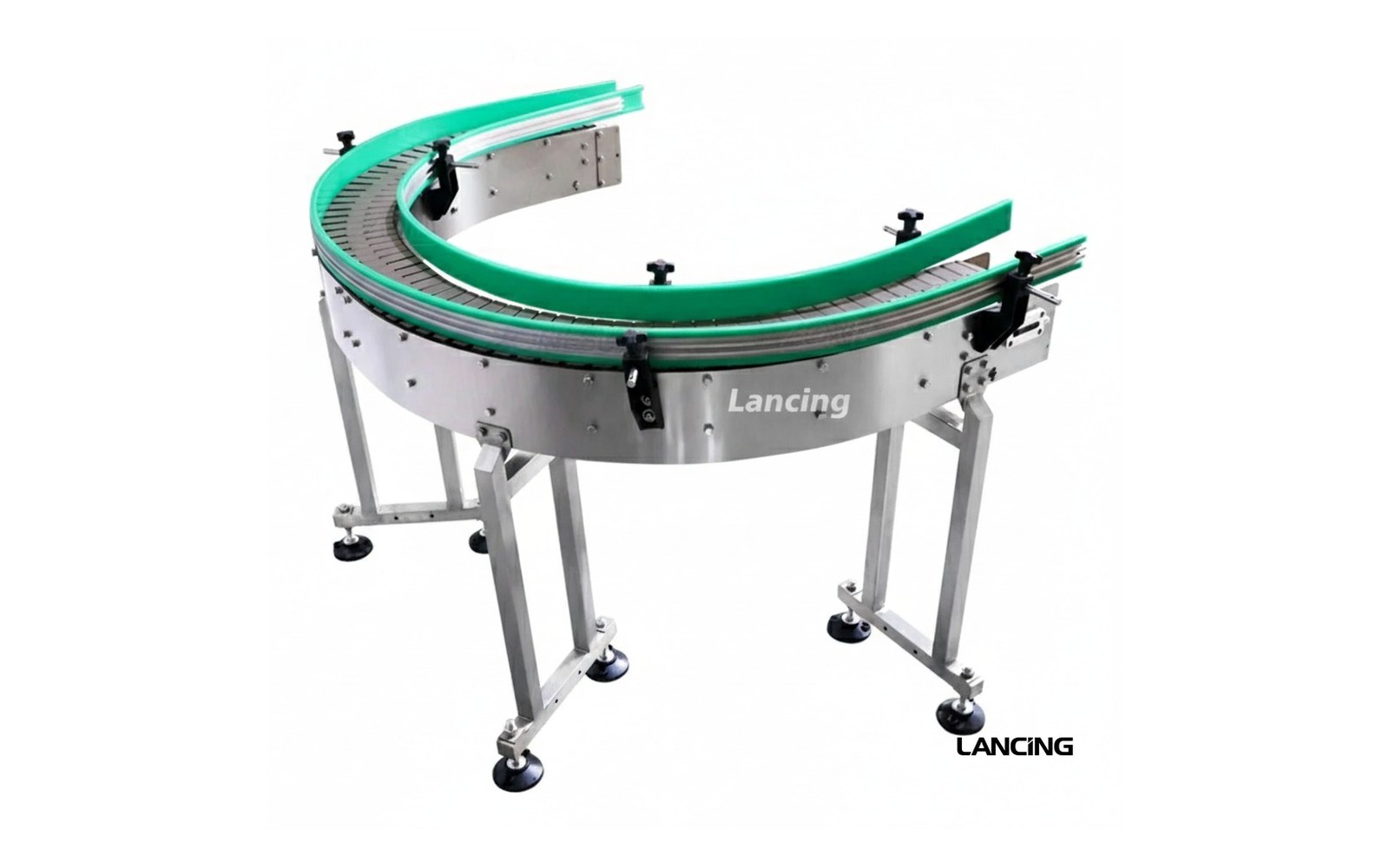 Bottle lines
Stable inline handling for bottles, jars and containers moving through filling, capping and labelling.
Compare conveyor →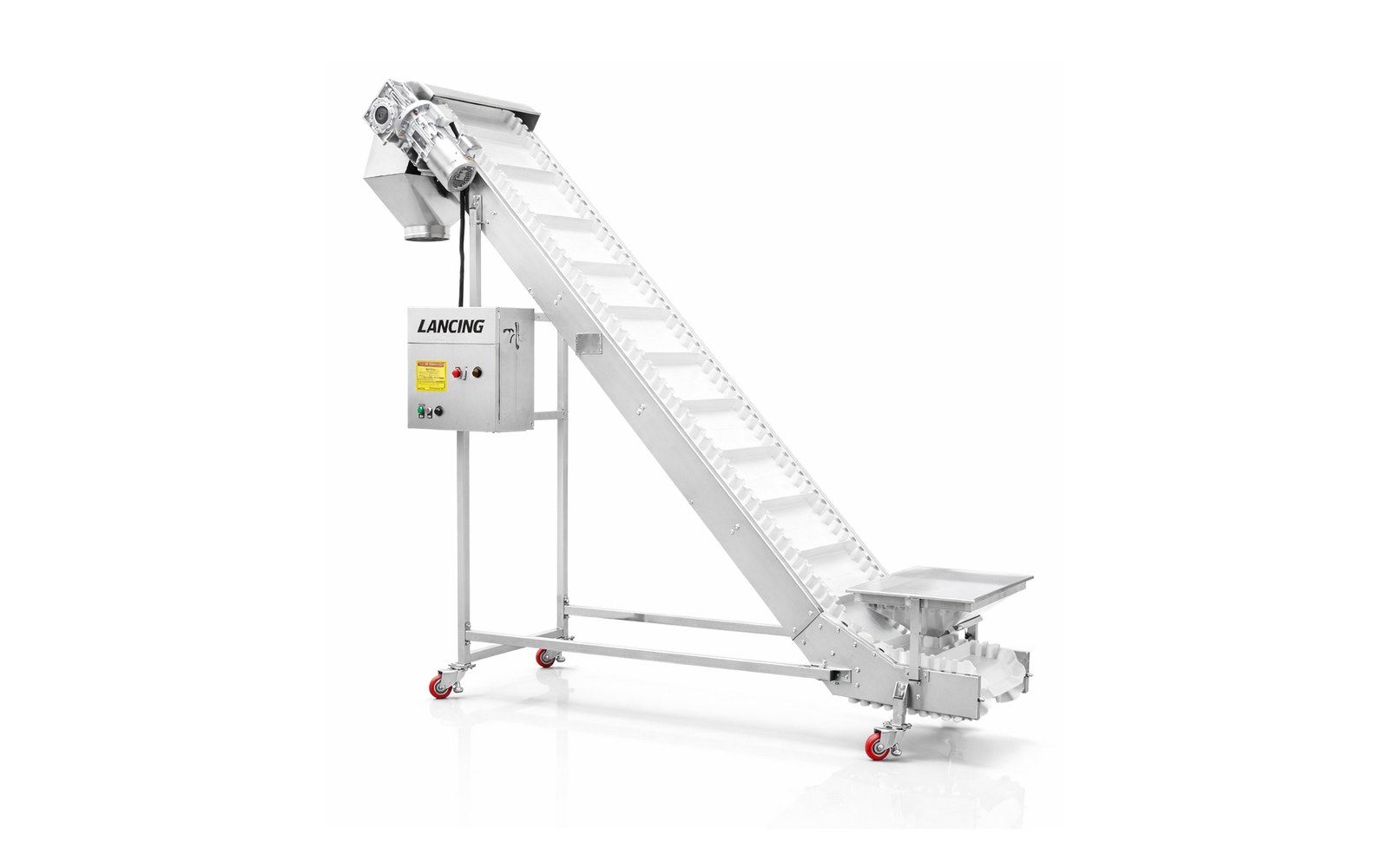 Elevation changes
Move packs between levels with belts, cleats, grip surfaces and layout support for safe transfer.
Compare conveyor →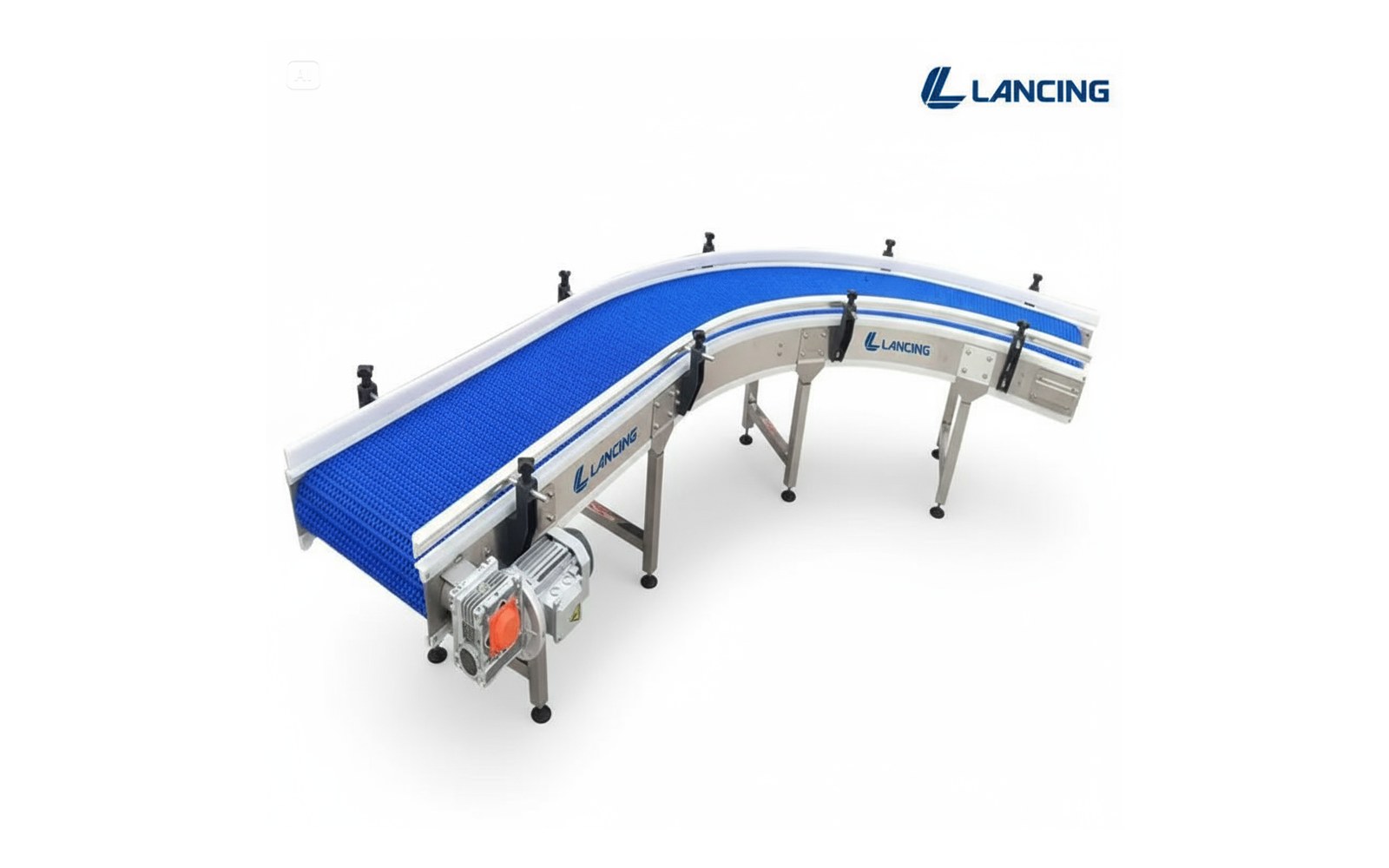 Space saving
Turn production flow through 45°, 90° or 180° routes while protecting pack spacing and orientation.
Compare conveyor →Clear answers for choosing conveyor options, planning a line layout and preparing quote details.
The best conveyor is decided by pack stability, size, weight, required speed, transfer points, cleaning needs and the connected packaging machinery.
Yes. Share photos, layout dimensions and machine details so infeed heights, outfeed heights, controls and access can be checked.
Send your product details, line speed and available space to get advice on the conveyor route that fits your packaging line.
Bottle handling changes through the packaging process. Empty containers can be light and easily deflected; filled bottles have greater mass and a different centre of gravity; capped or trigger-fitted bottles may introduce projections that contact guides. Use samples from each relevant stage rather than assuming one bottle represents the complete line.
The conveyor route should identify bottle feed, filling, capping, sealing, labelling, coding, inspection, accumulation and packing interfaces. Each stage can require a different pitch, guide setting or support condition. A stable straight run does not prove entry to a filler, capper timing device or label application zone.
Record the bottle base diameter or footprint, overall height, filled weight, wall stiffness and any recessed, petaloid or uneven base feature. Tall narrow bottles are sensitive to acceleration and guide transitions. Soft bottles can deform under side pressure. Glass bottles may add impact, contact and breakage considerations.
Guide rails should contact a stable area while avoiding labels, handles, pumps, triggers and closures. Format changeover should be repeatable, with settings or scales where useful. If a bottle must be elevated or its base must remain clear, compare a side-grip route using actual sidewall samples.
A conveyor can accumulate and deliver containers, but bulk feeding and orientation are separate duties. If bottles arrive disordered and must be placed upright or in a defined orientation automatically, use Bottle Unscramblers UK for that machinery scope. The conveyor interface should then be specified from the unscrambler discharge to the next packaging machine.
For guided transport and curves, review slat chain conveyors. For short buffers and collection, compare rotary tables and accumulation conveyors.
| Bottle condition | Handling concern | Evidence to confirm |
|---|---|---|
| Empty bottle | Low mass, wall stiffness, static, air movement and guide deflection. | Empty samples from all moulds or formats and infeed video. |
| Filled uncapped bottle | Higher mass, liquid movement, open neck and spill risk. | Filled samples, product behaviour and filler discharge detail. |
| Capped or sealed bottle | Closure height, cap stability, torque stage and top pressure restrictions. | Final closure samples and capper or sealer interface. |
| Labelled bottle | Scuffing, adhesive cure, label edge and presentation quality. | Production-labelled samples and allowable guide-contact zones. |
| Pump, trigger or handled bottle | Projection, orientation, side-guide interference and centre of gravity. | Complete assembled pack in every orientation that can reach the conveyor. |
Run the limiting bottles through straight sections, bends, machine transfers, accumulation and restart. Include empty and filled states where both occur on the line. Where a label or closure can be damaged, inspect the pack after repeated contact rather than only watching for jams.
For coding or inspection, define the required bottle face and speed window. Direct-print technology and ink suitability should be selected through Coding Machinery; the conveyor scope is to present the bottle consistently and provide the required sensor or encoder interface.
Acceptance should state the sample references, line rate, run sequence, blocked-outfeed duration and maximum acceptable tip, jam, scuff or manual intervention.
These answers define the evidence needed for a reliable specification and quotation.
Their mass, centre of gravity, stiffness and friction can differ significantly. The empty bottle may be hard to control at infeed while the filled bottle may create more impact or pressure downstream.
It can be useful where the base must be exposed for coding or inspection, or where side support is needed through a level change. Bottle sidewall strength and contact area must be validated.
Only when the complete range remains stable and the setting does not damage labels, handles or closures. Most multi-format lines need adjustable, repeatable guide positions.
Define the required buffer time and rate, then test product contact, pressure, scuffing, tipping, full-buffer response and stable release with the actual bottles.
No. A rotary table can collect, buffer or feed suitable upright containers, but automatic orientation from disordered bulk supply is an unscrambler function.
A bottle range can contain formats that share a fill volume but behave differently on a conveyor. Base geometry, height-to-base proportion, shoulder shape, sidewall stiffness, material, surface finish and closure all affect stability. Build the trial set from the formats most likely to expose a weakness rather than testing only the most common product.
Record the bottle condition at each line stage. An empty container approaching the filler may be light and flexible; the filled bottle leaving the filler is heavier and may have a wet base; the closed bottle may carry a pump, trigger or cap that changes its centre of gravity and permitted guide-contact area; the labelled bottle may have a surface that must not be scuffed during accumulation.
| Limiting format | Why it matters | Where to test it |
|---|---|---|
| Smallest or least supported base | More sensitive to transfer gaps, dead plates and guide transitions. | Every conveyor-to-conveyor and machine hand-off. |
| Tallest or highest centre of gravity | More sensitive to acceleration, curves, stops and uneven guide contact. | Curves, speed changes, blocked-line queues and restart. |
| Heaviest filled bottle | Changes drive load, friction, back pressure and stopping behaviour. | Accumulation, incline sections and downstream stops. |
| Softest or most flexible bottle | Can distort under guide or product pressure and affect sensors. | Guide rails, metering, accumulation and side-grip contact where used. |
| Most contact-sensitive decoration | Labels, print or surface finish may mark during guiding or queuing. | Curves, rails, accumulation and pack-off points. |
| Largest closure, pump or trigger | Can overhang, alter balance or prevent normal guide contact. | Capping discharge, curves, inspection and final accumulation. |
For each approved format, record side-guide datums, curve settings, sensor positions, chain or belt speed, machine-entry guides and any metering device. Confirm that operators can reach the adjustment safely and that one setting does not solve a straight section while creating a problem at the next transfer.
Use slat-chain conveyor guidance for guided container routes, adjustable guide-rail planning for multi-format settings, and rotary tables or accumulation conveyors where a buffer is needed. Automatic bulk orientation remains the specialist responsibility of Bottle Unscramblers UK.
Check for wet or contaminated bases after rinsing or filling, incomplete closures after capping, label edges after application and unstable spacing after inspection or reject stations. A bottle that passes the first conveyor section can still become the limiting format later in the line. Acceptance should follow the bottle through every relevant state and include controlled stops and restarts.
The same bottle can require different handling once it is filled, closed or decorated.
Each condition can change mass, centre of gravity, base friction and sidewall behaviour. Testing the handling states present on the real line reveals which transfer, guide or accumulation setting is limiting.
The closed pack may become taller, top-heavy or asymmetric, and the closure can overhang the bottle wall or restrict guide contact. Test the completed pack through curves, sensors, accumulation and machine transfers.
The limiting bottle may change as it is filled, closed and labelled. A closure can alter the profile, a liquid fill can move the centre of gravity and a decorated surface can restrict where side guides may touch.
Test the smallest base, tallest format, heaviest filled bottle and any pump or trigger profile. Record the guide setting, sensor position, transfer result and acceptable contact for each. Include blocked-line and restart conditions because bottle pressure can reveal scuffing or instability that is absent during free flow.
Where base access is required for coding or inspection, compare a side-grip section. Where accumulation is required, define the stop duration and product-contact limit separately rather than extending a route without a recovery plan.
Review side-grip conveyors, then use the sample-trial guide, spacing guide and changeover checklist.
Bottle dimensions alone do not describe how the pack will behave. Base geometry, closure, orientation and the empty or filled condition can change the required support.
Define the required orientation and identify stable contact zones on the bottle body. Guides should control the pack without pinching across dimensional variation or forcing a corner into the transfer. Test every permitted arrival orientation, especially at curves, merges and speed changes, and confirm how the line recovers when one bottle arrives misaligned.
A recessed, punted or discontinuous base reduces the area supported at transfers and may allow the bottle to rock on a narrow rail, plate or gap. Inspect the actual base profile rather than using only outside diameter. The transfer design should support the load-bearing parts of the base throughout normal running, stopping and restart.
A neck guide may help when the body is tapered, decorated, flexible or interrupted by a handle, but it must suit the closure geometry and vertical tolerance. It is not a universal solution and should not lift or constrain the bottle unexpectedly. Use complete production bottles and prove transfer, accumulation and changeover at the intended guide height.
Test every orientation that the upstream process can realistically deliver, including the position of handles, pumps, triggers, labels and seams. Define whether the conveyor only transports the bottle or must also control orientation for the next process. If orientation is required, state the accepted datum and how an incorrect arrival is detected or managed.
Clear PET or glass, dark colours, reflective labels, sleeves, liquid levels and curved sidewalls can change the signal seen by a photoeye. The limiting bottle for stability may not be the limiting bottle for detection, so include both risks in the sample schedule.
Test empty and filled states where they occur, plus labelled, sleeved and capped formats. Record the sensor mounting datum, guide position, product pitch and the fault response. The detailed packaging conveyor sensor guide explains how to define and validate the detection task.
An empty bottle may be less stable than the filled pack, while a fitted pump or trigger may change the centre of gravity and the surfaces that can be contacted. Prove every support route with the limiting production sample.
| Handling route | Useful starting point | Evidence to confirm |
|---|---|---|
| Base conveyor and guides | Stable rigid bottles with suitable side-contact surfaces. | Transfers, guide height, back pressure and format settings. |
| Side-grip conveyor | Temporary base access or local support between machines. | Wall stiffness, grip contact, width range and release stability. |
| Puck conveyor system | Unstable or shaped bottles needing a carrier through several operations. | Loading, orientation, station access, de-pucking, return and cleaning. |
| Indexing conveyor | A stable bottle that must stop at a controlled process datum. | Pitch, acceleration, position confirmation, dwell and restart sequence. |