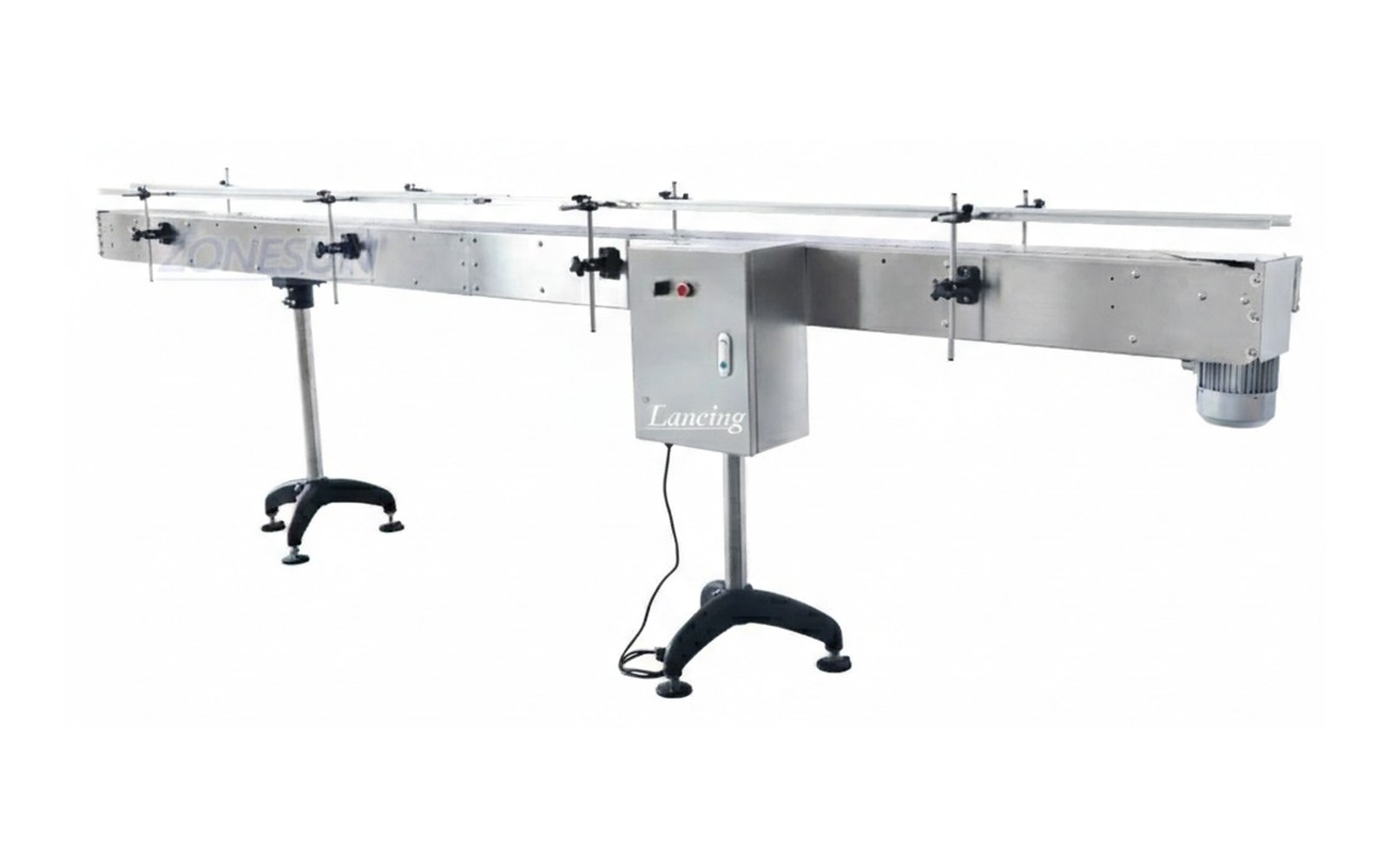
 General transfer
Belt conveyors
Clean, practical movement for cartons, bottles, tubs, trays and stable packaged goods.
Compare conveyor →Food and beverage conveyors are specified around hygiene, cleaning, product presentation, packaging stability and throughput. The route can include bottle lines, jar lines, tub handling, tray transfer and end-of-line packing sections.
Food and beverage conveyors are specified around hygiene, cleaning, product presentation, packaging stability and throughput. The route can include bottle lines, jar lines, tub handling, tray transfer and end-of-line packing sections.
Check the final conveyor choice against real samples, filled weight, line speed and connected machinery.
General transfer
Clean, practical movement for cartons, bottles, tubs, trays and stable packaged goods.
Compare conveyor →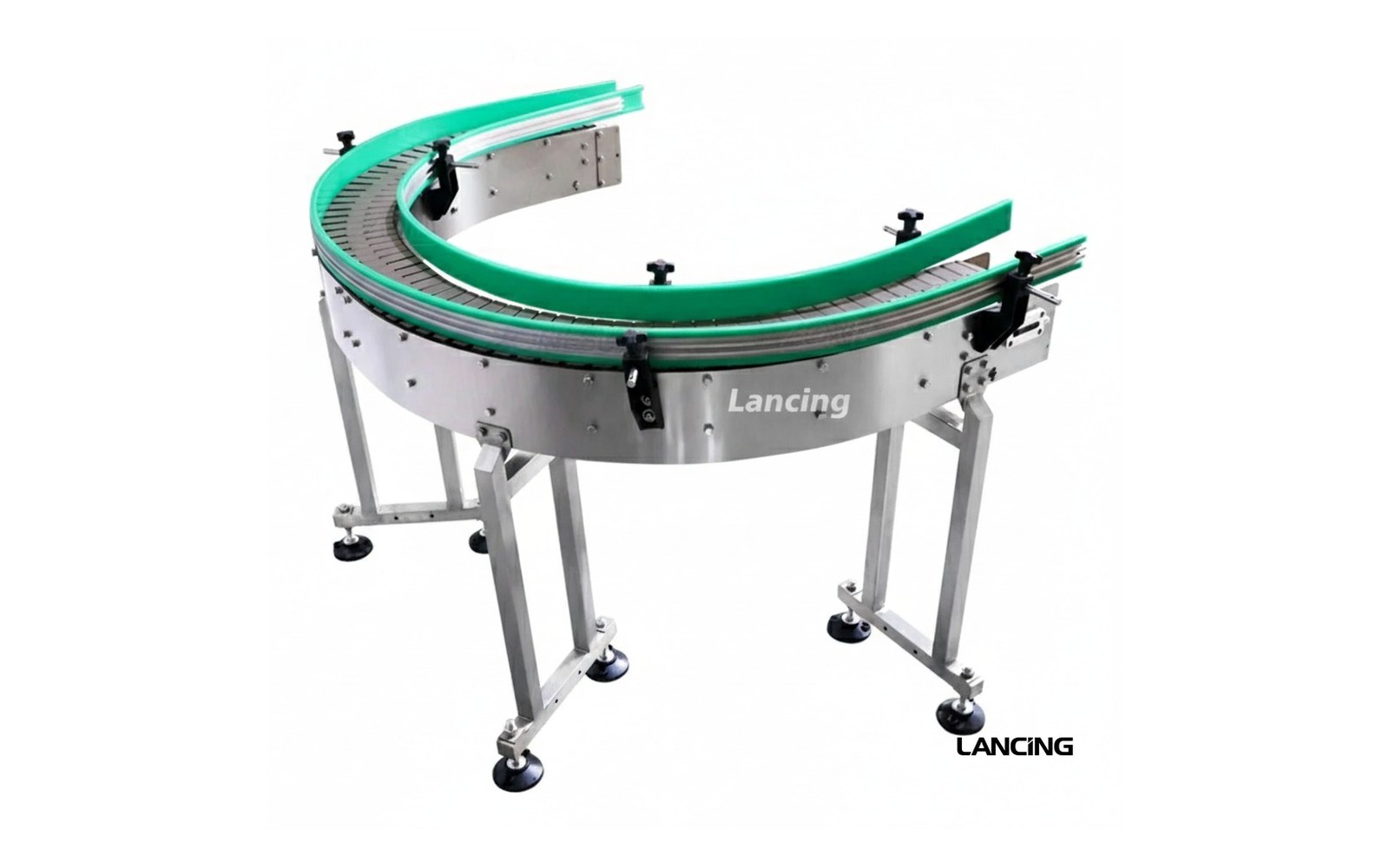 Bottle lines
Stable inline handling for bottles, jars and containers moving through filling, capping and labelling.
Compare conveyor →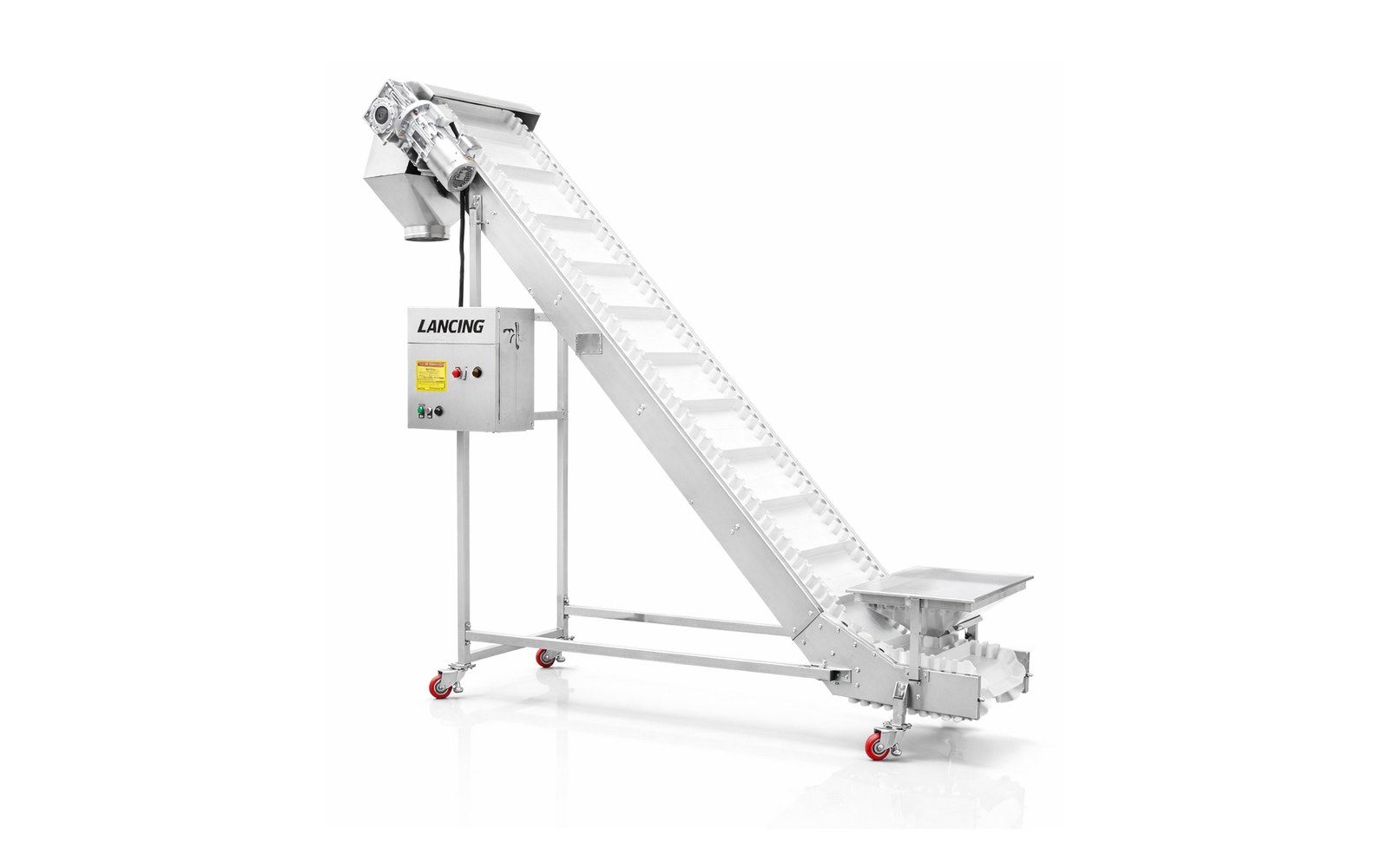 Elevation changes
Move packs between levels with belts, cleats, grip surfaces and layout support for safe transfer.
Compare conveyor →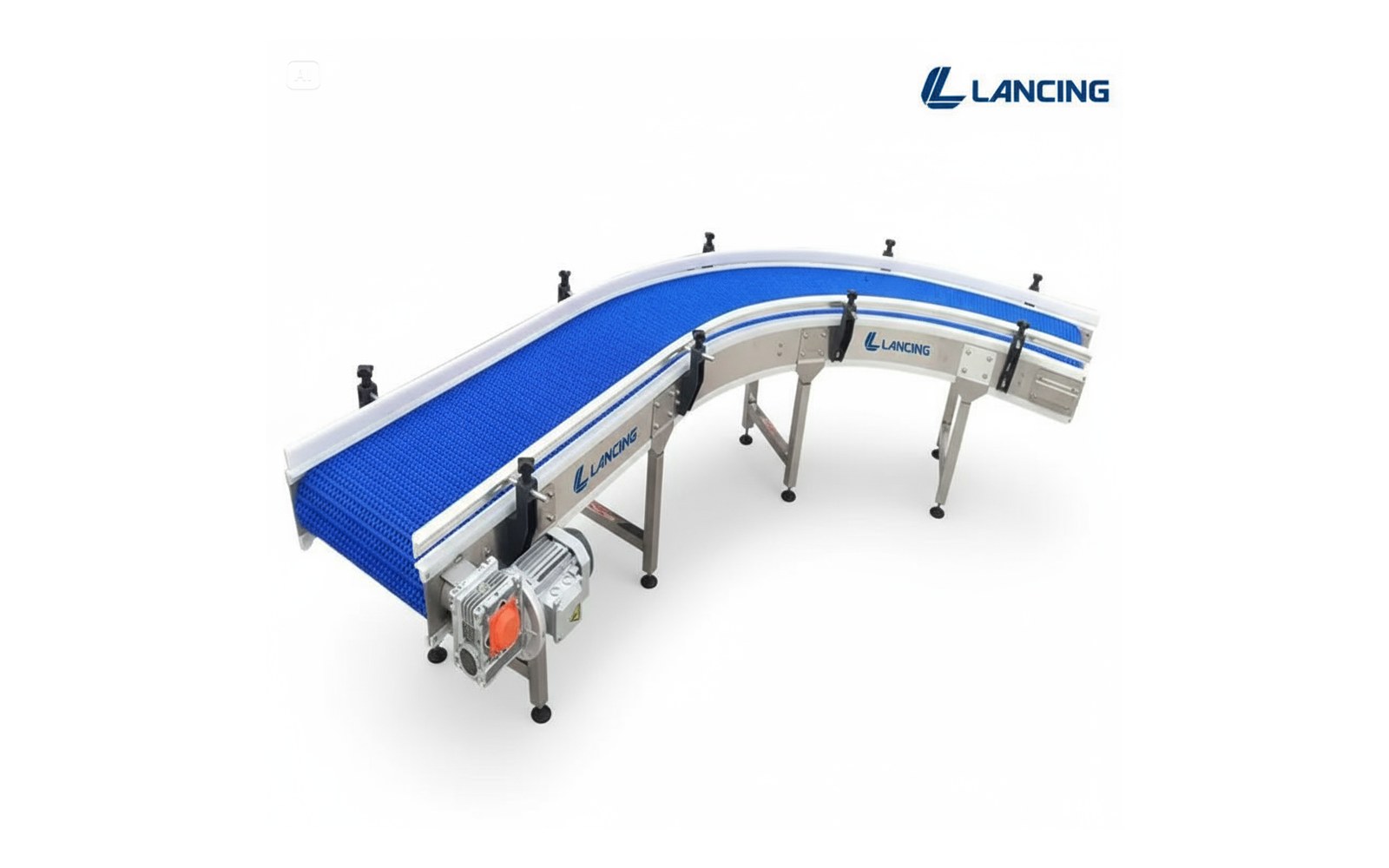 Space saving
Turn production flow through 45°, 90° or 180° routes while protecting pack spacing and orientation.
Compare conveyor →Clear answers for choosing conveyor options, planning a line layout and preparing quote details.
The best conveyor is decided by pack stability, size, weight, required speed, transfer points, cleaning needs and the connected packaging machinery.
Yes. Share photos, layout dimensions and machine details so infeed heights, outfeed heights, controls and access can be checked.
Send your product details, line speed and available space to get advice on the conveyor route that fits your packaging line.
Food and beverage packaging lines can handle dry cartons, wet bottles, glass jars, tubs, trays or wrapped products. The industry name does not define the required construction. Specify the actual product-contact status, spill risk, cleaning procedure, water and chemical exposure, temperature and access needed to inspect all product or debris collection areas.
Do not apply a generic “food-grade” description without identifying which parts contact the pack or product and which site standard applies. Materials, belt or chain, finishes, drainage and ingress protection should be selected from the documented duty and confirmed by the responsible project parties.
A cleanable belt does not make the complete conveyor cleanable if spills can remain in hollow sections, under the return path, behind guides or around poorly accessible supports. Review how operators reach the top surface, return, frame, drive, sensors, guide brackets and floor below. Define which components are removed, opened or cleaned in place.
Drainage should prevent water and product residue from collecting in the installed position. The design should consider the real floor, slope and surrounding machinery. If pressurised washdown is used, identify the actual method and select electrical components and seals for that exposure rather than assuming an ingress rating.
Stable cartons, trays and wrapped packs often suit continuous belt support. Bottles and jars may suit guided slat chain, particularly through filling, capping and labelling. Tubs or pots can need careful transfer support. Any buffer should be tested for contact damage, lid movement, label scuffing and safe cleaning after a spill.
For washdown-specific planning, use washdown packaging conveyors. For a complete food or beverage packaging line, use Packaging Lines UK so filling, closing, inspection, conveying and end-of-line scope are reviewed together.
| Requirement | Questions to answer | Evidence |
|---|---|---|
| Product and spill exposure | Is the conveyor carrying sealed packs, open product, leaking containers or external residue? | Process description and photographs of normal/worst condition. |
| Cleaning method | Dry clean, wipe-down, foam, rinse, low or higher pressure, chemicals and temperature? | Current cleaning procedure and chemical data. |
| Materials and surface | Which parts contact product or packaging, and what site material standard applies? | Customer specification and compatibility review. |
| Access and drainage | Can all surfaces be reached, inspected and drained in the installed layout? | Design review using site floor and surrounding equipment. |
| Electrical exposure | Which motors, sensors, junctions and controls are exposed to water or chemicals? | Environmental zones and selected component ratings. |
| Cleaning verification | How is acceptable cleanliness or residue removal checked? | Site hygiene procedure and agreed inspection points. |
Water, oil, sugar, powder or condensation can change product friction and sensor performance. If such a condition is expected, review it safely during selection and acceptance. A dry showroom run may not represent the production line. The test should also confirm that cleaning does not alter belt tracking, guide settings or sensor alignment.
Noise should be assessed with the real containers and line state. Glass contact, chain speed, dry running, worn guides and product accumulation can contribute. Define acceptable operating conditions and maintenance actions instead of publishing an unsupported generic noise value.
The spare-parts list should identify cleanable belts or chains, wear strips, guide components, bearings, seals and sensors used in the final design. Store replacement parts in a way that preserves their cleanliness and traceability under the customer’s procedure.
These answers define the evidence needed for a reliable specification and quotation.
Not automatically. Construction should follow the product-contact status, cleaning method, corrosion risk and the customer’s site standard. State the exact requirement rather than relying on the industry label.
Accessible product and return surfaces, suitable materials, drainage, removable or openable parts where needed, limited residue traps and a cleaning method that can be completed and inspected in the installed layout.
Only when the complete design, including frame, belt or chain, bearings, motor, sensors, controls and seals, is selected for the stated water, chemical, temperature and pressure exposure.
Use filled and closed samples through transfers, curves, accumulation and stop/restart while observing impact, noise, breakage risk and guide contact. Define safe containment and recovery with the project risk assessment.
Check belt or chain condition, tracking, guides, sensors, guards, drainage and any residue collection points before returning the conveyor to production under the site procedure.
Industry labels alone do not establish a cleaning duty. The conveyor brief should state the product exposure, soil, cleaning method, water or chemical use, drainage needs and the areas that operators must reach.
Identify components that are removed, opened or adjusted during cleaning and how their settings are restored. Trapped product, inaccessible returns and poorly defined drying or inspection steps can extend downtime or create inconsistent start-up conditions.
Use representative containers or packs during the product trial, including any wet, cold or contaminated state that changes friction or sensing. If a specific hygiene or ingress-protection claim is required, it must be confirmed against the final design and site procedure rather than assumed from a generic application page.
Use the cleaning/changeover checklist, sample-trial guide and washdown conveyor guidance.
Conveyor construction should follow the actual contamination risk and cleaning method rather than an industry label alone.
Not necessarily. The required design depends on whether food can contact the conveyor, the risk from spills or broken packs, the cleaning regime and the site food-safety plan. Closed-pack handling can still need easy-to-clean surfaces and controlled debris areas, but it should not be specified from the same assumptions as direct product-contact equipment. Align the conveyor review with the site food-safety system.
Where the site cleaning plan requires removal of residues between products, the conveyor should provide access to the surfaces and collection areas that can retain those residues. Define whether parts are cleaned in place, removed, washed or replaced, and how the result is verified. The Food Standards Agency emphasises cleaning and cross-contamination control within food-safety management; the site procedure remains the basis for the application.
Check drainage paths, horizontal ledges, hollow or trapped areas, belt return surfaces, fastener recesses and the position in which removable parts dry. Residual water can also affect product grip, sensing and the first packs after restart. Include a post-clean inspection and dry-run condition in the cleaning method rather than assuming that stainless-steel construction guarantees drainage.
Include cleaning verification when the customer has defined access, removal, drainage, visual inspection or residue-control requirements that the conveyor must support. Acceptance can confirm that required areas are reachable and that the agreed procedure can be completed and inspected; it should not claim microbiological or allergen performance unless a competent, site-specific validation has actually been carried out.
Trays, tubs, cartons and wrapped food packs may arrive in several lanes or need a controlled dwell for filling, sealing, coding, inspection or manual loading. The useful design target is a stable, cleanable product flow through all operating states, not only the fastest empty conveyor run.
Review indexing conveyor sequences where a pack stops at a station and lane merging or diverting where several product streams must be combined or distributed.